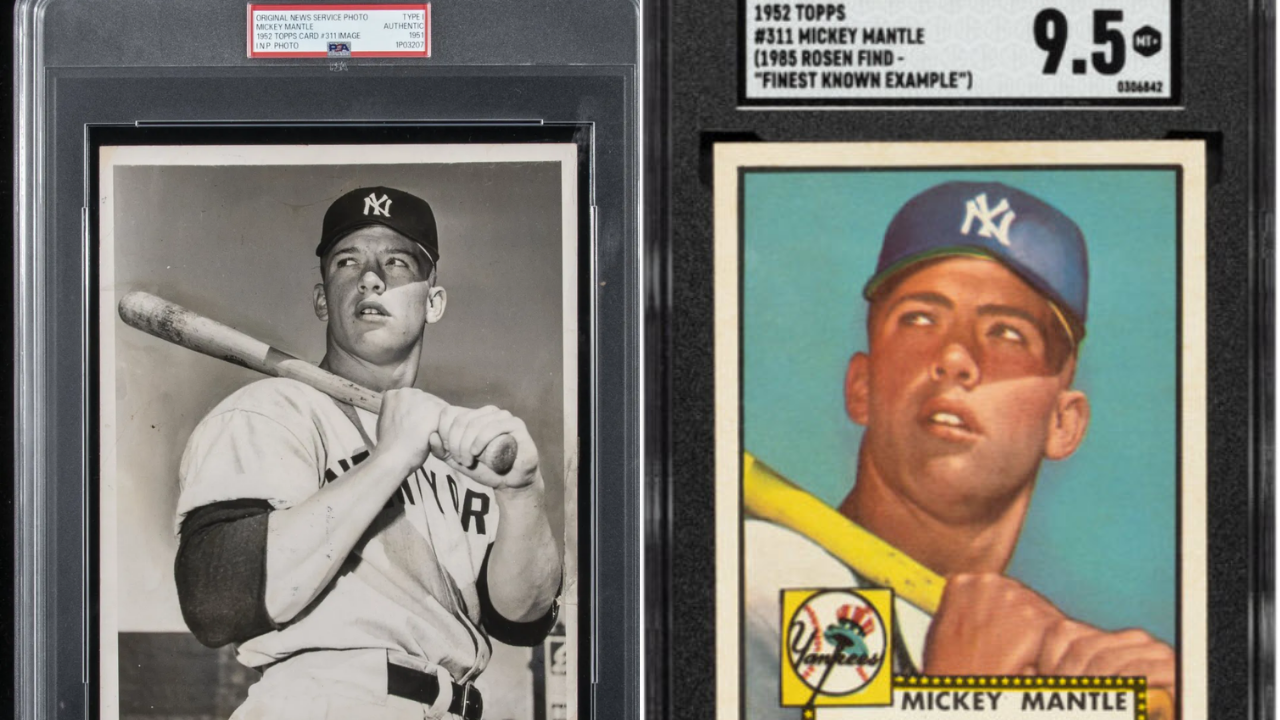
An original 1951 photograph of Mickey Mantle just fetched a staggering $3 million in a private transaction brokered by Hunt Auctions. If you follow the sports memorabilia market, you already know the image. It is the exact photographic source that Topps used to create the legendary 1952 Mickey Mantle card, widely considered the holy grail of postwar collecting.
This private sale obliterates the previous record for an unsigned sports photograph. It more than triples the old mark set in April 2024, when another Mantle photo—the one used for his 1951 Bowman rookie card—brought in $843,750. It even doubles the record for any autographed sports photograph in history, bypassing the $1.47 million paid for a signed Shoeless Joe Jackson photo back in 2021.
Cards get all the glory. Photos used to be treated like disposable office supplies. That era is dead.
The Anatomy of a Type 1 Masterpiece
Why would an unadorned piece of black-and-white photo paper command the price of a luxury mansion? It comes down to classification and extreme scarcity.
This item is authenticated as a PSA Type 1 photograph. In the collecting world, that designation means it is a first-generation print produced directly from the original negative during the period the event occurred. It is as close to the source as a physical image can get.
Most working press photos from the early 1950s were clipped, stamped, thrown into newspaper morgues, or ruined by ink and paste. They were tools, not collectibles. Out of this specific 1951 portrait session, only three Type 1 copies are known to exist.
Collector Ron Firman stepped up to buy this piece, adding a foundational artifact to his holdings. One of the other two surviving copies carries a "Newark Sunday News" archive stamp on the reverse and a chipped corner, yet commanded $375,000 back in 2019. Rarity concentrates value fast when heavy hitters start competing for the same asset class.
Riding the Coattails of Cardboard Royalty
You cannot separate this photo sale from the frenzy surrounding the 1952 Topps Mickey Mantle card itself. High-grade copies of card No. 311 dictate the weather for the entire vintage hobby.
Think about the pricing pressure. A high-grade PSA 8 copy of the 1952 Topps Mantle sold for $3.72 million just weeks before this photo deal closed. Meanwhile, the legendary "Rosen Find" specimen graded SGC 9.5 pulled down $12.6 million.
When multi-million dollar price tags become normal for the cardboard, investors start looking sideways. They want adjacent assets. If you are priced out of a top-tier 1952 Topps Mantle, or if you already own one and want the ultimate companion piece, what do you buy? You buy the physical negative print that birthed the card.
Original photography is behaving more like fine art. Buyers are paying for visual impact, historical weight, and a direct line to America's past.
What This Means for Your Collection Strategy
If you collect sports memorabilia, this shift changes how you should view supporting material.
- Look beyond the card: Original wire photos, translucent printing negatives, and vintage advertising proofs tied to iconic cards are gaining traction.
- Prioritize authentication: Only buy Type 1 photos certified by trusted grading services like PSA/DNA. Unauthenticated prints carry massive counterfeiting and second-generation risks.
- Target secondary icons: While Mantle and Babe Ruth command astronomical figures, astute collectors are hunting down Type 1 portraits of secondary stars, early Negro Leagues players, and key historic moments before the broader market catches up.
The three-million-dollar Mantle photo proves that the hobby is maturing. Collectors are willing to pay massive premiums for the raw history that happened before the ink ever hit the cardboard.


