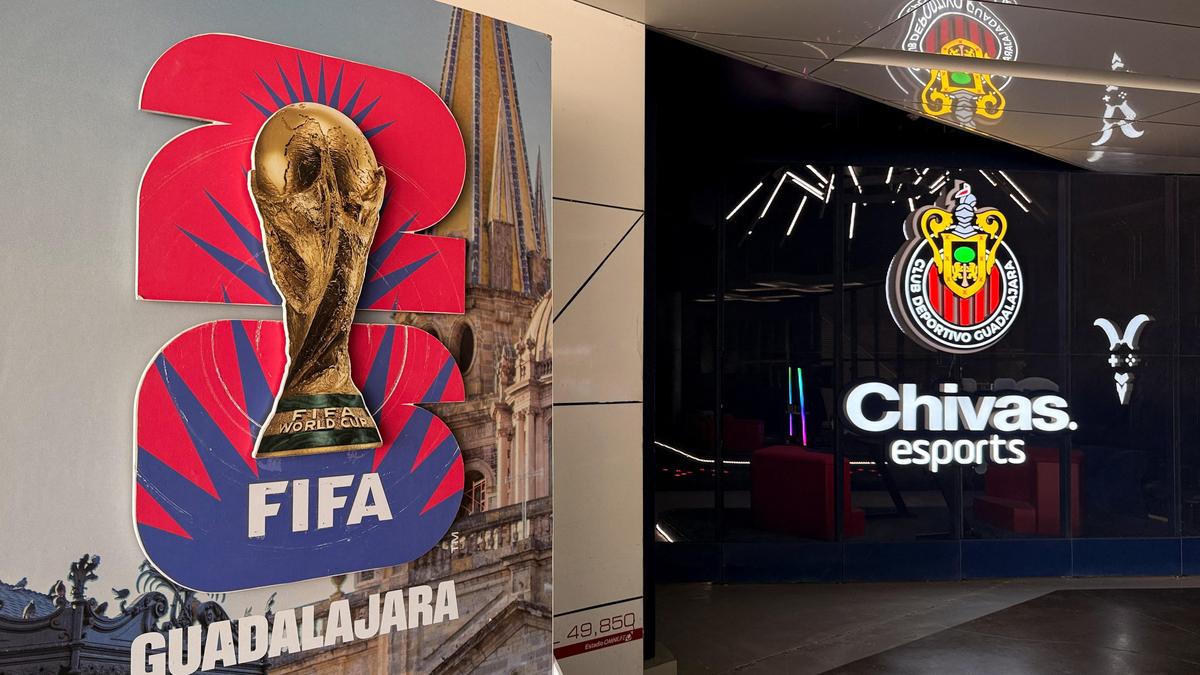
Mexico’s preparations for the 2026 FIFA World Cup have shifted from ceremonial planning to operational scrutiny. President Claudia Sheinbaum’s confirmation of an upcoming FIFA delegation visit marks the transition into a technical evaluation phase, where the abstract promises of "hosting" meet the rigid requirements of international event governance. The success of this tournament does not hinge on stadium aesthetics but on the synchronization of three critical operational vectors: perimeter security, urban mobility, and jurisdictional integration.
The upcoming assessment focuses on Mexico City, Monterrey, and Guadalajara—the three hub cities tasked with absorbing a transient population influx that will exceed existing infrastructure capacity. For the Mexican administration, the objective is to demonstrate that the state can maintain a "sterile" security environment while facilitating the frictionless movement of millions across complex urban topographies. For another view, read: this related article.
The Security Architecture: Beyond Static Policing
FIFA’s security requirements demand more than a visible police presence; they require a multi-layered defensive posture that integrates civilian law enforcement, federal intelligence, and private security contractors. The evaluation will likely parse the Mexican strategy into three distinct zones of control.
1. The Immediate Perimeter (The Sterile Zone)
This is the area within the "last mile" of the stadium. FIFA mandates absolute control over access points. The challenge for Mexico lies in the age and surrounding density of venues like the Estadio Azteca. Unlike purpose-built modern complexes, the Azteca is embedded in a mature urban fabric. The security assessment will scrutinize the ability to create temporary exclusion zones without paralyzing local commerce or residential life. Further reporting on the subject has been provided by Reuters.
2. The Transit Corridors (The Flow Zone)
Security risks are highest during the transit of teams and fans between airports, hotels, and venues. The Mexican government must prove it can secure these "soft targets" through:
- Rapid Response Synchronization: Reducing the lag time between a detected incident and the deployment of specialized units.
- Predictive Surveillance: Utilizing existing C5 (Command, Control, Computing, Communications, and Citizens) infrastructure to identify crowd anomalies before they escalate.
3. The Regional Backdrop (The Ambient Zone)
International perception often conflates localized crime with tournament risk. The administration faces the technical hurdle of isolating World Cup operations from broader national security challenges. FIFA’s visit serves as a vetting process for the "Security Ring" concept, where specialized federal forces are deployed specifically for the duration of the event to create a temporary, high-security micro-climate.
Mobility Dynamics and the Capacity Gap
The most significant bottleneck for the 2026 World Cup is not the seating capacity of the stadiums, but the "throughput" capacity of the cities themselves. Mobility in Mexico City, specifically, operates near a constant state of saturation. Inserting an additional several hundred thousand people into this system requires a total recalibration of urban transit.
The Peak-Load Challenge
Urban planners utilize a peak-load model to determine if a system will fail. During the World Cup, the peak load occurs simultaneously across three nodes:
- International Entry Points: AICP (Mexico City) and Felipe Ángeles (AIFA) must handle a surge in customs processing and baggage handling that exceeds their hourly rated capacity.
- Last-Mile Logistics: The movement from the nearest Metro or Light Rail station to the stadium gates. If the discharge rate of a train exceeds the intake rate of the stadium security gates, a "compression wave" occurs, creating a high-risk crowd crush scenario.
- The Fan Zone Dispersion: Unlike the matches, which have fixed start and end times, Fan Festivals create a continuous, unpredictable demand on ride-share services and public transit.
Structural Improvements vs. Operational Workarounds
President Sheinbaum has indicated that infrastructure upgrades are a priority, yet the timeline for the 2026 kickoff precludes massive new builds. Instead, the focus is on Operational Elasticity. This involves:
- Dedicated Lanes: Implementing temporary BRT (Bus Rapid Transit) lanes that bypass standard traffic, specifically for FIFA-accredited vehicles and ticket holders.
- Intermodal Synchronization: Ensuring that the arrival of suburban trains is timed perfectly with the departure of stadium shuttles, minimizing the dwell time of crowds in public spaces.
The Jurisdictional Friction Point
A recurring failure in previous international mega-events is "Jurisdictional Drift"—where local, state, and federal agencies overlap in authority but fail in communication. The FIFA delegation’s visit is essentially an audit of the Unified Command Structure.
In Mexico, the coordination between the Secretaría de Seguridad y Protección Ciudadana (SSPC) and municipal police forces in Monterrey and Guadalajara is the primary variable. FIFA requires a single point of truth—a central command center where every camera feed, sensor, and personnel movement is visible in real-time. The delegation will test the interoperability of radio frequencies and digital databases across these varying levels of government.
Quantifying the Economic Friction of Security
While the government highlights the economic windfall of the tournament, a rigorous analysis must account for the "Security Tax." The cost of securing a World Cup can consume up to 25% of the total hosting budget. This includes:
- Opportunity Cost: Reassigning thousands of officers from their standard beats to World Cup zones.
- Infrastructure Stress: The accelerated wear and tear on transit systems operating at 120% capacity for 30 days.
- Disruption Deficit: The loss of economic activity in sectors displaced by the security perimeters and traffic restrictions.
The objective for the Sheinbaum administration is to mitigate these costs by leveraging the 2026 event as a catalyst for long-term infrastructure "legacies"—improvements that remain functional long after the final whistle. If a new transit line or a security surveillance upgrade serves the public for a decade, the "Security Tax" is effectively converted into a capital investment.
Strategic Recommendation: The Resilience-First Model
Mexico’s strategy must move away from a "static defense" model to a "dynamic resilience" model. Static defense relies on barriers and fixed checkpoints, which are vulnerable to bypass and create bottlenecks. Dynamic resilience focuses on the fluidity of movement and the rapid redistribution of resources.
The administration should prioritize the following actions before the final FIFA certification:
- Digital Twin Simulation: Run exhaustive digital simulations of crowd flows at Estadio Azteca, Estadio BBVA, and Estadio Akron to identify specific "pinch points" where mobility and security overlap.
- Tiered Access Governance: Implement a digital credentialing system for local residents and businesses within the "Last Mile" zones to prevent economic paralysis during match days.
- Contingency Redundancy: Establish secondary and tertiary transit routes for teams and VIPs that are fully vetted and secured, ensuring that a single protest or traffic accident cannot derail the tournament schedule.
The FIFA visit is not a formality; it is a stress test of the Mexican state’s ability to function as a high-performance logistical machine. The coming months will determine if Mexico is simply a venue for a game or a global leader in complex urban management. Success requires the clinical application of data over the enthusiasm of rhetoric. Only by treating the World Cup as a massive logistical optimization problem can the government ensure that the event is remembered for the sport, rather than the friction of the experience.