The air inside Muscat’s Sultan Qaboos Grand Mosque smells faintly of warm frankincense, a sharp, resinous perfume that has drifted across the Arabian Sea for three thousand years. It is a scent defined by patience. It takes years for a Boswellia tree to weep the sap that hardens into those prized, milky-white tears.
Seven hours away by flight, the air in Singapore’s Jewel Changi smells of treated water, damp ferns, and the hyper-engineered crispness of a climate-controlled indoor rainforest. It is a scent defined by velocity.
For decades, the global aviation industry treated the distance between these two worlds as a mere highway, a stretch of empty sky to be crossed by massive double-decker jets flying from London to Sydney. The giant carriers of the United Arab Emirates and Qatar built empires by scooping up millions of these long-haul travelers, dropping them briefly into cavernous, glittering desert hubs, and spinning them back out across the globe. It was a brilliant strategy. It turned aviation into a numbers game played with massive, expensive metal tubes.
But numbers do not tell stories. People do.
Consider a hypothetical traveler named Tariq. He is an entrepreneur based in Muscat, running a specialized logistics firm that sources marine equipment. When Tariq needs to close a deal in Southeast Asia, his life historically devolved into an exercise in fragmented time. He would board a flight, touch down in a chaotic mega-hub, wait three hours under fluorescent terminal lights, and then board another aircraft. By the time he walked out into the sticky humidity of Singapore, his body clock was shattered, and his focus was dulled.
The aviation industry calls this the hub-and-spoke model. Tariq calls it exhausting.
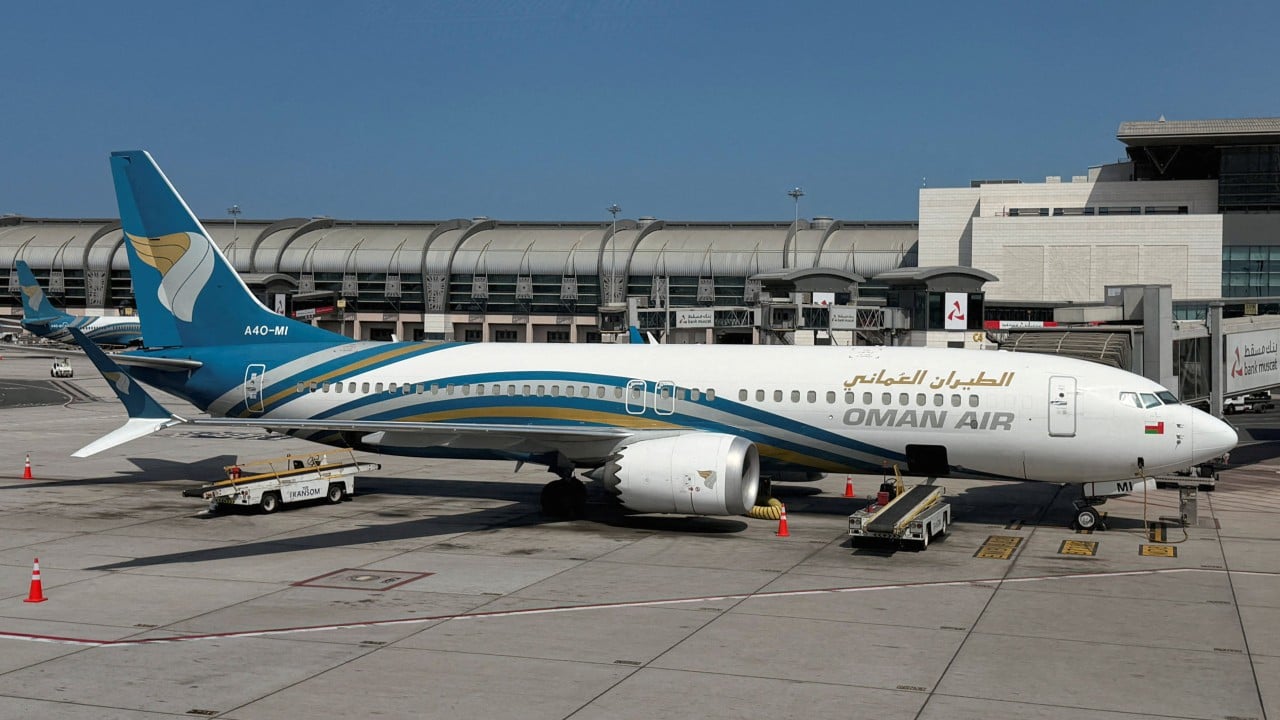
Now, a quiet shift is occurring on the tarmac in Muscat. Oman Air is changing its posture, dropping a new nonstop arrow straight into the heart of Singapore. This is not just a routine route expansion or a dry line item in a corporate press release. It is a direct challenge to the established order of the skies, and a window into how the battle for our attention, time, and comfort is shifting.
The Weight of the Giants
To understand why a single direct flight matters, you have to look at the shadow cast by the titans next door.
For the past twenty years, the script for Gulf aviation was written with absolute predictability. If you wanted to fly from the Middle East to Asia, you looked to the massive operations in Dubai or Doha. These airlines operated like giant, highly efficient factories. They bought airplanes by the hundreds. They built terminals that felt like independent city-states.
This hyper-scaling created an undeniable efficiency, but it also stripped away something vital. Travel became institutionalized. The passenger became a unit of throughput, pushed through security checkpoints and duty-free corridors designed to maximize revenue per square foot.
Oman watched this happen from its quiet corner of the Arabian Peninsula. The country has always been an anomaly in the region. It lacks the aggressive, vertical ambition of Dubai’s skyline, choosing instead to enforce strict architectural rules that keep buildings low, white, and traditional. It possesses a maritime history that predates modern oil wealth by centuries; Omani sailors were navigating the monsoon winds to reach Chinese ports while Europe was still in the Dark Ages.
When an airline like Oman Air enters a market like Singapore with a nonstop service, it is tapping into that ancient maritime DNA. It is recognizing that the shortest distance between two points is not just a mathematical reality, but a psychological one.
The Strategy of the Underdog
Aviation analysts often look at route maps as a game of risk. Flying a massive wide-body aircraft across an ocean requires an immense amount of capital. Fuel burns by the ton. Crew schedules must be meticulously balanced. If the seats are empty, the route bleeds cash with terrifying speed.
The standard industry playbook suggests that smaller regional carriers should avoid going head-to-head with the mega-airlines. Why try to compete with a carrier that runs multiple flights a day to the same destination?
The answer lies in the nuance of the experience.
When a flight is direct, the nature of the journey alters completely. You board in the evening haze of the Omani desert. The cabin quietens. You sleep without the looming anxiety of a midnight wake-up call for a connection. You wake up as the aircraft begins its descent over the crowded shipping lanes of the Malacca Strait.
For businesses operating in the post-pandemic reality, this economy of human energy has become highly valuable. Corporate travel budgets are scrutinized more than ever, but the value placed on a executive's mental clarity upon arrival has spiked. A broken night of sleep in a transit lounge is no longer seen as a badge of honor; it is viewed as an operational inefficiency.
This is the vulnerability that Oman Air is exploiting. By skipping the mega-hub entirely, they are offering an alternative to the sensory overload of modern air travel. They are betting that a growing segment of travelers will choose intimacy and directness over the sprawling options offered by larger competitors.
The Invisible Ripples
The consequences of this route extend far beyond the tourists seeking the pristine beaches of Salalah or the financial boardrooms of Singapore’s Downtown Core.
Think of the cargo hold beneath the passenger cabin. Modern commercial aviation is a twin-engine beast; passengers sit on top, while tons of high-value freight sit beneath their feet. A direct connection between Muscat and Singapore opens a fresh vein for time-sensitive commerce. Fresh seafood from the rich coastal waters of the Arabian Sea can land in Singaporean restaurants within hours of being caught. Specialized tech components from Asian manufacturing hubs can reach Omani infrastructure projects without sitting on hot tarmacs in intermediate countries.
But the most profound changes are cultural.
When two cities are joined by a single flight path, they begin to mimic each other’s rhythms. Omani students seeking world-class education in technology and urban planning find Singapore suddenly accessible. Singaporean travelers, weary of the predictable luxury of highly developed resorts, find an entry point into a country that has preserved its rugged, mountainous soul.
The challenge for Oman Air will be maintaining this distinct identity while scaling up its operations to meet the demands of a highly competitive market. The larger Gulf carriers will not simply sit back and watch their market share erode. They will respond with price adjustments, loyalty program incentives, and increased frequencies.
The aviation industry is notoriously brutal, a graveyard of ambitious ideas and collapsed companies. Success is measured in razor-thin margins and fluctuating oil prices.
Yet, as the first flights lift off from Muscat, cutting through the coastal humidity and setting a course due southeast, the narrative feels larger than mere economics. It feels like a return to an older form of travel, where a journey was a deliberate, unbroken line drawn across the map, connecting two distinct cultures with a single, elegant stroke. The outcome remains unwritten, but the sky has suddenly become a far more interesting place.