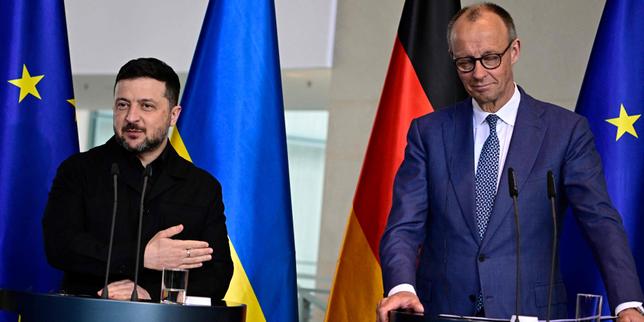
Germany just dropped a 4-billion-euro press release disguised as a military aid package. The headlines are screaming about Patriot missiles, IRIS-T launchers, and long-range attack drones. The general consensus is that this is a decisive shift in European support.
It isn’t. In similar developments, take a look at: The Ghost in the Soil and the Empty Plate.
If you look at the raw mechanics of high-intensity attrition warfare, this package is a band-aid on a gunshot wound. We are witnessing the "shopping list" fallacy: the belief that adding up big numbers and impressive-sounding hardware creates a strategic outcome. In reality, this agreement highlights the exact bottlenecks that have plagued Western intervention since February 2022. It’s time to stop counting euros and start counting rates of fire.
The Patriot Trap: Interception is Not Victory
The centerpiece of this deal is the promise of hundreds of missiles for the Patriot system. On paper, that sounds like an impenetrable shield. In practice, it’s a fiscal disaster for the defender. Al Jazeera has also covered this critical topic in great detail.
We are currently engaging in the most lopsided economic exchange in modern history. A single Patriot interceptor costs between $3 million and $4 million. The Russian-operated Shahed drones or basic cruise missiles they are intercepting often cost a fraction of that—sometimes as low as $20,000.
By shipping "hundreds" of missiles, Germany is helping Ukraine survive the night, but they are also cementing a cycle of depletion. You cannot win a war by trading a $4 million asset for a $50,000 nuisance. Eventually, the math breaks. The "success" of these systems is actually a slow-motion bankruptcy of Western stockpiles.
If this aid package didn't include a radical plan to lower the cost-per-kill—like massive investment in Gepard-style kinetic guns or directed energy—it's just a stay of execution. Germany is providing the missiles, but they aren't providing a way to win the math war.
The IRIS-T Ghost Infrastructure
The agreement mentions more IRIS-T launchers. Here is the problem nobody wants to discuss: industrial lead times.
Modern air defense systems aren't sitting on a shelf in a warehouse. They are handcrafted marvels of engineering with supply chains that stretch across dozens of borders. When a politician announces a "4-billion-euro package," they aren't saying the gear is at the border. They are saying they’ve placed an order.
I’ve seen how these defense contracts operate. A "launcher" promised today often means a delivery date in 2026 or 2027. By the time these systems arrive, the tactical reality on the ground will have shifted five times over. We are fighting a 21st-century drone war with a 20th-century procurement calendar.
The Long-Range Drone Fantasy
The buzzword of the moment is "long-range attack drones." The competitor narrative suggests these will allow Ukraine to strike deep and dismantle Russian logistics.
Let’s be blunt: range is irrelevant without scale.
Sending a few hundred, or even a few thousand, long-range drones into a theater of this size is a pinprick. For these tools to be effective, they need to be deployed in "swarm" configurations that overwhelm Electronic Warfare (EW) environments. Russia has spent the last decade perfecting the world’s most dense EW umbrellas.
A drone that can fly 500 kilometers is useless if its GPS signal is fried 10 kilometers past the line of contact. Unless this German package includes the source code for autonomous, terminal-phase AI targeting that doesn't rely on satellite links, these drones are just expensive kites. The package focuses on the "long-range" marketing tag while ignoring the "jam-resistant" technical necessity.
The Maintenance Black Hole
Four billion euros buys a lot of metal. It doesn't buy a mechanic in a trench.
The Ukrainian military is currently operating a "museum of NATO," with a dozen different platforms from a dozen different countries. Each requires specific spare parts, specific lubricants, and specific training.
- Patriot: US/German logistics.
- IRIS-T: German logistics.
- Leopard tanks: German/Dutch/Polish variants.
- Archer/Caesar/PzH 2000: Three different 155mm howitzers with three different maintenance cycles.
This package adds more complexity to an already breaking logistical spine. True support would be the standardization of the Ukrainian front. Instead, Germany is throwing more "flavor of the month" hardware into the mix. I have seen military units grind to a halt not because they lacked ammo, but because a single proprietary O-ring failed and the replacement was sitting in a depot in Mannheim.
The Industrial Reality Check
The most uncomfortable truth is that Germany’s defense industry, the Beschaffungsamt, is not geared for war. It is geared for peacetime accounting.
Even with 4 billion euros, Rheinmetall and Diehl Defence cannot simply flip a switch. They face shortages in everything from nitrocellulose (for gunpowder) to specialized microchips. When the German government signs these deals, they are often competing with their own domestic replenishment needs.
If you want to know if this package matters, don't look at the price tag. Look at the factory floor. Are they running three shifts? Are they bypassing the usual three-year certification processes for minor components? If the answer is no, the 4 billion euros is just a line item in a budget, not a change in the balance of power.
Why We Ask the Wrong Questions
People ask: "Is 4 billion enough?"
They should ask: "Can 4 billion euros actually be converted into steel and explosives fast enough to matter?"
We are obsessed with the "announcement effect." It makes for great television. It makes politicians look decisive. But 4 billion euros of "commitments" does not stop a glide bomb from hitting a position in Avdiivka today.
We are treating this war like a financial transaction. It is a physical one. If the shells aren't moving, the money doesn't exist.
The Fatal Flaw in "Incrementalism"
This package continues the trend of "just enough to not lose." By dripping support in these large, infrequent chunks, the West allows the opposition time to adapt.
Every time we introduce a new system—first Javelins, then HIMARS, now Patriot and IRIS-T—we give the Russian military a learning window. They adapt their tactics, move their nodes, and harden their EW. By the time the "next" package arrives, its primary advantage has been neutralized.
A 4-billion-euro package sounds like a hammer. In reality, it’s a series of small taps. If you want to break a wall, you hit it once with everything you have. If you tap it every six months, the wall just gets reinforced.
The Real Cost of German Hesitation
The "Nuance" the mainstream media misses is that this package is as much about German domestic politics as it is about Ukrainian defense. It is a way for the current coalition to signal "leadership" without crossing the red lines that actually matter—like the delivery of Taurus cruise missiles.
The Taurus is the one system that could actually disrupt the logistical bridgeheads this package claims to target. But the Taurus is absent. Instead, we get 4 billion euros of "defensive" and "long-range" drones that lack the kinetic punch to drop a hardened bridge.
We are substituting volume for capability. We are giving Ukraine a thousand scalpels when they need a single sledgehammer.
The Logistics of Attrition
War at this scale is a hunger game.
- Production capacity beats stockpile size.
- Standardization beats variety.
- Cost-efficiency beats raw budget.
On all three counts, this German package fails the stress test. It is a collection of high-end, low-volume, expensive-to-operate systems that look fantastic in a brochure but struggle in a war of grinding attrition.
Stop being impressed by the zeros on the check. Start looking at the lead times and the cost-per-interception. Until the West out-produces the East in basic, low-cost, high-volume munitions, these multi-billion euro packages are just expensive ways to buy time.
The frontline doesn't need a 4-billion-euro agreement. It needs a factory that never sleeps and a supply chain that doesn't require a PhD to navigate. Everything else is just noise.