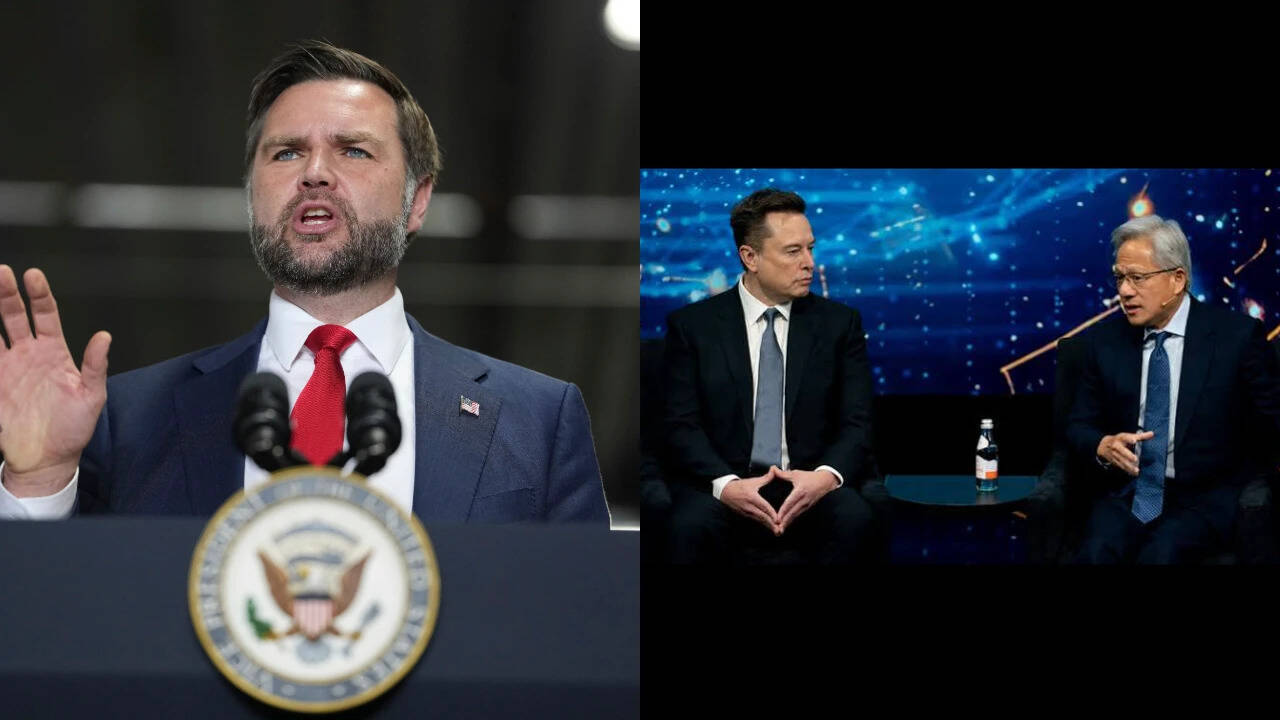
Did Vice President JD Vance really drop an F-bomb backstage while waiting for Elon Musk and Nvidia CEO Jensen Huang to finish an AI panel? According to a late October 2026 report from the Daily Mail, yes—and it was supposedly bad enough that aides had to remind event organizers who holds the second-highest office in the country. According to Vance’s office and at least one on-the-ground event organizer, the whole thing is a "complete fabrication" that never happened.
When two massive egos from Silicon Valley share a stage with a sitting Vice President waiting in the wings, rumors travel fast. Let's look at the actual timeline of the event, what the competing accounts claim, and why a backstage scheduling clash in Washington is drawing so much political scrutiny right now.
The Timeline of the America.gov Launch
To understand why tempers allegedly flared—or why the rumor sounded plausible to political observers—you have to look at the calendar for September 29, 2026.
That day, the administration hosted the official launch of America.gov at the Andrew W. Mellon Auditorium near the National Mall in Washington, D.C. Built through a collaboration between the U.S. General Services Administration (GSA) and the White House's National Design Studio, America.gov is an artificial intelligence platform designed to streamline how citizens access government services and public information.
The guest list read like a who's who of tech and administration heavyweights:
- Elon Musk and Jensen Huang, who took the stage together for a headline discussion on artificial intelligence and global tech competition.
- Vice President JD Vance, scheduled to follow them for a fireside chat with Airbnb co-founder and U.S. Chief Design Officer Joe Gebbia.
- Former White House press secretary Karoline Leavitt, along with various communications staffers and administration officials.
Here was the logistical catch. Vance wasn't just hanging out at the Mellon Auditorium with an open afternoon. Immediately after his chat with Gebbia, the Vice President was slated to appear alongside Health and Human Services Secretary Robert F. Kennedy Jr. at a Make America Healthy Again (MAHA) summit. In Washington, a 30-minute delay at one venue doesn't just annoy the speakers; it throws Secret Service motorcades, press pools, and downstream events into chaos.
What the Daily Mail Report Claims Happened
According to the Daily Mail's reporting—which was subsequently picked up by outlets including the Times of India, Irish Star, and Raw Story—the schedule started slipping while Musk and Huang were onstage.
As the two tech leaders extended their conversation past the 30-minute mark, Vance was allegedly waiting backstage watching the clock tick down on his MAHA summit commitment. Sources cited by the Daily Mail claimed the Vice President lost his cool in front of his communications team and other staffers, reportedly yelling at aides to get the two executives "the [expletive] off" the stage.
The report went further, describing a tense scramble in the production area. Vance's aides allegedly approached event planners to warn them that the Vice President would have to be pulled from the lineup altogether if Musk and Huang didn't wrap up immediately. During that exchange, staffers were reportedly overheard reminding organizers, "Vance is the Vice President of the United States."
Eventually, Musk and Huang concluded their discussion, and Vance took the stage with Gebbia as planned, albeit roughly half an hour behind schedule.
The Pushback From Vance's Team and Organizers
When the story broke weeks after the event, the pushback from the Vice President's camp was immediate and blunt. Spokespeople for Vance dismissed the account outright, calling it a "complete fabrication" and insisting the outburst never occurred.
Unlike many Washington "he-said, she-said" disputes where officials offer carefully worded non-denials, an event staffer involved in organizing the America.gov launch also went on the record to dispute the Daily Mail narrative. Christina Bonarrigo stated publicly that she had worked closely with both Vance's team and the other panelists throughout the event and saw no evidence of a meltdown.
"Having worked closely with his team and other panelists, I can say he never raised his voice, used profanity or showed any frustration," Bonarrigo said.
Official White House photography from September 29 confirms the basic movement of the day: Vance appeared onstage with Gebbia at the Mellon Auditorium and later joined Kennedy at the MAHA summit. As IBTimes UK noted in its coverage of the dispute, those images naturally capture public appearances rather than backstage conversations, leaving the public with two irreconcilable versions of what happened behind the curtain.
Why This Rumor Caught Fire in Washington
Honestly, whether Vance swore backstage or stayed completely calm, the reason this story exploded across political and tech media has very little to do with profanity. It has everything to do with friction between populist politics and Silicon Valley power.
The Silicon Valley Dynamic
Throughout 2025 and 2026, the relationship between Vance and prominent tech executives has been complicated. While Vance came out of the venture capital world before entering politics, his populist economic messaging—particularly around labor, regulation, and domestic manufacturing—hasn't always aligned neatly with Big Tech's priorities. Reports surrounding the alleged outburst explicitly tied the story to broader chatter about Vance's standing with Silicon Valley donors and executives.
The Musk Factor
Whenever Elon Musk is in a room, questions of protocol and deference follow. Musk operates on his own clock, whether he's running SpaceX, xAI, or speaking at a federal AI launch. Previous viral moments—including a March 2025 incident where Vance had to publicly call out a fake, AI-generated audio clip impersonating him criticizing Musk—show just how eager internet commentators are to spot a rift between the two men.
Protocol vs. Celebrity
In traditional Washington protocol, nobody keeps the Vice President waiting. The Vice President is the final speaker before the President, and schedules are built around their motorcade movements. At a tech conference, however, the tech titans are often treated as the main draw. When those two worlds collide in the same auditorium, even a routine 20-minute overrun looks like a power struggle.
How to Read Behind-the-Scenes Political Leaks
When you come across conflicting stories like this—anonymous sources describing a profane tirade on one side, named staffers and official spokespeople calling it pure fiction on the other—it helps to apply a few basic filters before taking the headline at face value.
- Check who is on the record. Anonymous "sources" in tabloid reporting often have axes to grind, whether they're rival staffers, disgruntled contractors, or political opponents trying to paint an official as volatile. Named denials—especially from third-party event organizers rather than just press secretaries—carry real reputational risk for the person speaking.
- Look at the timing of the leak. The America.gov launch happened on September 29, 2026, yet the Daily Mail story didn't surface until October 22—more than three weeks later, right in the heat of the 2026 midterm election cycle. Delayed leaks in October almost always serve a broader political narrative rather than breaking news.
- Separate the verifiable facts from the color. We know for a fact that Musk and Huang spoke before Vance and Gebbia at the Mellon Auditorium on September 29. We know the event ran roughly 30 minutes behind schedule before Vance's MAHA summit appearance. Everything else—the exact words spoken in the green room, the tone of voice, and the alleged aides' warning—remains unverified and contested.
If you're following how the administration manages its alliance with major AI leaders heading into 2027, watch policy decisions—like federal AI procurement contracts, export controls, and regulatory accords—rather than unconfirmed green-room gossip. Policy tells you where the actual leverage sits.