The envelope does not arrive with sirens. It slides through a brass mail slot on a Tuesday morning in Copenhagen, landing softly on linoleum worn smooth by twenty years of footsteps, groceries, and children’s boots.
To understand what happened inside Denmark’s highest court, you first have to stand in a hallway like that one. If you liked this post, you might want to look at: this related article.
Imagine—as a hypothetical composite drawn from the lived reality of thousands of Danish tenants—a retired seamstress named Amina. She has paid her rent on the first of every month since the late nineties. She knows the baker on the corner by his first name, argues gently with her neighbors about bicycle parking, and waters geraniums on a narrow concrete balcony overlooking a courtyard in Mjølnerparken. Her Danish passport sits in a kitchen drawer beside unpaid utility receipts and grandchildren’s drawings. On paper, she is a citizen. In the eyes of the state’s housing map, however, she is a percentage point.
And recently, the Supreme Court of Denmark decided that counting her that way is legal. For another perspective on this event, refer to the recent update from NPR.
The ruling upheld the core machinery of Denmark’s controversial anti-ghetto legislation—officially rebranded by politicians as the "parallel society" laws—affirming that the state can classify neighborhoods using ethnic origin and mandate the demolition, sale, or forced restructuring of public housing blocks when those thresholds are crossed.
Cold legal language calls it administrative classification. For the families watching surveyors measure their courtyards, it feels like watching the floor vanish beneath a home you spent decades building.
The Architecture of a Label
Numbers rarely bleed, which is why governments love them.
Under the law passed in 2018 and refined in subsequent years, Denmark’s Ministry of Transport and Housing publishes an annual list every December. Until 2021, the government openly called the worst-ranked estates "hard ghettos." Today, the official term is "transformation areas," though almost everyone in Copenhagen, Aarhus, and Odense still uses the old word—some with defiance, others like a bruise they cannot stop pressing.
To land on the list, a public housing estate of at least 1,000 residents must trip a specific combination of statistical wires. Unemployment rates. Low income levels. Criminal convictions. Low educational attainment. All four are socioeconomic metrics, the familiar tools of urban planners trying to spot poverty before it calcifies.
Then comes the fifth wire.
If more than fifty percent of a neighborhood’s residents are "immigrants or descendants from non-Western countries," the area crosses a threshold that triggers drastic intervention. Once an estate remains in that top tier for several consecutive years, housing associations are legally required to slash the share of family public housing down to forty percent by 2030.
Think about what that math actually demands. You cannot shrink a brick apartment block with a spreadsheet. To reduce public housing from eighty percent to forty percent, you either sell buildings off to private developers, convert apartments into youth or senior units, or bring in bulldozers and tear the walls down.
Thousands of residents across Denmark have already been evicted or relocated under this mandate.
When tenants from Mjølnerparken—one of Copenhagen’s most famous social housing complexes—took the Danish state to court, they were not arguing that poverty is imaginary or that integration is easy. They were asking a deceptively simple question: Can a modern European democracy decide who loses their home based on where their parents were born?
The Supreme Court answered yes.
Inside the Courtroom Logic
I still remember the first time I walked through a Danish almen bolig—the non-profit public housing system that has long been one of Scandinavia’s proudest social inventions. Unlike the stigmatized housing projects of other countries, Danish public housing was built for teachers, bus drivers, nurses, and factory workers alike. Roughly one in five Danes lives in it. The lawns are trimmed. The laundry rooms hum cleanly. Democracy is woven into the leases; tenants vote on courtyard renovations and maintenance budgets.
That history makes the current rupture so disorienting.
In challenging the law, residents and human rights advocates argued that using "non-Western" ancestry as a legal trigger constitutes direct ethnic discrimination under both the European Convention on Human Rights and European Union law. Even after the European Court of Justice weighed in on preliminary questions—noting that distinctions tied to ethnic origin carry heavy scrutiny and could amount to direct discrimination unless strictly justified—the legal battle returned to Copenhagen with enormous stakes.
Denmark’s Supreme Court did not deny that the law treats people differently based on background. Instead, the judges leaned into proportionality and legislative intent. In the court’s reasoning, Parliament pursued a legitimate aim: preventing social isolation, improving school outcomes, breaking up concentrations of disadvantage, and strengthening social cohesion. Because the measures were tied to broader integration goals and accompanied by rehousing obligations, the court concluded that the policy did not cross the line into unlawful discrimination.
Legally, the gavel fell with crisp finality.
Emotionally, it left a fog that refuses to lift.
Consider what happens next when a legal distinction becomes an everyday reality. Suppose two neighbors live on the exact same stairwell. Both earn modest wages. Both send their kids to the local public school. One neighbor has grandparents from Jutland; the other has parents from Beirut or Mogadishu. Under the statutory formula, one presence stabilizes the neighborhood’s statistical health, while the other pushes the building closer to demolition.
Try explaining that arithmetic to a twelve-year-old sitting at a kitchen table doing Danish grammar homework.
Why Denmark Built This Machine
To understand how a country celebrated for hygge, bicycle lanes, and egalitarian trust arrived here, you have to look past caricatures of villainy and confront a genuine political anxiety.
For decades, Denmark prided itself on a generous welfare state built on high taxes and high social trust. That model works smoothly when nearly everyone participates in the labor market and shares unwritten civic habits. When large waves of refugees and labor migrants arrived from the 1970s through the 2010s, municipal housing rules often concentrated newcomers in suburban concrete estates built during the post-war boom—places like Vollsmose in Odense, Gellerupparken in Aarhus, and Tingbjerg in Copenhagen.
Over time, warning signs accumulated. In certain pockets, unemployment lingered across generations. Local schools became overwhelmingly minority-enrolled, prompting middle-class families—both ethnic Danish and immigrant—to move away. Parallel norms hardened in isolated courtyards.
Mainstream Danish politics did not merely drift rightward on immigration; it underwent a structural realignment. Even the center-left Social Democrats, under Prime Minister Mette Frederiksen, embraced the premise that cultural and demographic concentration itself threatens the survival of the welfare state. Their argument was blunt: if parallel societies grow, public support for universal welfare will collapse, and everyone—newcomers included—will lose.
That perspective deserves to be heard honestly, because ignoring it turns complex policy into a cartoon. You can recognize real challenges in segregated housing without endorsing the cure.
The trouble is the instrument Denmark chose to solve the problem.
Instead of investing exclusively in language schools, targeted policing, early childhood support, or mixed-income incentives across the entire city, lawmakers drew red circles around specific postcodes and attached a demographic quota to brick and mortar.
It is a bit like trying to cure a fever by shattering the thermometer—and then demolishing the bedroom.
The Invisible Taxes of Being Counted
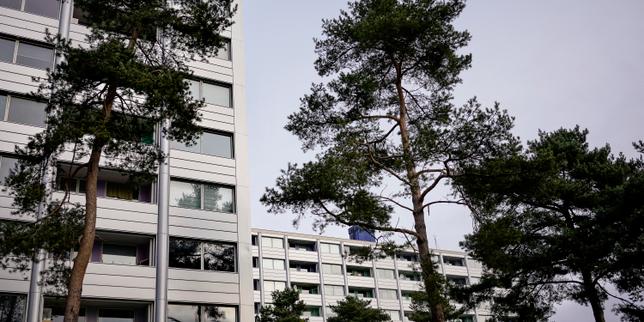
Walk through Mjølnerparken on an overcast afternoon and you will not see a war zone. You will see red-brick buildings arranged around tidy inner courtyards, children chasing a scuffed football near a playground slide, mothers wheeling strollers past community notice boards.
What you cannot see in a photograph is the slow psychological erosion caused by living inside an expiration date.
When a neighborhood is labeled a "transformation area," time changes shape. Why paint the hallway if the building is slated to be sold to a private equity landlord? Why plant perennials in the courtyard? Why invest energy in tenant boards when the state has already decided the community’s composition is a failure?
Even more corrosive is the double standard baked into daily civic life. Under the broader legislative package, residents in designated areas have faced harsher criminal penalties for identical offenses committed within those geographic zones—meaning a theft or act of vandalism carries double the punishment depending on which side of a street sign it occurred. Parents have faced mandatory daycare requirements for toddlers starting at age one, backed by threats to cut welfare benefits if attendance slips.
Imagine living in a country where crossing an invisible municipal boundary alters the criminal code, dictates when your toddler must leave home, and determines whether your apartment building survives the decade.
People adapt, because human beings always adapt. They pack boxes. They accept replacement flats miles away from their mosques, their clinics, and the elderly aunt who watches the kids after school. They smile politely at caseworkers holding clipboards.
Yet something quiet breaks in the exchange. Trust—the very currency Denmark claims to be protecting—does not grow when citizens discover that their passport carries an asterisk.
The Ripple Beyond Jutland
If this were solely a Danish domestic quarrel, the rest of Europe might watch from a polite distance. It is not.
Across the continent—from Sweden’s suburbs to French banlieues, from Dutch social housing districts to German industrial towns—governments are wrestling with the same tense equation: how to sustain solidarity in increasingly diverse societies without sacrificing equal treatment before the law.
Politicians in Stockholm, Berlin, and Paris have studied the Danish playbook with a mixture of fascination and unease. For years, critics warned that Denmark’s explicit use of "non-Western" origin would inevitably collide with European anti-discrimination law and collapse under judicial review.
Now, Denmark’s highest court has handed those politicians a precedent.
By validating the law’s proportionality, the ruling signals that states possess wide latitude to engineer residential demographics so long as they frame the goal around integration and social cohesion. It lowers the legal taboo against classifying citizens by ancestral geography.
History suggests that administrative categories rarely stay confined to the emergencies that birthed them. Once a government normalizes the idea that certain citizens are statistically excessive in one neighborhood, the logic quietly invites expansion. Today it is public housing estates over a thousand residents. Tomorrow, why not school districts? Municipal hiring pools? Zoning permits?
Law is a habit before it is a rule.
What Remains After the Bulldozers
I keep thinking about that hypothetical seamstress, Amina, and the real neighbors whose names fill court filings in Copenhagen.
Many of the families fighting these evictions are not estranged from Danish society at all. They are bus drivers on the night shift, pharmacy assistants, engineering students at the Technical University of Denmark, eldercare workers bathing ethnic Danish pensioners in municipal nursing homes. They fought the state in court because they believed in Danish institutions—because they trusted that a courtroom would look past surnames and see citizens standing on equal ground.
They lost the case, yet they forced the country to look directly at the machinery it built.
You cannot bulldoze your way into belonging. You can scatter families across postal codes, lower a percentage on a ministry spreadsheet, and declare victory in a press release. Bricks fall quickly when the cranes arrive.
Belonging moves at a slower speed. It lives in whether a child feels safe walking through her own front door without wondering if the country outside is quietly calculating how many people like her are too many.