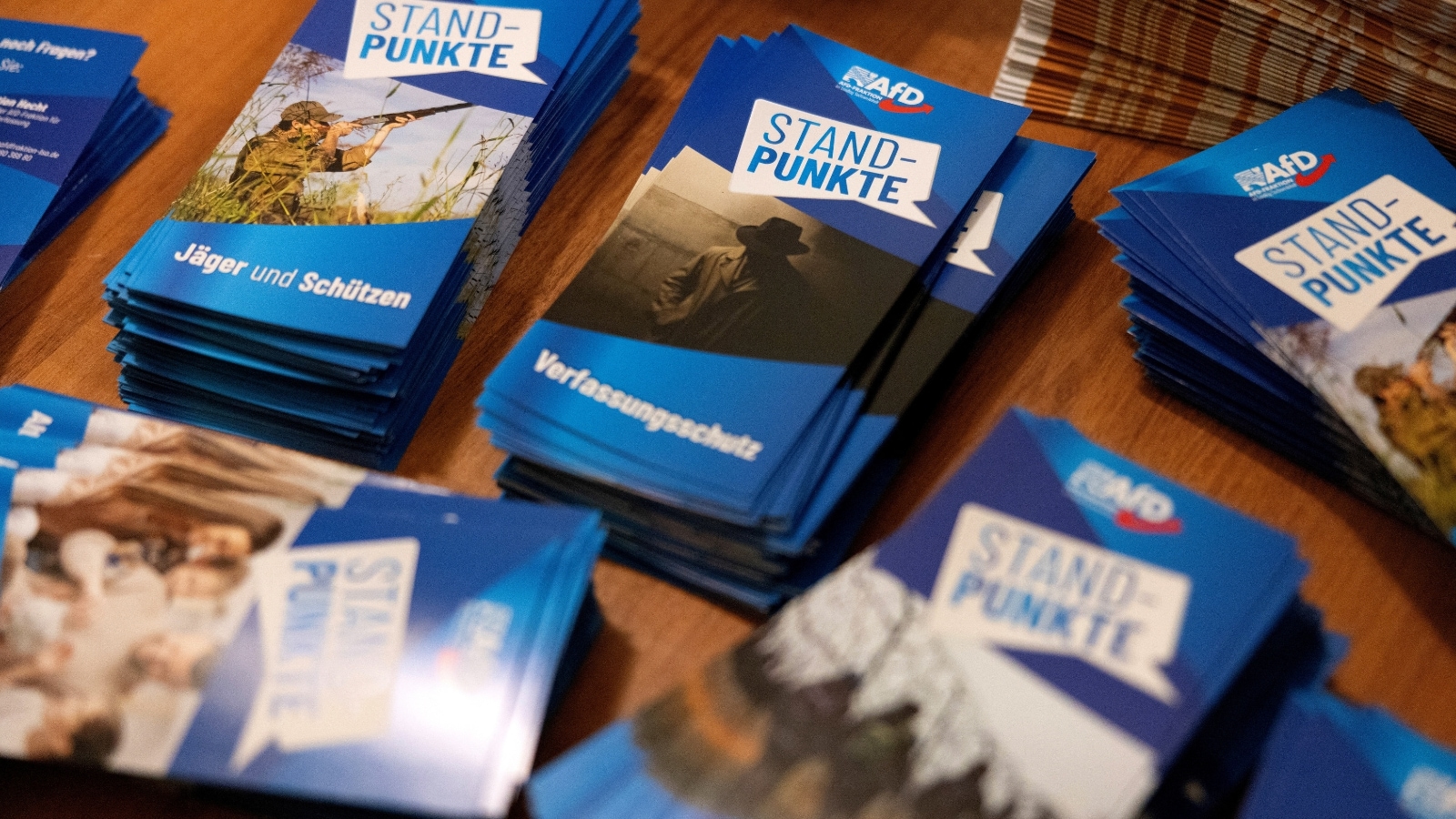
The mainstream media is having another collective meltdown over the Alternative for Germany (AfD). The latest trigger? Reports that a high-ranking AfD official quietly slipped into Moscow to meet with a top adviser to Vladimir Putin and the boss of state-owned energy giant Gazprom.
The immediate commentary wrote itself. Outraged pundits screamed "treason," "fifth column," and "Kremlin puppets." The lazy consensus across Western newsrooms is that the AfD is merely a group of ideological lackeys doing Moscow’s bidding to destabilize European democracy.
That narrative is intellectually lazy, historically blind, and fundamentally misdiagnoses what is actually happening.
What the establishment calls a treasonous backchannel is actually something far more grounded in German history: a calculated revival of Ostpolitik. The AfD isn't acting as Putin’s useful idiots. They are positioning themselves as the sole heirs to Germany’s decades-long tradition of mercenary energy pragmatism. While Berlin’s current coalition burns its own industrial base on the altar of geopolitical moralizing, the far-right is playing a brutal, logical game of economic survival that appeals directly to the German voter's deepest anxieties.
The Blind Spot of Western Outrage
To understand why the mainstream analysis fails, you have to look at what the competitor articles conveniently omit. They focus entirely on the optics of the meeting—the optics of a right-wing populist shaking hands with a Gazprom executive while the war in Ukraine rages. They treat it as an isolated act of ideological deviance.
This perspective ignores the foundational reality of the German post-war economy.
Germany did not become an industrial powerhouse through sheer manufacturing wizardry alone. It built its economic miracle on cheap, reliable, uninterrupted Russian natural gas. For fifty years, through the height of the Cold War, through the collapse of the Soviet Union, the gas flowed.
When the current German government decided to cut ties with Russian energy after 2022, they didn't just punish Moscow. They structurally crippled Germany.
The Price of Geopolitical Purity
Let’s look at the hard numbers that the outrage merchants prefer to ignore:
- Energy Costs: German manufacturers are currently paying up to three times more for electricity than their American competitors, largely due to the reliance on expensive imported Liquefied Natural Gas (LNG).
- Deindustrialization: Production in energy-intensive sectors in Germany has plummeted by nearly 20% since the energy crisis began. BASF, the pride of German chemical engineering, is cutting thousands of jobs at its Ludwigshafen headquarters and shifting investments to China.
- The Subsidies Mirage: Berlin is attempting to paper over the cracks by throwing tens of billions of euros in subsidies at foreign chipmakers like Intel and TSMC. But you cannot subsidize your way out of a structural energy deficit.
The AfD understands this economic bleeding intimately. While the center-left SPD and the Greens lecture the public on the necessity of sacrifice, the AfD is the only party explicitly telling the German electorate: Your financial ruin is a policy choice.
By sending an official to meet with Gazprom, the AfD is signaling to German small-business owners (the Mittelstand) and industrial workers that they have a plan to turn the cheap energy taps back on. It is not about loving Putin; it is about loving German industrial survival.
The Ghost of Willy Brandt
The media treats the AfD’s Moscow ties as a radical departure from German tradition. In reality, it is a direct copy of the most celebrated foreign policy doctrine in modern German history: Willy Brandt’s Ostpolitik.
In the late 1960s and 1970s, Brandt, the Social Democratic Chancellor, recognized that ignoring the Soviet bloc was a strategic dead end. He pioneered a policy of "change through rapprochement" (Wandel durch Annäherung). The core thesis was simple: engage economically and diplomatically with Moscow to reduce tensions and secure German interests, regardless of ideological differences.
Every major German political party embraced this for half a century. It gave birth to the original Nord Stream pipelines, championed by former SPD Chancellor Gerhard Schröder and fiercely protected by Christian Democrat Angela Merkel.
When the AfD sends an emissary to Moscow, they are tapping into this exact historical playbook. They are gambling that beneath the current layer of public outrage, the German electorate retains a deep, historical memory of stability brought by Ostpolitik. They are betting that when the winter bills arrive and inflation refuses to die, pragmatism will override principles.
Dismantling the "Kremlin Puppets" Premise
The common question asked in political talk shows is: "How do we stop Russia from co-opting the AfD?"
The premise of the question is flawed. It assumes a one-way street where Moscow pulls the strings and the AfD dances. This misjudges the transactional nature of populist politics.
The AfD is utilizing Russia just as much as Russia is utilizing the AfD. In politics, relevance is currency. By securing direct access to Kremlin decision-makers and Gazprom leadership, the AfD achieves something the current German government cannot: a viable, alternative economic narrative.
Imagine a scenario where the German economic stagnation deepens into a full-scale depression. The AfD can stand before the electorate and say, "We have already spoken to the suppliers. We can fix this next week. The only thing standing between you and cheap heating is the current government's stubbornness."
That is an incredibly potent electoral weapon. It transforms the AfD from a mere protest party against immigration into a government-in-waiting with a distinct economic solution.
The High-Stakes Risk of the Mercenary Approach
To be clear, this strategy is laced with catastrophic risks, and the AfD is walking a razor-thin tightrope.
First, it completely alienates Germany from its European and NATO allies. A Germany that cuts a unilateral energy deal with Moscow is a Germany that fractures the European Union permanently. For a nation whose security is entirely guaranteed by the Western alliance, burning bridges with Washington and Paris for short-term economic relief is a massive gamble.
Second, it assumes Russia is a reliable partner. The old Soviet Union prided itself on never missing a gas delivery, even during the Cuban Missile Crisis. But the modern Russian state has shown it is entirely willing to weaponize energy flows for immediate tactical gains. The AfD is betting that Russia needs the German market as much as Germany needs Russian gas. In an era where Moscow is rapidly building pipelines to China and India, that assumption might be outdated.
But pointing out these risks does not change the domestic political calculus. In a democracy, voters care about their immediate economic reality far more than abstract geopolitical grand strategy.
Stop Demanding Morality in an Economic War
The establishment media will continue to publish panicked exposés about AfD officials meeting with Russian elites. They will continue to treat it as a moral failing.
They are missing the point entirely.
This is not a debate about morality; it is a battle for the future of the European industrial core. The AfD has realized what the ruling coalition refuses to admit: you cannot run a first-world industrial economy on moral superiority and expensive American LNG.
By engaging with Gazprom, the AfD has exposed the central vulnerability of the modern European political class. They have shown that while the establishment talks about values, the populist right is talking about the cost of doing business. Until the defenders of the status quo find a way to lower energy costs and save German industry without Russian gas, the path to Moscow will remain the most potent political route in German politics.
Stop looking for hidden conspiracies. It is just cold, calculated self-interest, played out on a geopolitical stage.