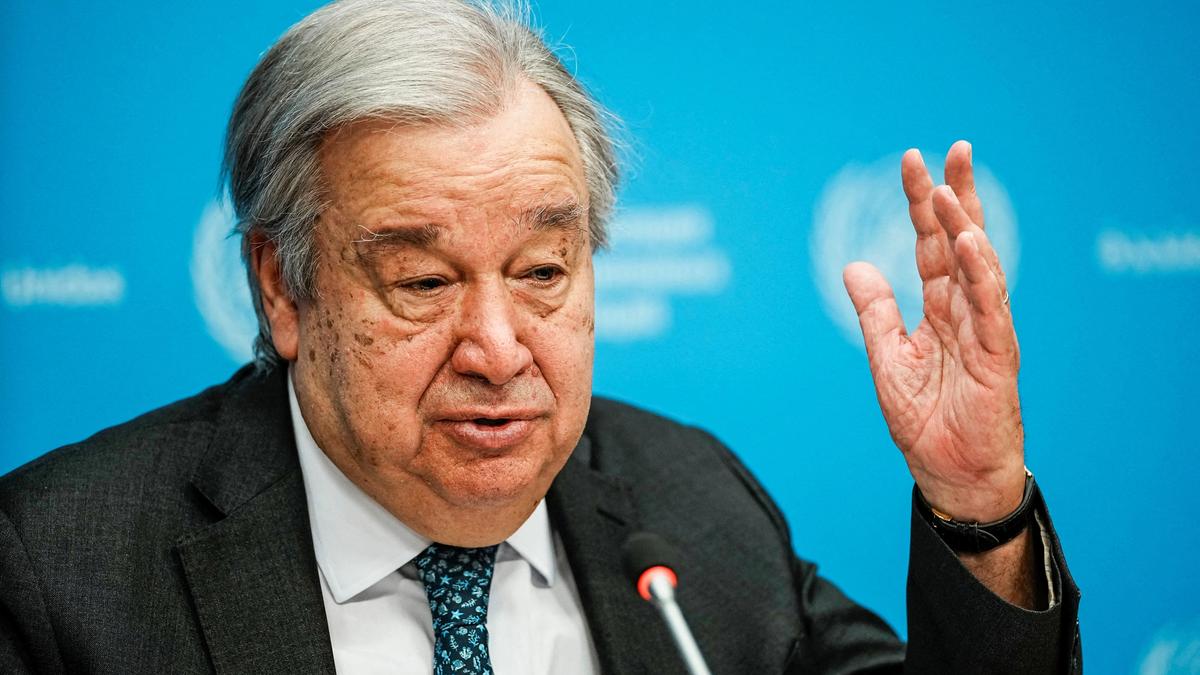
The Durand Line has always been a powder keg, but right now, it’s exploding. On February 27, 2026, Pakistan’s Defense Minister Khawaja Asif didn't just issue a warning; he declared an "open war" against Afghanistan. This isn't just another border skirmish or a war of words between disgruntled neighbors. We’re seeing a total collapse of the fragile relationship between Islamabad and the Taliban, a shift that has forced UN Secretary-General António Guterres to call for an immediate end to the madness.
Guterres is "deeply concerned," a phrase the UN uses often, but the data backing it up is legitimately terrifying. The current escalation involves Pakistani fighter jets bombing major Afghan cities like Kabul and Kandahar. In response, the Taliban’s Islamic National Army has been hammering Pakistani military posts along the border. If you think this is just a regional spat, you’re missing the bigger picture of how quickly a humanitarian catastrophe can scale.
The Breaking Point of a Failed Alliance
For decades, Pakistan was the Taliban's biggest backer. Now, they’re trading artillery fire. The core of the issue is the Tehreek-e-Taliban Pakistan (TTP), often called the Pakistani Taliban. Islamabad says the TTP uses Afghan soil as a base to launch deadly attacks inside Pakistan, including a brutal bombing of a mosque in Islamabad earlier this February.
The Taliban in Kabul denies this, but the numbers tell a different story. The TTP has emerged as the fastest-growing militant group in the region, with a 90% increase in attributed deaths over the last year. Pakistan’s patience basically evaporated when their "Operation Khyber Storm" failed to neutralize the threat through surgical strikes. Now, they're hitting urban centers, and the Afghan Taliban is hitting back.
Why Guterres Is Sounding the Alarm
When the UN chief speaks up, he’s looking at the 22 million Afghans already on the brink of starvation. It’s not just about the soldiers on the front lines.
- Civilian Toll: Recent strikes in Nangarhar and Paktika killed at least 18 people, including women and children.
- Border Chaos: The Torkham border crossing, a vital artery for food and medicine, has become a target. A transit center there was recently hit, making it even harder for aid to get through.
- Funding Gap: The UN’s humanitarian plan for Afghanistan is currently only 11% funded. They need $1.7 billion; they have $181 million.
Guterres isn't just worried about the bombs; he’s worried about the total collapse of the aid pipeline. If the fighting doesn't stop, that 22 million figure is going to skyrocket. You can't feed a country when its main trade routes are being shelled and its airspace is a combat zone.
The Dangerous Logic of Open War
Pakistan’s declaration of "open war" is a massive gamble. By targeting Kabul and Kandahar—the political and ideological hearts of the Taliban—Islamabad is trying to force a domestic crackdown on the TTP. But the Taliban isn't a monolith, and their leader in Kandahar isn't exactly known for bowing to foreign pressure.
Instead of a crackdown, we're seeing retaliation. The Taliban claims to have destroyed nearly 20 Pakistani check posts and captured more than a dozen positions along the border. While Pakistan disputes these numbers, the fact that we're even discussing "captured posts" shows how far this has gone beyond a typical border dispute.
What Needs to Happen Now
Diplomacy feels like a pipe dream when jets are in the air, but it’s the only way out. Countries like Qatar and Türkiye have tried to mediate before, and those channels need to be reopened immediately.
- Stop the Air Strikes: Targeting major cities is a red line that only guarantees more Taliban retaliation on Pakistani soil.
- Verify the Militant Camps: Independent monitoring of the border regions could help settle the "safe haven" accusations that fuel this fire.
- Fund the Aid: If the international community wants to prevent a refugee crisis that spills into Europe and Asia, they have to put up the money for the UN's response plan.
The situation is fluid, and honestly, it looks bleak. But the first step is recognizing that this isn't a "simmering" conflict anymore—it's a full-blown fire. You should keep a close eye on the Torkham and Chaman border status, as these are the primary indicators of whether the two sides are actually willing to step back from the edge.