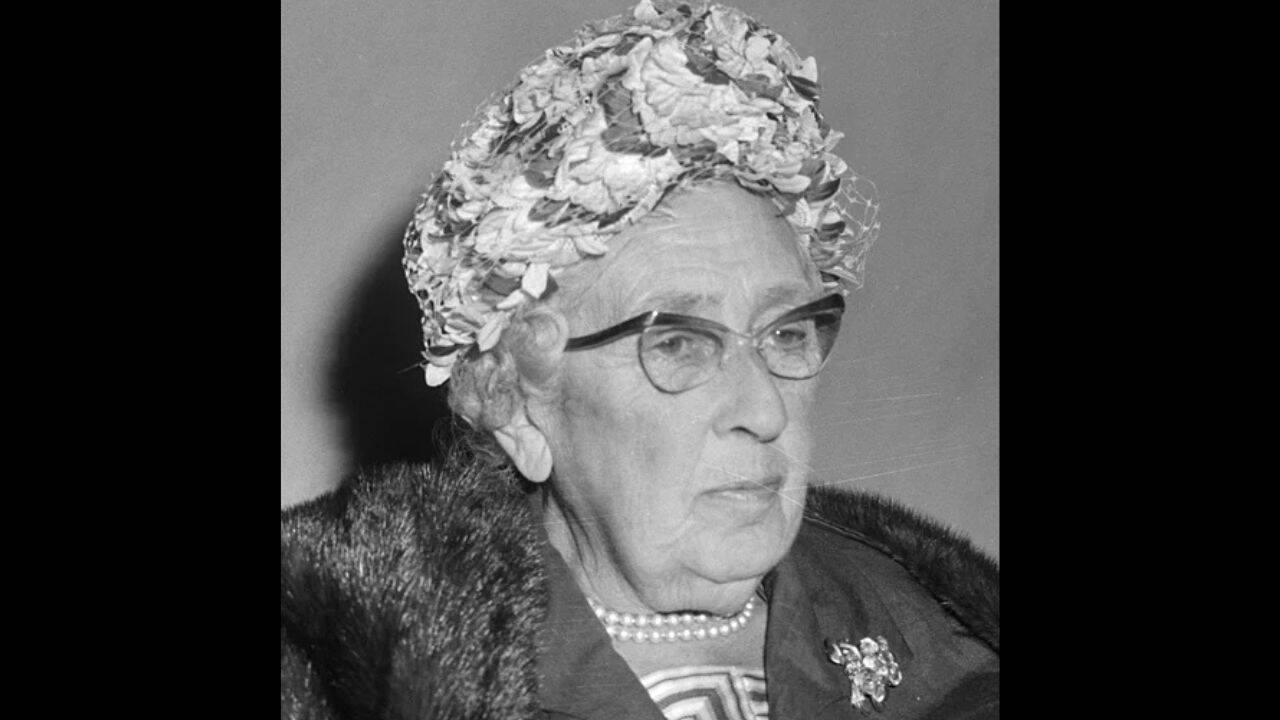
"If you place your head in a lion's mouth, you cannot complain if it happens to bite it off." Agatha Christie wrote those words with the dry, clinical precision of someone who spent decades watching human beings walk willingly into operational traps.
People love quoting the Queen of Mystery for her clever plot twists. They miss the brutal pragmatism beneath her prose. Christie was not offering a quaint metaphor for dramatic flair. She was detailing a fundamental law of voluntary exposure. When you deliberately insert yourself into a situation defined by inherent volatility, you surrender the right to protest when that volatility executes its natural function.
Modern culture ignores this warning on an hourly basis. From corporate boardrooms to high-stakes personal ventures, participants routinely court absolute disaster, secure in the belief that social contracts or safety nets will protect them from their own calculated recklessness.
Then the teeth close. And the shock begins.
The Architecture of Voluntary Exposure
Human psychology possesses a fascinating blind spot regarding self-inflicted danger. We calculate the upside with meticulous detail while treating the downside as a theoretical abstraction.
Consider the mechanics of high-risk gambits. A founder signs a predatory term sheet with an aggressive investor. An executive ignores compliance warnings to hit a quarterly growth target. An individual hands over personal autonomy to a volatile partner because the initial rewards feel intoxicating. In every single instance, the participant knows the risk profile. They see the jaws wide open. They choose to step inside anyway, seduced by the illusion of control.
Control is the narcotic that powers every dangerous entry. The person placing their head in the lion's mouth rarely believes they will be bitten. They believe they possess a special exemption. They assume their charm, their speed, or their unique intellect will allow them to extract their skull before the jaws snap shut.
This is where Christie's observation becomes a diagnostic tool. The moment of entry is the only moment that truly matters. Once the head crosses the threshold, agency shifts entirely to the animal.
The Myth of the Unfair Bite
When a high-risk venture collapses, a predictable cultural ritual follows. The victim demands justice. They hold press conferences, file lawsuits, or flood public forums with complaints about how unfair the outcome was.
The lion did not cheat. The lion behaved exactly like a lion.
In professional and personal arenas, we frequently label systemic outcomes as betrayals when they are actually just predictable consequences. Markets punish over-leveraged portfolios. Corrupted institutions eventually turn on compromised participants. Volatile environments produce volatility.
Expecting mercy from a system designed to extract value is the ultimate form of self-delusion. When individuals or organizations bypass standard safeguards for a shortcut, they implicitly accept the terms of the environment. Complaining about the aftermath is an exercise in absurdity.
Industry veterans recognize this dynamic immediately. They have watched brilliant operators destroy decades of goodwill for a single, high-stakes gamble. They have listened to the subsequent rationalizations. The common denominator in every disaster is the refusal to accept personal accountability for the initial entry point.
Navigating the Threshold
How do you operate in high-stakes fields without losing your head, literally or metaphorically?
First, strip away the optimism bias. Before making a major move, audit the worst-case scenario with total emotional detachment. If the worst-case scenario involves total ruin, and the environment has the structural capacity to deliver it, do not enter. No upside justifies an unrecoverable downside.
Second, abandon the grievance mindset. If you choose to play in a corrupted market, deal with untrustworthy partners, or bypass safety protocols for speed, accept the risk of loss as a toll. Do not waste energy on outrage when the inevitable occurs. Outrage is just camouflage for poor risk assessment.
Third, maintain absolute exits. True professionals never trap themselves in a position where survival depends on the cooperation of an adversary. If you cannot pull back instantly, you are no longer managing risk. You are gambling.
Agatha Christie understood human nature because she studied its terminal flaws. She knew that people rarely fall into ruin by accident. They crawl in, eyes wide open, whispering justifications to themselves until the dark snaps shut.