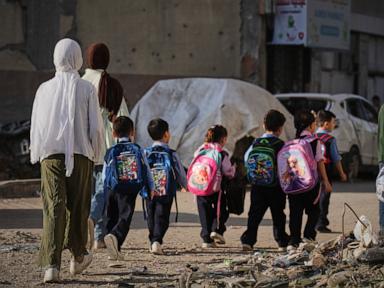
Technology companies love solving human problems with algorithms. They look at messy, complex, high-stakes environments and see a data pipeline. But dropping automated speech monitors into classrooms in Gaza isn't just tone-deaf. It's dangerous.
When a US charity announced plans to use artificial intelligence to screen classroom interactions for hateful speech, the tech world nodded along. They thought it was smart management. They called it modern safety. But if you spend five minutes looking at how language actually works under occupation, trauma, and constant artillery fire, the entire premise collapses.
Let's talk about what happens when Silicon Valley logic meets a war zone.
The Core Problem with Automated Speech Monitoring
Speech isn't binary. Kids don't talk like corporate HR manuals. They use slang, sarcasm, emotional outbursts, cultural idiom, and hyperbole. When you drop an automated monitor into a school, you're relying on pattern recognition software trained on Western datasets.
What happens to a student who vents rage about destruction? What happens to a teacher quoting traditional poetry or political rhetoric that an algorithm flags as inflammatory? The system doesn't understand context. It flags keywords. It creates a chilling effect where children learn to self-censor not just out of social grace, but out of fear that a machine will report them.
Charities mean well. They want donor accountability. They want to prove that educational grants aren't funding radicalization. Yet, outsourcing the surveillance of traumatized children to an opaque code base trades real human mentorship for automated paranoia.
Context Always Gets Lost in Translation
Nuance disappears when you compress human expression into code. In Arabic, idioms and political discourse carry heavy emotional weights that shift depending on the speaker, the tone, and the neighborhood. Automated tools struggle with high-context languages, let alone dialects spoken under extreme duress.
Imagine sitting in a classroom where every sentence faces algorithmic scrutiny. Kids stop speaking freely. Teachers spend more time managing software flags than managing minds. Instead of creating a safe space for learning and healing, the classroom becomes an anxiety chamber.
We have to ask who benefits from this setup. Donors get peace of mind through a neat dashboard metric. The charity gets a tech-forward badge of honor. But the kids? They shoulder the burden of proving they are innocent to a piece of software that cannot even comprehend why their school was rebuilt three times.
Why Trust and Surveillance Can't Coexist
Education in crisis zones requires radical trust. Students need mentors who listen to their anger and help them channel it into literacy, math, science, and art. You cannot build trust when a surveillance tool sits between the teacher and the desk.
Monitoring speech doesn't cure hatred. It drives expression underground. If a child expresses anger about losing a home, labeling that anger as a policy violation misses the point entirely. It pathologizes normal grief. It treats human suffering as a compliance risk.
Charities should stick to building physical infrastructure, providing clean water, buying textbooks, and hiring counselors. Leave the panopticon out of the curriculum. If the goal is truly to protect children, start by keeping algorithmic judgment out of their classrooms and restoring actual human empathy to the center of education.