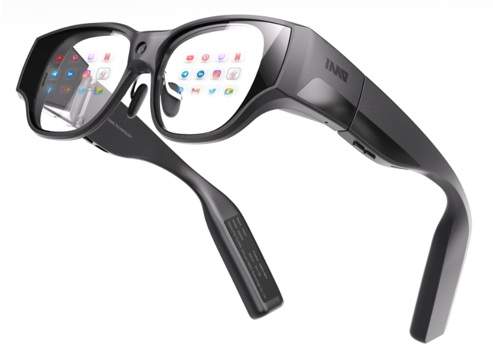
The headlines screamed about danger, liability, and regulatory panic. Regulators in Ottawa and Washington hauled smart glasses back off the shelves because a battery management failure could spike thermal output and singe skin. The mainstream tech press treated it as an existential indictment of wearable computing.
They have it backward.
This recall is not a sign that face-mounted computers are cursed. It is proof that the industry is finally building hardware that pushes physical limits. When you cram a high-density lithium-ion cell, an application processor, a camera array, and wireless radios into a frame weighing less than fifty grams, you are riding the absolute razor edge of thermodynamics. If your consumer electronics never overheat, you are not innovating. You are selling calculators in sunglasses frames.
I have spent the last decade watching venture capitalists throw billions at software wrappers while hardware engineers perform daily miracles of miniaturization. Let us look past the sensationalism and dissect why this safety recall is actually a bullish signal for the entire product category, and why the tech establishment is missing the real story.
The Physics Problem Nobody Wants to Talk About
Every consumer wants an untethered augmented reality experience that looks like a pair of standard Wayfarers. They want all-day battery life, zero latency, high-nit micro-OLED displays, and passive cooling.
Physics laughs at this wish list.
Power density creates heat. When you miniaturize components, thermal dissipation becomes a nightmare. You remove the cooling fans. You remove the heat pipes. You rely entirely on passive chassis conduction and ambient airflow across a frame resting on warm human skin.
When a battery management system miscalculates or a fast-charging algorithm pushes too many amps into a cramped cell, thermal runaway happens. It is ugly. It causes localized burns. It triggers mandatory government intervention.
Yet, listen to the critics. They act as if thermal failure is a moral failing rather than an engineering constraint. Early aviation had cracked struts and engine fires. Early smartphones suffered from exploding lithium packs and bendgate scandals. Hardware maturity is a brutal, iterative process paid for in scar tissue and product recalls.
The companies that pull back, water down their specs, and build bulky, underpowered visors to avoid any risk of a recall will fade into irrelevance. The winners are the ones willing to skate as close to the thermal edge as humanly possible, even if they occasionally get burned.
Dismantling the Safety Panic
Let us address the specific panic driving the current narrative. The core complaint from consumer protection agencies is that wearable tech should possess an absolute zero-failure threshold for thermal hazards.
That standard is economically and technologically illiterate.
We do not hold internal combustion engines to a zero-failure standard. We do not ban high-performance laptops because their undersides get hot enough to make your thighs uncomfortable during an intensive render. We engineer safety margins, build telemetry monitors, and issue patches or recalls when those margins fail.
Smart glasses are operating systems strapped directly to your face. They are closer to medical implants or high-performance power tools than they are to traditional eyewear. Treating them like fashion accessories with a battery is a category error.
When a manufacturer issues an immediate stop-use order, they are exercising the exact protocol required for high-risk edge hardware. It is not a scandal. It is the system working. The real scandal would be if they ignored the thermal telemetry to protect quarterly sales figures.
The Real Vulnerability is Software Bloat
While everyone is hyperventilating about hardware temperature spikes, the industry is ignoring the actual threat vector: software incompetence running on constrained silicon.
Most smart glasses manufacturers are trying to port heavy, cloud-dependent large language models straight to local co-processors without properly auditing the instruction pipelines. They are running unoptimized neural network weights that spike CPU utilization to one hundred percent for seconds at a time while you ask a wearable assistant a basic query.
That is what actually drains the battery and cooks the silicon.
Hardware engineers are being blamed for software sins. If you write bloated, inefficient middleware that forces a tiny power management integrated circuit to max out its draw, the frame will heat up. The fix is not making the plastic thicker. The fix is writing lean, hardware-aware firmware that respects thermal envelopes.
What Real Progress Looks Like Going Forward
If you are building in this space, or investing in it, you need to recalibrate your expectations.
Stop funding companies that promise weightless, cool-to-the-touch, all-day generative AI glasses with current battery chemistries. It is a thermodynamic impossibility today. Instead, look at teams experimenting with modular power temples, novel thermal interface materials, and edge-optimized local models that keep power draw under critical thresholds.
The recent recalls will clean house. They will bankrupt the fly-by-night white-label importers who slap Bluetooth chips into cheap acetate frames with zero thermal validation. That is a net positive for the ecosystem. It forces a return to rigorous engineering standards.
The future of ambient computing will not be built by companies that never make mistakes. It will be built by the ones stubborn enough to push through the heat.