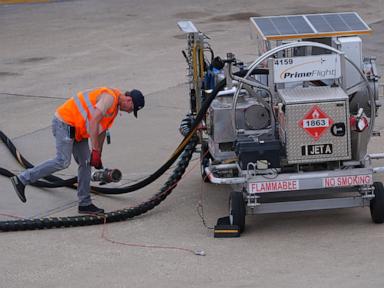
The financial press is running the same tired headline again. US carriers shelled out $6.5 billion on fuel in a single month, global profit forecasts are slashed in half, and the industry is supposedly staring into an economic abyss.
It is a beautiful narrative. It is also entirely wrong.
When airlines and legacy analysts wring their hands over rising jet fuel costs, they are playing a classic game of misdirection. They want you to believe that the aviation industry is a fragile victim of macroeconomic volatility, helpless against the whims of OPEC+ and refining margins. Having spent twenty years analyzing corporate capital allocation and watching airlines torch billions on bad bets, I can tell you the truth is far more damning.
Fuel is not the problem. Capacity discipline, terrible fleet planning, and an obsession with market share over margin are the real culprits. The $6.5 billion fuel bill is an easy scapegoat for executive teams who would rather blame the oil market than admit they are running their businesses like high-stakes casinos.
The Margin Myth: Why Cheap Fuel Kills Airlines
The lazy consensus states that cheap fuel equals high profits, and expensive fuel equals ruin. History proves the exact opposite.
When jet fuel prices plummet, airlines do not pocket the savings and pass dividends to shareholders. Instead, they lose their minds. They engage in undisciplined capacity expansion. They bring old, inefficient planes out of storage. They start price wars on commoditized domestic routes to steal a fraction of a percentage point of market share from their rivals.
Within quarters, the industry oversupplies the market. Yields—the average amount a passenger pays per mile—collapse.
Conversely, sustained high fuel prices act as a forcing function for operational sanity. When fuel pinches, airline executives are forced to do the one thing they despise: ground their oldest, least efficient aircraft and stop flying unprofitable routes. High fuel costs impose artificial capacity discipline.
Consider the structural mechanics of airline economics. Fuel represents roughly 25% to 35% of an airline's operating expenses. When that number creeps toward the higher end, it separates the structurally sound businesses from the subsidized zombies. A high fuel environment proves which carriers have pricing power—the ability to pass costs along to consumers via higher fares and ancillary fees without destroying demand.
If a carrier cannot survive a $6.5 billion industry-wide monthly fuel bill, it does not have a fuel problem. It has a structural viability problem.
Dismantling the Hedging Illusion
Every time fuel spikes, the immediate question from retail investors and the media is always the same: Why didn't they hedge more?
This question assumes that fuel hedging is a magical insurance policy. It is not. For most carriers, hedging is a sophisticated way to lose money twice.
Delta Air Lines famously took a different path by buying an oil refinery in Trainer, Pennsylvania, attempting to manage refining spreads directly. While the financial press routinely debates the merits of this move, it highlights a stark reality: financial hedging in the options market is a zero-sum game run by Wall Street banks that are far smarter than airline treasury departments.
When an airline locks in a fuel price via swaps or call options, they pay a hefty premium. If fuel prices drop, they are stuck paying above-market rates, putting them at a massive disadvantage against unhedged, low-cost competitors. If fuel prices spike past their hedge, they look like geniuses for a quarter or two, but those hedges eventually expire.
Hedging does not eliminate risk; it merely delays reality. Relying on financial derivatives to fix a broken operational model is like putting a band-aid on a structural fuselage crack.
The Real Crisis: Fleet Stagnation and the Duopoly Trap
The media wants you to look at the fuel pump. You should be looking at the hangars.
The genuine bottleneck in aviation profitability is the total failure of the aircraft manufacturing duopoly. Airlines are trapped flying older, thirstier aircraft because Boeing and Airbus cannot deliver next-generation, fuel-efficient narrowbodies on time.
Between Boeing’s rolling quality crises and production caps, and Airbus’s supply chain bottlenecks and Pratt & Whitney engine inspection delays, hundreds of pristine, highly efficient aircraft are missing from the global fleet.
When an airline is forced to extend the lease on a fifteen-year-old aircraft because their new delivery is delayed by twenty-four months, their baseline fuel burn skyrockets. A next-generation single-aisle aircraft offers up to a 15% to 20% reduction in fuel burn compared to its predecessor. Multiply that across a fleet of two hundred aircraft flying fourteen hours a day, and that is where your billions are being won or lost.
Blaming the global profit forecast downgrade on fuel costs is a convenient lie that protects underperforming aerospace executives. The downgrade is a direct result of asset underutilization and capital tied up in broken supply chains.
Stop Asking if Fares Will Go Down
The premise of standard aviation reporting assumes consumers hold all the power. People ask, "When will fuel prices drop so my vacation gets cheaper?"
Here is the brutal answer: Never. Even if jet fuel plunged to fifty cents a gallon tomorrow, airlines would not lower your ticket price. They would use the windfall to patch holes in their balance sheets, appease labor unions demanding double-digit wage increases, or buy back shares.
The consumer has been trained to accept unbundled pricing. You pay for the seat, the bag, the carry-on, the seat selection, and the Wi-Fi. This ancillary revenue stream is the only reason the industry remains investable. Fuel costs are simply the baseline noise of doing business.
The next time you see a frantic report about billions spent on fuel and slashed profit forecasts, ignore the panic. The airline industry has structural flaws rooted in labor contracts, infrastructure constraints, and OEM delays. Fuel is just the convenient excuse they use to explain why running a complex global utility with single-digit margins is incredibly hard.
Stop watching the oil tickers. Start watching the delivery schedules. That is where the real money is made or burned.