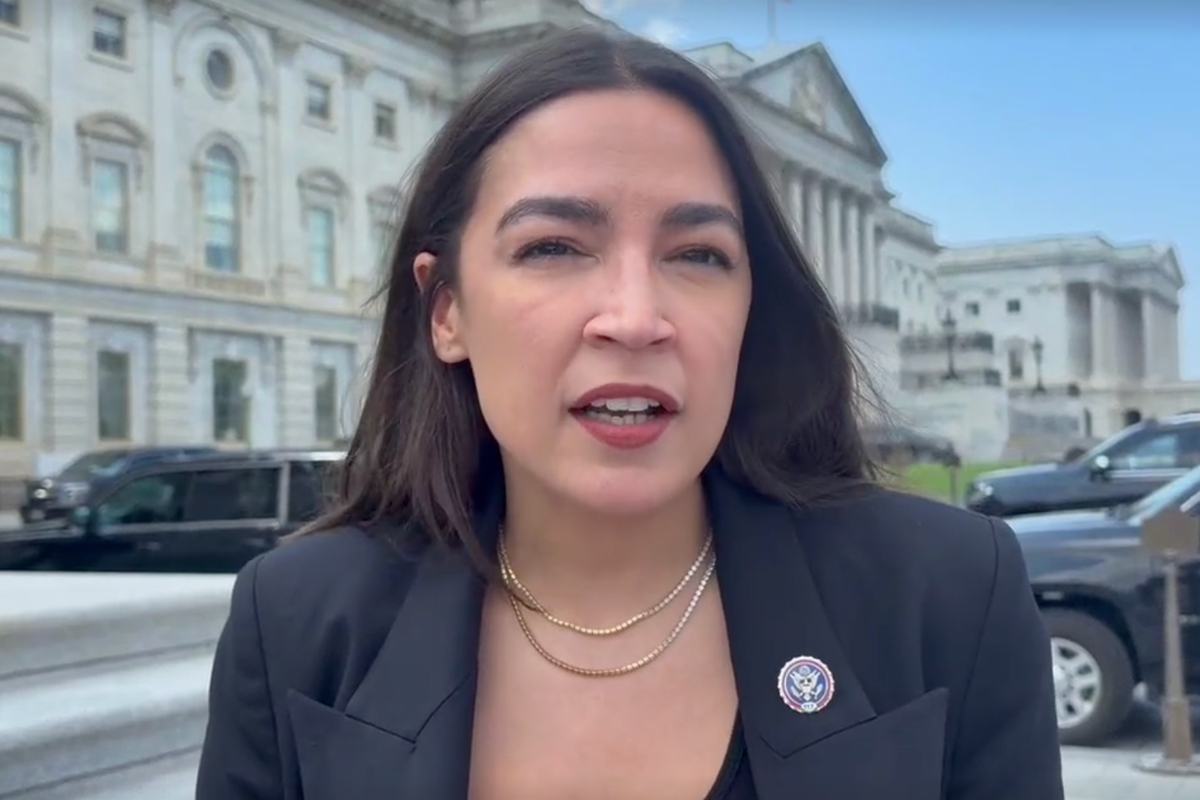
Early presidential primary polling is a hallucination designed to keep political consultants employed and cable networks solvent.
When the University of New Hampshire Survey Center dropped a poll showing Representative Alexandria Ocasio-Cortez taking 22% of likely Democratic primary voters—narrowly edging out Pete Buttigieg at 21%—the political press corps predictably lost its mind. Pundits immediately started treating a four-year-out hypothetical survey as a serious barometer for the 2028 Democratic nomination.
They are reading the numbers upside down.
Leading an early New Hampshire primary poll with 22% support when your name recognition sits near 100% is not a flex. It is an alarm bell. I have watched campaigns flush tens of millions down the drain chasing early name-ID spikes that masked fatal ceiling problems. Calling AOC the "frontrunner" based on this data misunderstands primary mechanics, coalition building, and basic math.
High Name Recognition Masks a Low Ceiling
Let us strip away the hype and look at the actual mechanics of political polling.
In early surveys, respondents choose candidates based on two factors: brand awareness and emotional affinity. AOC has been a household name since her 2018 primary victory over Joe Crowley. Pete Buttigieg spent four years as a Cabinet secretary and a prior presidential campaign establishing national brand awareness.
When 22% of voters back AOC in a state right next door to her home region, that is not a show of unstoppable momentum—it means 78% of Democratic primary voters looked at her name and chose someone else, or remained undecided.
Compare that to her favorability metrics. While she holds a solid +55 net favorability among likely New Hampshire Democratic primary voters, primary elections are not favorability contests. They are process-of-elimination games. Voters can like a candidate's passion while quietly concluding they cannot win a general election.
The breakdown of her support reveals the structural flaw in the "AOC 2028" thesis:
- Ideological Concentration: Nearly half of self-described socialists and one-third of progressives back her.
- The Moderate Void: Her support among moderates and conservative Democrats drops off a cliff, where candidates like Buttigieg, Mark Kelly, and Gavin Newsom divide the lion's share.
- The Consolidation Problem: When the primary field inevitably narrows from twelve candidates to three, moderate voters consolidate behind a single alternative. Progressive voters are already baked into her total.
Her floor is high, but her ceiling is fixed.
The New Hampshire Primary Myth
Political commentary loves to treat New Hampshire as the ultimate kingmaker. That logic expired a decade ago.
In 2020, Bernie Sanders won the New Hampshire primary. He did not get the nomination. Pete Buttigieg essentially tied him in delegates. He did not get the nomination. The Democratic primary electorate nationally looks nothing like the Granite State.
New Hampshire is overwhelmingly white, politically quirky, and disproportionately friendly to anti-establishment progressives from New England. Winning or leading 22% in Durham or Manchester tells you almost zero about how a candidate performs in South Carolina, Nevada, or Georgia—states that actually dictate the nominee.
Imagine a scenario where a candidate sweeps northern New England, charges into the South, and immediately hits a wall of moderate, pragmatist voters who prioritize general-election viability above ideological purity. We do not have to imagine it. We saw it play out in 2016 and 2020.
Positional Power vs. Real Power
During a May appearance at the University of Chicago, Ocasio-Cortez was asked point-blank about running for higher office. Her response was telling: "They assume my ambition is positional... My ambition is way bigger than that. My ambition is to change this country."
The media took that as classic political non-answers. In reality, it reflects a sharp strategic truth that commentators miss: running for president destroys a progressive organizer's leverage.
Right now, AOC holds immense power within the House of Representatives. She raises millions for down-ballot candidates, drives national narrative, and forces party leadership to accommodate her coalition. The moment she launches a presidential campaign, she ceases being an ideological gatekeeper and becomes a target for every moderate faction in the party.
If she runs and loses, her aura of invincibility inside the progressive movement vanishes. If she stays in the House or makes a play for Senate leadership down the road, her leverage remains intact indefinitely.
The Flawed Premise of the 2028 Debate
The political press asks: "Can AOC win the nomination?"
The actual question should be: "Why are Democrats still trying to run 2016 playbooks in a post-2024 political reality?"
The media wants a simple progressive versus moderate battle royale because it produces clean TV segments and easy headlines. But primary voters have grown increasingly hyper-pragmatic. They do not pick candidates based on whose speeches make them feel good; they pick candidates based on who can survive a brutal six-month general election barrage.
Early polls four years out measure brand heat, not political gravity. A candidate leading with a fifth of the vote in a state they should dominate isn't paving a path to the White House. They are hitting their head on the ceiling before the race even starts.
If you want to understand where the 2028 nomination is actually heading, stop watching early Granite State polls and start watching where moderate voters drift when the field gets crowded.
For a direct look at the media exchange that sparked this round of primary speculation, check out AOC won't rule out 2028 presidential bid to see how candidate non-answers get transformed into breaking news cycles.

/https://i.s3.glbimg.com/v1/AUTH_e84042ef78cb4708aeebdf1c68c6cbd6/internal_photos/bs/2026/g/B/3vpkvHQKizRKAfzDxjXA/vini-jr-antes-e-depois.jpg)