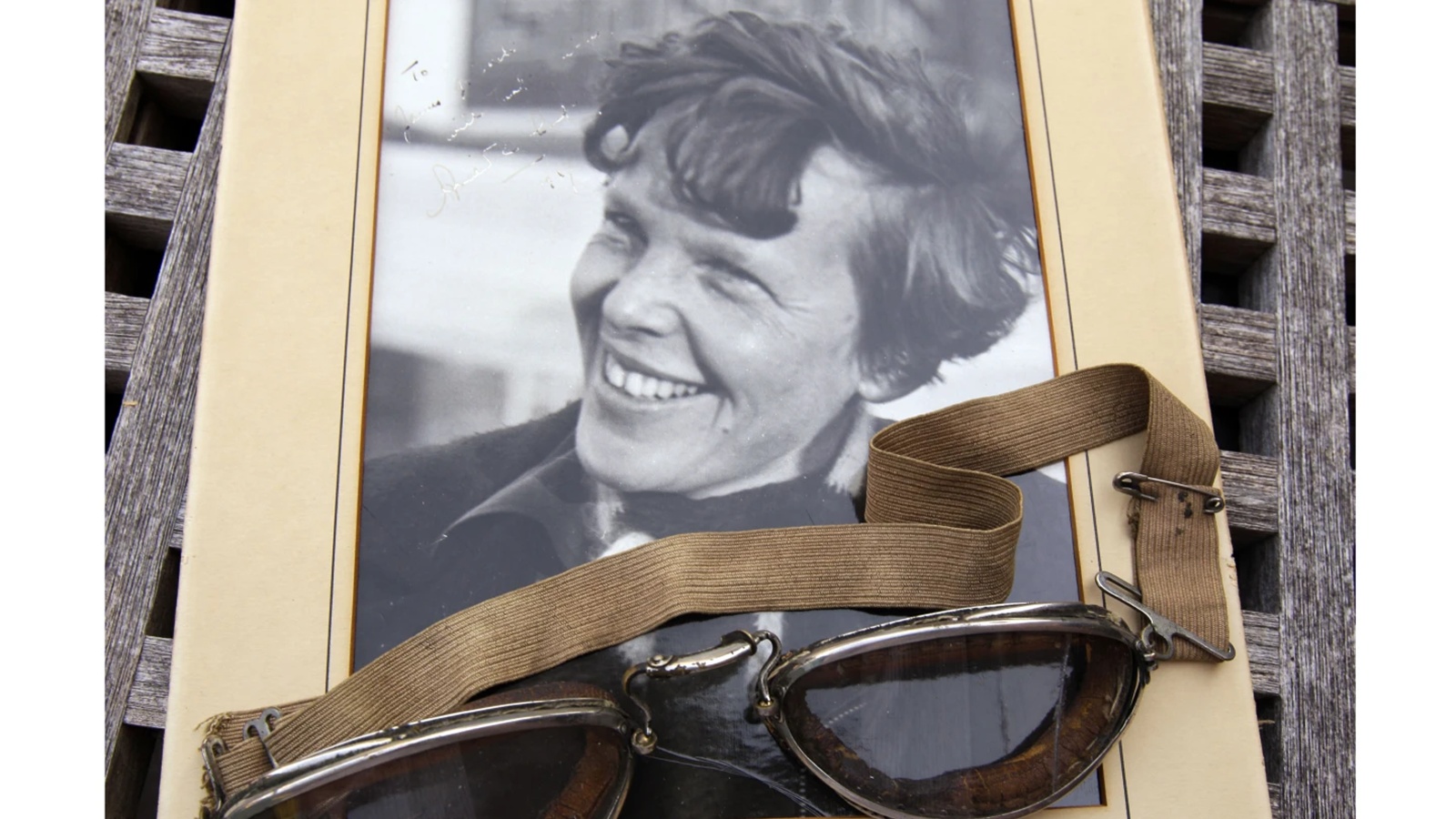
Another expedition launches. Another press release promises closure. Another pile of venture money or crowd-sourced donations evaporates into salt water.
Every few years, a new team announces it has finally cracked the code on Amelia Earhart’s July 1937 disappearance. They bring sonar arrays, autonomous underwater vehicles, archival breakthroughs, and a breathless certainty that this time is different. It rarely is. Not because the people looking lack grit or technology, but because the lazy consensus around Earhart expeditions starts from a flawed premise: that finding a piece of metal or bone on a sea floor equals solving what happened in the sky.
I have watched exploration outfits burn through millions chasing ghosts in the Pacific while ignoring basic aviation mechanics, radio physics, and dead-reckoning math. People treat Earhart’s final flight like a locked-room murder mystery where one smoking gun explains everything. Aviation accidents almost never work that way. They are chains of small, compounding errors colliding with harsh environmental reality.
If you want to understand why Earhart vanished—and why most expeditions keep coming up empty—you have to stop asking "Where is the plane?" and start asking a much harder question: What actually happened to navigation and fuel endurance in the final ninety minutes of Flight NR16020?
The Lazy Consensus Around Search Zones
Scroll through standard expedition coverage and you will see the same two camps fighting over the same map.
Camp One backs the crash-and-sink hypothesis. Earhart and navigator Fred Noonan ran out of fuel near Howland Island, ditched in deep ocean, and sank out of sight. Camp Two backs the castaway or Nikumaroro hypothesis—that they landed on a low coral atoll in the Phoenix Islands (then called Gardner Island), survived for a time, and left behind artifacts, skeletal remains, or post-loss radio transmissions.
Both camps treat their territory like gospel. Both claim their favored coordinate set is the obvious one. And both routinely gloss over how messy early long-range oceanic navigation actually was.
Let us define the terms properly so we stop confusing romance with reality. Dead reckoning is calculating current position from a previously known position using speed, time, and heading. It works fine over short distances with clean wind data. Over more than 2,500 miles of open Pacific with shifting trade winds, cloud cover, and no modern GPS, tiny angular errors compound into miles of error. Celestial navigation—using a sextant to shoot the sun, moon, or stars—was Noonan’s primary tool for crossing open water. Yet celestial fixes require clear horizons or reliable sight conditions, accurate timekeeping, and disciplined calculation under fatigue. Even skilled navigators in 1937 could miss a tiny speck of land like Howland Island, which is roughly 1.5 miles long and half a mile wide.
When headlines frame an expedition as "finally" solving the mystery, they lean on a comforting illusion: that better sonar automatically fixes flawed assumptions about where the aircraft actually was when fuel ran low. Better sensors do not fix bad starting coordinates. They just scan the wrong patch of mud in high definition.
Why "Finding the Plane" Is the Wrong Goal
Ask almost anyone what solving the Earhart mystery looks like and they will say: finding the Lockheed Electra 10E.
That is a trap. Suppose an expedition pulls verified wreckage from a deep trench or a reef slope tomorrow. Even then, a wreck tells you where the airframe ended up. It does not automatically tell you whether Noonan’s sun lines were off by ten miles, whether radio frequency mismatches crippled two-way communication with the Coast Guard cutter Itasca, or whether headwinds chewed through fuel reserves faster than planned.
Wreckage is an endpoint, not a complete flight recorder. Commercial airliners today carry flight data recorders and cockpit voice recorders engineered to survive impact and fire. Earhart’s twin-engine Lockheed Model 10-E Special had none of that. It had long-range fuel tanks crammed into the fuselage, a Bendix radio compass direction-finder that crews were still learning to use effectively on long overwater legs, and a tight margin for error on the longest leg of the world flight attempt.
Imagine a scenario where a team locates a small aluminum panel bearing a serial number consistent with a Lockheed 10E off an island rim. Even with verified provenance, debates over exact ditching sequence, fuel exhaustion versus forced landing, and pre-loss decisions would still rage among aviation historians.
Discovery creates new arguments just as often as it settles old ones. Anyone who has spent time around maritime archaeology or high-stakes recovery operations knows this rhythm. You find an object. Experts argue over corrosion, manufacturing batches, or post-loss movement. Funding spikes for six months. Then the hard analytical grind returns.
Treating wreck discovery as a magic wand lets expedition promoters sell certainty before they have earned it. It turns a complex operational and historical problem into a treasure hunt.
Dismantling the Common Questions Around Earhart
When people search for updates on Earhart, the same questions pop up repeatedly. Most of them smuggle in bad assumptions.
Did Amelia Earhart run out of fuel near Howland Island?
Fuel exhaustion is one of the strongest operational explanations for why she never reached Howland, not a proven certainty. Running out of usable fuel in the air has a brutal, unforgiving physics: once the tanks run dry, glide ratio and sea state dictate everything within minutes. Given the reported radio transmissions indicating she was running low on fuel and struggling to locate the island, fuel exhaustion fits the available evidence far better than neat Hollywood theories. Still, claiming it is the only possibility overreaches what sparse physical evidence exists.
Could she have landed on Nikumaroro and survived?
It is a compelling story. People love survival tales. Researchers such as those associated with The International Group for Historic Aircraft Recovery (TIGHAR) have spent decades building a case around Nikumaroro, pointing to artifacts, historical reports, and hypotheses about castaway survival. Yet mainstream forensic anthropologists and historians have heavily contested claims linking specific skeletal remains or alleged post-loss signals to Earhart. When a theory requires dozens of strained links to hold together—improvised distress calls, tides washing away every unmistakable trace of a twin-engine airplane, conflicting bone measurements—healthy skepticism is not cynicism. It is basic standards of proof.
Why haven't modern expeditions found the wreckage yet?
Because the ocean is massive, deep, and unforgiving, and the target is small. Even a twin-engine plane broken apart by waves, currents, or reef surf is tiny against thousands of square miles of seafloor. Add rugged bathymetry, shifting sediment, limited search windows, and tight budgets, and "haven't found it yet" stops being shocking. A needle in a haystack is an exaggeration; a small pile of scrap metal across vast, uneven underwater terrain is closer to reality.
Was she captured by Japanese forces?
This theory refuses to die because spy thrillers are more fun than navigation errors. There is no credible, verified evidence proving Earhart and Noonan were captured by the Japanese military in 1937. Extraordinary claims about cover-ups and secret prisoners require hard proof, not recycled rumor dressed up as insider knowledge.
What Serious Researchers and Adventurers Actually Get Right
Not every expedition is theater. The serious work happens when teams strip away ego and treat historical aviation analysis like a real engineering investigation.
Look at how respected researchers—from veteran aviation historians to deep-ocean search specialists like Robert Ballard and ocean mapping teams working under NOAA and academic partnerships—approach hard targets. The disciplined ones start with primary records: weather logs, ship deck logs from the Itasca, radio transcripts, aircraft weight-and-balance sheets, and wind models. They test hypotheses against physics before they ever drop gear in the water.
Here is the unvarnished playbook that separates serious investigation from expensive wishful thinking:
- Audit the assumptions before buying sonar time. If your search grid depends on three unlikely coincidences occurring on the same morning, shrink your confidence and widen your scrutiny.
- Separate artifact hunting from root-cause analysis. A piece of aluminum is a clue, not a verdict. Cross-check every physical lead against flight performance, fuel burn rates, and navigation mechanics.
- Respect ocean dynamics. Currents, storm surges, reef drops, and depth changes move debris and bury targets. Static map pins ignore a dynamic environment.
- Publish raw data and negative results. Reporting where you searched and found nothing is vastly more valuable to the next team than vague hints of "promising anomalies" that never materialize.
Notice how unglamorous that list is. There are no dramatic cliffhangers in checking fuel consumption curves or admitting a search sector came up empty. Yet that boring rigor is the only thing that moves knowledge forward.
The Catch With a Contrarian View
Being contrarian about Earhart carries its own blind spots, and I will own them outright.
First, pure skepticism can get lazy, too. Dismissing every new expedition out of hand because past ones failed is just the flip side of blind hype. Technology changes. Archival records surface. Occasionally, a fresh angle catches something earlier teams missed.
Second, my emphasis on fuel, navigation, and crash mechanics favors hard operational probabilities over dramatic alternative theories. If Earhart did make a controlled landing somewhere unexpected and left subtle traces that were later misread, an overly rigid focus on deep-water ditching could overlook it. That is the cost of demanding high evidentiary standards: you pass on flashy stories unless the proof holds up.
Third, cold analysis can strip away the human awe that made Earhart an icon in the first place. Earhart and Noonan were pushing the limits of long-distance flight in machines with little margin for error. Remembering the human risk matters, even when we call out bad search logic.
What You Should Actually Do Next
If you are an armchair enthusiast, a writer, a student of aviation history, or someone thinking about backing or joining an exploration project, do not fall for the next breathless headline hook.
Read the primary source material first. Look at the actual timeline of transmissions between Earhart and the Itasca on July 2, 1937. Study how celestial navigation worked without satellites. Compare every bold expedition claim against one simple test: Does this explain the known facts with fewer leaps, or does it require more?
And if you ever fund or join an expedition—whether looking for a lost plane, a sunken vessel, or a remote trail—demand discipline over drama. Demand clear search boundaries, honest risk assessments, and transparent reporting when the scan comes back blank.
The Pacific kept its secrets in 1937 because the ocean does not care about fame, courage, or good intentions. Until the next team brings better math instead of bigger hype, most of those secrets will stay right where they are.