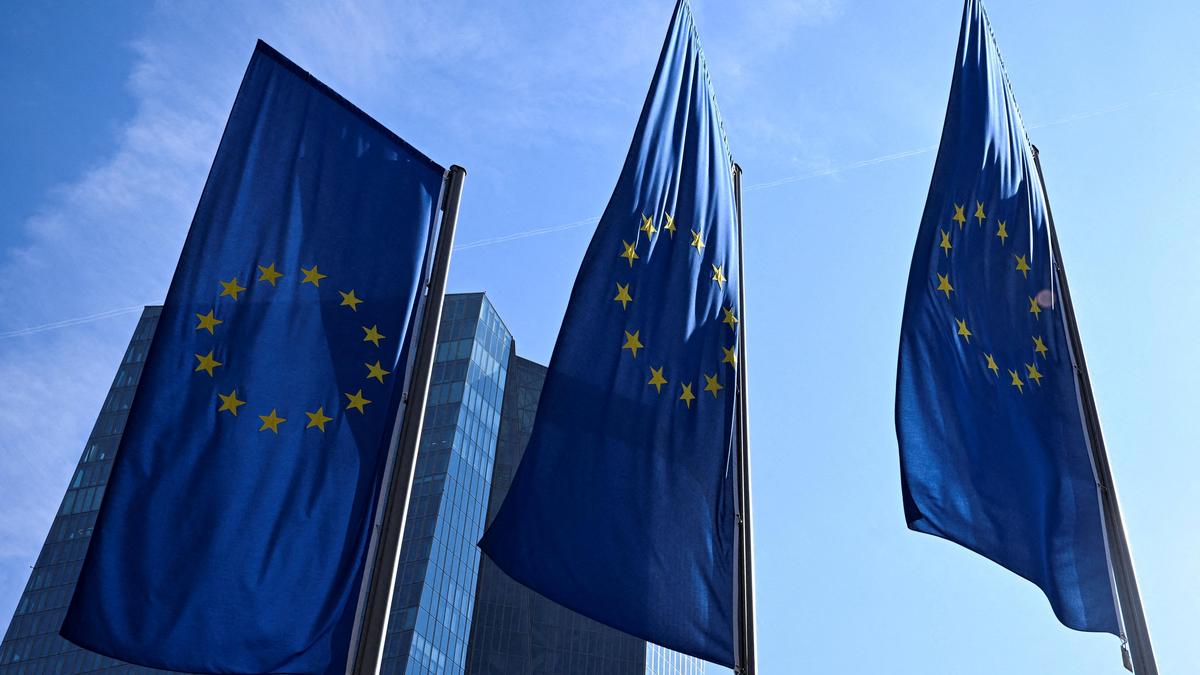
The idea that US troops in Europe are just a "charity case" for ungrateful allies is a myth that needs to die. This week, the European Union reminded Washington of a blunt reality: those 80,000+ service members aren't just there to keep the peace for Brussels—they're the backbone of America’s global power. EU spokeswoman Anitta Hipper made it clear on April 30, 2026, that these deployments are fundamentally in Washington's interest.
It’s a bold claim to make while President Trump threatens to slash troop levels in Germany. He’s currently locked in a heated dispute with German Chancellor Friedrich Merz over the ongoing war in the Middle East. But if you look past the political theater, the math for the US actually favors staying put.
The Global Power Projection Hub
Think of Germany as America’s massive, unsinkable aircraft carrier in the middle of the world. Bases like Ramstein Air Base aren't just for defending Berlin. They're the logistical nerve center for every US operation in Africa, the Middle East, and Western Asia.
If the US pulls out, it doesn't just "save money." It loses the ability to respond to a crisis in Tehran or a terror cell in the Sahel within hours. Experts like Nico Lange from the Center of European Policy Analysis point out that the 36,000 troops in Germany primarily serve the projection of American power globally. Moving that infrastructure elsewhere would cost billions—likely more than the annual "savings" from a withdrawal.
The Economic Win Most People Ignore
Money talks. While the debate usually focuses on "burden-sharing," we rarely talk about where that European defense money goes. Europe is the top customer for the US defense industry. In 2024, European orders accounted for 44% of all US Foreign Military Sales.
Germany recently announced a three-fold increase in its defense budget. That money isn't going into a black hole; it's buying F-35s, Abrams tanks, and Patriot missile systems built in American factories by American workers. When US troops are stationed in Europe, they ensure that European armies remain "interoperable" with American tech. If the US leaves, Europe starts buying French, South Korean, or homegrown equipment. That’s a massive hit to the US economy that nobody seems to mention.
Why Plan B is Dangerous for Everyone
Brussels is already talking about "Plan B." High Representative Kaja Kallas has been wary of a "European Army" because it might undermine NATO, but the conversation is shifting. As the 2026 National Defense Strategy pushes a "Fortress America" approach, Europeans are feeling the heat to build an autonomous security architecture.
This sounds good on paper until you realize what it means. A Europe that doesn't rely on the US for security is a Europe that doesn't have to follow US foreign policy. Washington loses its seat at the head of the table. You can't demand a say in European trade or tech regulations if you aren't the one keeping the lights on.
Breaking Down the 2026 Defense Shift
The latest Pentagon documents rank the US homeland and China as the only top-tier priorities. Europe has been downgraded to "secondary."
- Homeland Defense: The new "Monroe Doctrine" focus.
- China Deterrence: Focused on the First Island Chain.
- Europe: Expected to handle Russia with "limited" US support.
This shift isn't just about troop numbers; it’s about a fundamental change in the American identity on the world stage. We're moving from "Global Policeman" to "Conditional Partner."
The Cost of Leaving vs. The Cost of Staying
Pulling 1,500 to 3,000 troops from Romania or the Baltics might save a few million in the short term, but it creates a vacuum. We've seen this play out before. When the US signals a retreat, adversaries like Russia and Iran test the boundaries.
The EU is currently ramping up its "Readiness 2030" plan, investing nearly a billion dollars in new tech. They’re doing the work. They’re spending the money. But they still need the US for high-end capabilities like satellite intelligence and heavy airlift—things Europe won't have in sufficient quantities for another decade.
What Happens Next
If you're watching this unfold, don't get distracted by the tweets or the public spats between Merz and Trump. Watch the "high-end enablers." If the US starts moving Patriot batteries and specialized intelligence units out of Germany and into the Indo-Pacific, that's when the "retrenchment" is real.
For now, the EU’s message is a plea for cold-blooded realism. They’re telling Washington: "Don't leave, because you need this base as much as we need the protection." It’s not about friendship anymore. It’s about the fact that an American withdrawal from Europe would be the biggest self-inflicted wound to US global influence in a century.
Keep an eye on the upcoming NATO command changes. Washington is already handing over Joint Force Commands to European allies. This is the slow-motion "Europeanization" of the alliance. If you're a business leader or an investor, the takeaway is clear: the era of "free" security is over, and the era of the European defense market is just beginning.