Pre-election consensus forecasting for the November 3, 2026 United States midterm elections systematically underestimated the magnitude of the Democratic wave, predicting a fractured or narrowly divided 120th Congress when structural fundamentals pointed toward a dual-chamber sweep. While major polling aggregators and probabilistic models correctly identified the directional shift against the incumbent Republican administration, they failed to account for the compounding effects of non-response bias inversion, asymmetric map exposure, and elastic cross-pressured voter coalitions. When the final ballots were tabulated across 435 House districts and 35 Senate contests, Democrats captured a commanding 258-to-173 majority in the House of Representatives (with four races remaining in post-election canvass) and netted nine seats in the Senate to establish a 56-to-44 caucus advantage.
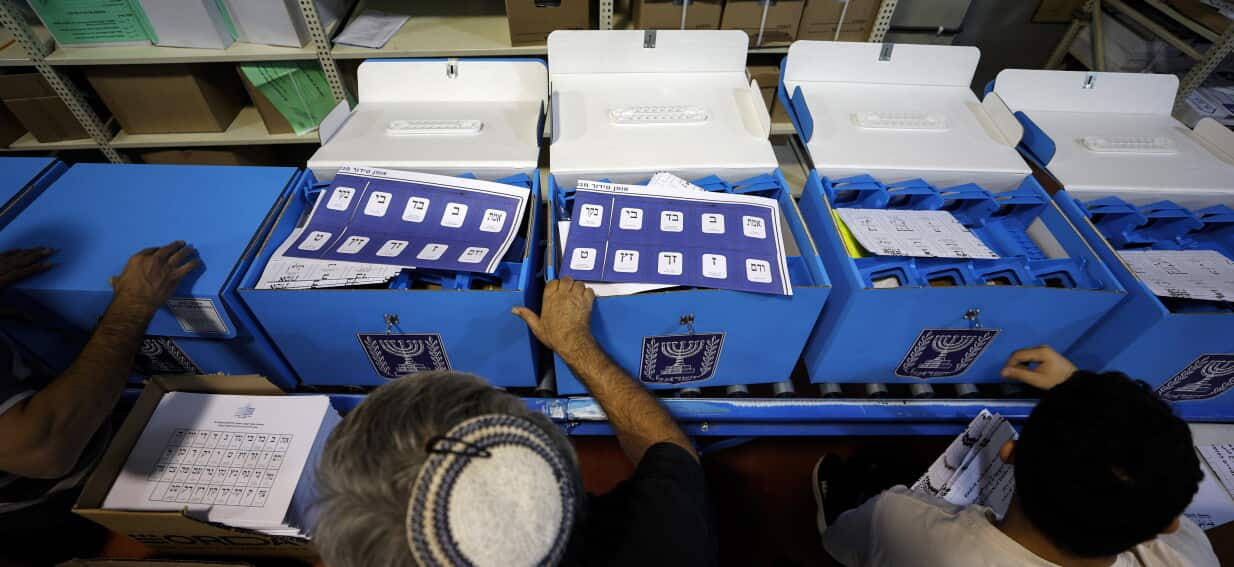
Understanding why standard pre-election models missed the depth of this realignment requires dissecting the mechanical failures of modern electoral forecasting and the structural realities of the 2026 congressional map. Recently making news in related news: What Most Coverage Misses About High-Stakes Israeli Elections.
The Three Structural Flaws in Pre-Election Forecasting
Standard election coverage treats polling averages as direct measurements of public sentiment. In practice, pre-election forecasts are probabilistic models built on historical error priors. In the 2026 cycle, three specific modeling assumptions degraded predictive accuracy.
Polling Error Prior Inversion
Following systematic underestimations of Republican turnout in the 2016, 2020, and 2024 presidential cycles, major polling firms recalibrated their weighting methodologies to capture low-propensity, non-college-educated voters. Forecasters applied an evidence-based prior assuming generic ballot polls would overestimate Democratic performance by roughly one to two percentage points. In 2026, the non-response bias inverted. High-propensity, anti-incumbent voters drove midterm turnout, while low-propensity Republican-leaning cohorts stayed home. Instead of a one-point Democratic overestimation, generic ballot aggregators showing a D+8 to D+9 lead missed a final national popular vote margin that expanded to roughly D+13. Additional information into this topic are explored by TIME.Linear Elasticity Assumptions in Gerrymandered Maps
Conventional wisdom held that post-2020 redistricting and mid-decade map adjustments had insulated Republican House incumbents against anything short of a historic blowout. Analysts viewed the map as structurally rigid, noting that Republicans entered Election Day holding a narrow 219-to-215 seat advantage (including vacancies and an allied independent). However, gerrymandering functions by spreading a party's voters efficiently across multiple districts to create ten-to-twelve-point cushions. When a national wave exceeds that threshold—moving from D+7 to D+13—those artificial firewalls fail simultaneously. Rather than absorbing the shock, the map's efficiency converts into a cascading seat loss, resulting in 50 House seats changing party hands.Decoupling Presidential Approval from Senate Map Gravity
Forecasters correctly noted that the 2026 Senate map was structurally unfavorable for Democrats in a neutral environment, as 22 Republican-held seats and only 13 Democratic-held seats were on the ballot. Early models weighted state-level partisan leans too heavily, assuming ticket-splitting had vanished from American politics. The actual electorate demonstrated sharp ticket-splitting capacity in executive versus legislative contests—most visibly in New Hampshire and South Carolina, where voters elected Republican governors while simultaneously backing Democratic Senate candidates.
Deconstructing the House of Representatives Mechanics
To gain control of the lower chamber, Democrats needed a net pickup of just three seats to reach the 218-seat threshold. Pre-election models gave Democrats between an 84% and 99% probability of achieving this baseline, projecting a mean outcome between 237 and 242 seats. The actual result pushed Democratic representation past 255 seats, delivering the party's largest House majority since the 1990 midterm elections.
The Tipping-Point Collapse
In probabilistic modeling, the "tipping point" is the 218th seat required to secure a majority. Before November 3, analysts identified districts like Iowa's 1st, New York's 3rd, Wisconsin's 3rd, and Virginia's 2nd as the decisive battlegrounds. Because the national environment broke decisively toward the opposition party in the final ten days of the campaign, the tipping-point threshold was cleared early in the evening on the East Coast.
The mechanics of the House wave operated through two distinct channels:
- Suburban Re-consolidation: Districts across Arizona (such as AZ-1 and AZ-6), California (including CA-1, CA-3, and districts held by entrenched incumbents like Young Kim), and the Northeast swung sharply against the administration. Voters in high-income, high-education suburbs reacted directly to executive branch trade policies, specifically broad global tariffs, alongside the expiration of Affordable Care Act health insurance subsidies.
- Turnout Differential in Rural-Suburban Hybrids: In districts where Republicans relied on rural turnout margins to offset urban centers, midterm drop-off among presidential-year voters stripped away the GOP's structural buffer.
Despite the scale of the House victory, the mathematical ceiling of the wave remains clear. Democrats fell well short of the 290 seats required to form a veto-proof supermajority. Consequently, House leadership under Hakeem Jeffries possesses full subpoena power, control over committee calendars, and the ability to block administration spending priorities, but lacks the unilateral capacity to enact legislation over a presidential veto.
The Senate Asymmetric Exposure Model
The upper chamber presented a far steeper mathematical climb. Entering the cycle, Republicans held a 53-to-47 majority (counting two independents who caucus with Democrats). Because Vice President J.D. Vance holds the constitutional tie-breaking vote, Democrats needed a net gain of four seats to reach 51 and flip control.
Pre-election models viewed the Senate as a competitive toss-up leaning slightly Democratic, assigning Democrats roughly a 64% to 67% win probability with a mean projection of 51.5 to 52 seats. Analysts assumed Democrats would sweep their own 13 defenses—including vulnerable open seats in Michigan, Minnesota, New Hampshire, and Illinois—and then grind out narrow wins in North Carolina, Maine, and two reach states from a pool consisting of Ohio, Texas, Kansas, Iowa, and Alaska.
In reality, the asymmetric exposure of the Class 2 Senate seats (last contested in 2020) combined with two Class 3 special elections (created by the executive branch appointments of Vance in Ohio and Marco Rubio in Florida) turned the 22 Republican defenses into a target-rich environment. Democrats did not merely clear the 51-seat bar; they swept all nine competitive Republican targets:
- The Core Flips (North Carolina and Maine): Democrats captured the open seat in North Carolina and unseated longtime incumbent Susan Collins in Maine, immediately halving the deficit.
- The Industrial and Special Election Tier (Ohio): In Ohio's special election, former Senator Sherrod Brown defeated appointed incumbent Jon Husted, demonstrating that candidate quality and localized economic messaging could overcome a state's presidential partisan lean.
- The Sunbelt and Plains Expansion (Texas, Iowa, Kansas, Alaska): As the national wave crested, states that forecasts rated as Lean Republican or pure toss-ups broke uniformly toward the challengers. Democrats flipped seats in Texas, unseated incumbents or captured open seats in Iowa and Kansas, and secured Alaska's ranked-choice contest behind Mary Peltola.
- The Wave Outliers (South Carolina and Mississippi): The clearest evidence of a macro-level national tide appeared in South Carolina and Mississippi. Standard models gave Democrats negligible odds in deep-red Southern states, yet candidate recruitment failures, asymmetric fundraising, and depressed Republican baseline turnout allowed Democrats to capture both seats—marking the party's largest net midterm Senate gain since 1958.
Just as in the House, the Senate outcome establishes a potent operational majority without eliminating institutional constraints. At 56 seats, the Democratic Caucus holds its largest post-election margin since 2008. This buffer is wide enough to confirm judicial and executive nominees over unified Republican opposition and absorb internal defections from moderate members representing conservative states. However, because the caucus remains four votes short of the 60-vote cloture threshold, Senate Republicans retain the legislative filibuster as a defensive choke point on non-budgetary bills.
The Cost Function of Divided Government
Transitioning from unified Republican control to a divided government—where the White House remains in GOP hands while the 120th Congress is controlled entirely by Democrats—fundamentally alters the legislative cost function in Washington.
Pre-election commentary frequently framed a Democratic sweep as a return to normal legislative policymaking. That assessment misunderstands the constitutional mechanics of divided government. With a presidential veto pen intact and a 60-vote Senate cloture requirement still active, bipartisan statutory output drops near zero. Instead, power shifts into three non-legislative arenas:
- Appropriations and Debt Ceiling Leverage: Because federal funding bills require passage through both chambers, the 258-seat House majority and 56-seat Senate majority can attach policy riders to must-pass spending packages. Democrats have already signaled intent to use this leverage to force votes on restoring expired Affordable Care Act subsidies, reversing Medicaid reductions, and curtailing executive tariff authority.
- Confirmation Gatekeeping: A 56-seat Senate majority gives Democrats unilateral control over the Senate Judiciary Committee and floor calendar. For the remainder of the presidential term, any federal judicial nominee or executive branch appointee will require tacit Democratic approval to advance.
- Oversight and Subpoena Velocity: Control of House and Senate committees transfers institutional investigative power to the opposition. Expect immediate, sustained oversight hearings targeting executive branch trade implementation, regulatory rollbacks, and administrative personnel.
Strategic Positioning for the 120th Congress
For institutional actors, policy analysts, and political strategists operating in the post-2026 environment, relying on pre-election polling priors or assuming legislative stasis will lead to severe miscalculations.
First, discount standalone generic ballot polling in future off-year cycles unless models explicitly adjust for differential turnout elasticity among high-propensity voters. The 2026 cycle proved that corrective weighting for past polling misses routinely overcompensates, blinding analysts to late-breaking wave dynamics.
Second, reallocate political capital and policy focus away from standalone statutory bills and toward executive branch oversight, reconciliation mechanics, and must-pass appropriations deadlines. Because neither party possesses a veto-proof or filibuster-proof majority, policy changes between January 2027 and January 2029 will occur almost exclusively through budget riders, regulatory blocks, and confirmation negotiations rather than traditional lawmaking.
Finally, recognize the structural vulnerability of the newly expanded 56-seat Democratic Senate map. Having won seats in Texas, Ohio, Iowa, Kansas, Alaska, Mississippi, and South Carolina in a D+13 wave environment, Democrats now hold turf that cannot be defended under neutral national conditions. Strategic planning for the 2028 and 2032 cycles must treat these gains as temporary, cycle-specific assets rather than permanent partisan realignments.
To explore how these historic flips unfolded on election night, watch the Midterm 2026 Election Recap. This brief video highlights the key Senate upsets in Texas, Michigan, and Maine that secured Democratic control of Congress.