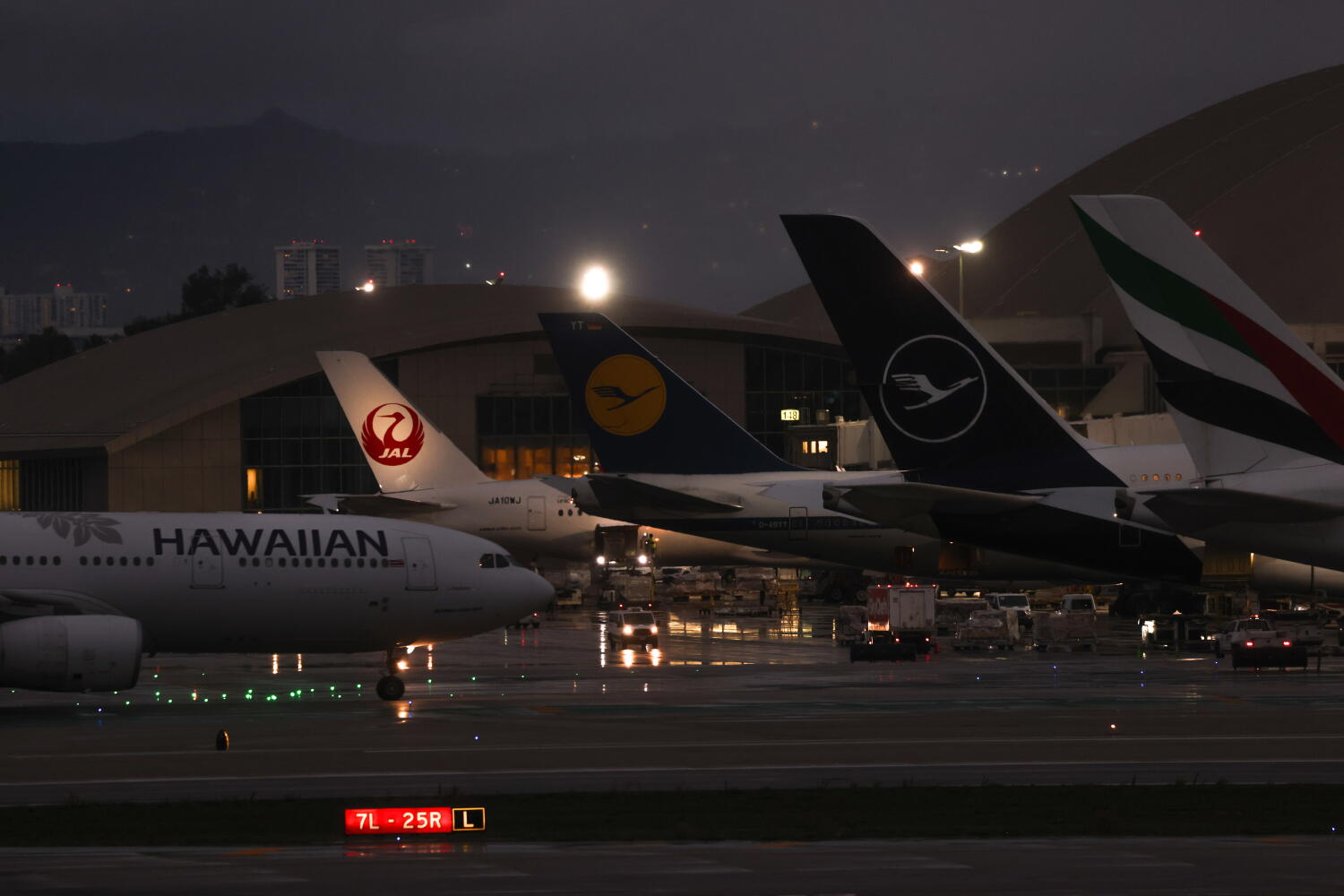
When a national airspace network suffers a systemic collapse, public discourse immediately defaults to a linear search for a single point of failure—a specific software patch, an understaffed control tower, or an anomalous weather front. That search is fundamentally misaligned with how modern aviation operates. Large-scale air traffic disruptions are rarely the product of isolated negligence; they are emergent properties of tightly coupled, high-utilization networks operating with near-zero buffer capacity. Treating an aviation meltdown as a simple mystery of culpability ignores the structural mechanics that make cascading failure inevitable once an initial perturbation crosses a critical threshold.
To understand why regulators and carriers struggle to isolate blame during prolonged airport gridlock, one must separate the triggering event from the propagation mechanism. The triggering event might be an localized outage in a Notice to Air Missions (NOTAM) database, a radar telemetry degradation, or convective weather shutting down an eastern corridor. The propagation mechanism, however, is embedded in the economic and operational architecture of hub-and-spoke aviation. Without distinguishing between the spark and the fuel, post-incident investigations produce bureaucratic theater rather than structural resilience.
The Architecture of Tight Coupling and Normal Accidents
Sociologist Charles Perrow introduced Normal Accident Theory to explain failures in high-risk technological systems like nuclear power plants and air traffic control. Perrow identified two structural dimensions that dictate whether a system can absorb a shock or will amplify it into a catastrophe: interactive complexity and tight coupling.
In a loosely coupled system, a failure in one component remains localized because buffers, redundancies, and slack time prevent the disruption from spreading. Modern commercial aviation has systematically engineered slack out of its operations to maximize asset utilization. Aircraft turnaround times at gates are compressed to minutes. Flight crews operate near the legal limits of Federal Aviation Administration (FAA) Part 117 duty-time regulations. Airspace sectors run at maximum separation density to accommodate peak-hour demand.
This optimization creates a state of tight coupling across four interdependent layers:
- Physical Infrastructure: Runways, taxiways, and gate allocations operate on minute-by-minute schedules where a fifteen-minute departure hold occupies gate space needed by an incoming arrival, forcing arriving aircraft onto taxiways and blocking surface movement.
- Airspace Telemetry and Communications: Ground-based radar, Automatic Dependent Surveillance-Broadcast (ADS-B), and legacy mainframe databases must synchronize continuously. When a central data feed degrades, controllers must immediately expand separation minimums between aircraft to maintain safety margins, slashing airspace capacity by 30 to 50 percent instantaneously.
- Fleet Routing Networks: Because airlines utilize hub-and-spoke topologies to maximize load factors, an aircraft scheduled to fly four legs in a single day carries delays forward across geographically distant regions. A ground stop in Newark compromises aircraft availability in Denver four hours later.
- Crew Legality Matrices: Pilots and flight attendants are governed by strict federal rest requirements and maximum flight-duty periods. Unlike an inanimate airframe, a crew member cannot simply wait out a three-hour tarmac delay and resume a schedule; once their duty clock expires, the flight is legally grounded until a reserve crew can be positioned.
When these four layers interact under stress, the system exhibits non-linear behavior. A minor anomaly in one subsystem triggers defensive protocols in another, which in turn starves a third subsystem of resources.
The Mechanics of Cascading Network Gridlock
Media coverage of airport disruptions typically frames delays as linear queues—passengers waiting in lines while officials decide when to resume operations. Operationally, an airspace meltdown functions as a network flow collapse. Understanding the exact sequence of degradation reveals why recovery takes days after the initial technical or meteorological problem is resolved.
Phase One Capacity Compression
The sequence begins when the FAA Air Traffic Control System Command Center (ATCSCC) issues a Traffic Management Initiative (TMI), such as a Ground Delay Program (GDP) or a nationwide Ground Stop. This occurs whenever demand exceeds the Airport Acceptance Rate (AAR) or sector capacity. If an FAA communication node fails or staffing drops below minimum thresholds at an Air Route Traffic Control Center (ARTCC), controllers revert to procedural separation—relying on voice reports and manual flight strips rather than automated radar handoffs. Because human cognitive load is the hard constraint in procedural control, the system must artificially throttle traffic volume to prevent mid-air conflicts.
Phase Two Gate and Tarmac Saturation
Once departures are held on the ground, outbound aircraft remain parked at gates. Inbound flights that were already airborne prior to the Ground Stop cannot be held in the air indefinitely due to fuel reserves; they must land. Upon landing, these aircraft find all terminal gates occupied by delayed departures. They are routed to remote hardstands or held on active taxiways. Within forty-five minutes, the airport's surface grid locks up. Even if the FAA lifts the airspace restriction at this exact moment, planes cannot push back because taxiways are blocked by arriving traffic with nowhere to park.
Phase Three Crew Timing Out and Fleet Desynchronization
As surface gridlock extends past two hours, the disruption transitions from an infrastructure bottleneck to a human-capital and asset-allocation crisis. Flight crews sitting on taxiways cross their maximum allowable duty hours. Under federal safety rules, these crews must be relieved immediately. Because reserve crews are stationed primarily at major hubs—and are themselves trapped in airport congestion or already deployed—airlines lose the ability to staff the aircraft even after gates clear. Simultaneously, the airline's dispatch software loses track of optimal crew-to-airframe pairings. An airframe may be ready at Gate B4, its pilots may be legal at Gate C12, and its flight attendants may be stranded in another city entirely.
Phase Four The Reset Deficit
Unlike a factory assembly line that can simply restart where it left off, an airline schedule must be physically reset. Aircraft and crews are scattered across the wrong cities. Carriers are forced to execute mass preemptive cancellations—often cutting 20 to 30 percent of the next day's schedule—just to ferry empty aircraft and deadhead crews back to their intended starting positions. To the traveling public, the chaos appears to continue unabated long after the FAA declares its systems nominal, fueling the perception of ongoing regulatory incompetence.
Why Attribution Fails Technical Debt Versus Organizational Silos
When congressional committees and transportation analysts attempt to assign blame after a historic meltdown, they run into a structural wall: responsibility is distributed across antiquated federal infrastructure, fragmented agency governance, and private corporate risk-taking. Neither the regulator nor the airlines possess full visibility or control over the entire causal chain.
The Legacy Infrastructure Deficit
The FAA manages the most complex airspace in the world while relying on foundational technology architectures designed decades ago. While high-profile initiatives like NextGen have modernized satellite navigation, core back-end systems—such as the databases handling flight plans, weather dissemination, and NOTAMs—often run on legacy codebases and aging hardware. Modernization efforts face chronic funding instability due to congressional budget cycles, forcing agency engineers to maintain brittle patchworks where a single corrupted file or database synchronization error can halt national operations.
Blaming the FAA administrator or an individual technician for a database failure misses the systemic reality: underfunded infrastructure maintenance accumulates technical debt. Eventually, that debt comes due during peak operational load. However, proving a direct causal line between a specific budget appropriation five years prior and a Tuesday morning software crash is politically unpalatable and legally impossible.
Chronic Controller Staffing Shortfalls
A second structural vulnerability lies in human capital. Certified Professional Controllers (CPCs) require years of specialized training at the FAA Academy in Oklahoma City followed by facility-specific certification. A hiring freeze, a pandemic-induced training halt, or a wave of mandatory retirements at age 56 creates a multi-year demographic hole that cannot be filled quickly.
When key facilities like the New York Terminal Radar Approach Control (TRACON) or Jacksonville Center operate at 60 to 70 percent of target staffing, the system has zero surge capacity. A minor spike in sick leave or a localized weather cell forces immediate traffic metering. Yet when delays mount, the operational log records the cause as "weather" or "airspace volume," masking the underlying vulnerability that a fully staffed facility would have absorbed the same weather event without systemic disruption.
Corporate Scheduling Externalities
Airlines bear equal structural responsibility, though their role is rarely captured in simple fault narratives. In a deregulated market, carriers compete fiercely on frequency and hub connectivity. To maximize revenue per available seat mile (RASM), airlines routinely schedule operations right up to the theoretical maximum capacity of an airport under optimal Visual Meteorological Conditions (VMC).
This creates a moral hazard in infrastructure usage. Airlines schedule flights knowing that if conditions degrade to Instrument Meteorological Conditions (IMC)—which require wider spacing between landing aircraft—the airport's physical runway capacity will drop below the scheduled arrival rate. When delays inevitably occur, carriers point to FAA traffic management initiatives as the proximate cause, externalizing the cost of their aggressive scheduling onto passengers while avoiding accountability for building fragile schedules with zero recovery buffer.
Distinguishing Empirical Facts from Analytical Hypotheses
In the immediate aftermath of an aviation breakdown, clarity requires separating verified operational realities from speculative conclusions. Analysts evaluating these events must enforce strict epistemological boundaries:
- Verified Fact — Capacity is a Hard Physical and Cognitive Constraint: Air traffic separation rules exist to prevent mid-air collisions. When radar automation fails or controller workload peaks, reducing traffic flow is not an arbitrary bureaucratic choice; it is the mandatory safety protocol required to keep mortality risk near zero.
- Verified Fact — Recovery Time Scales Non-Linearly with Disruption Duration: A thirty-minute ground stop produces minor, localized delays. A three-hour ground stop triggers multi-day crew and fleet desynchronization because federal duty-time limits act as hard step-functions rather than gradual slopes.
- Educated Hypothesis — Organizational Diffusion of Responsibility Delays Root-Cause Remediation: Because the FAA controls the airspace, airport authorities control the terminals and ground infrastructure, and private carriers control fleet and crew dispatch, no single entity owns the end-to-end customer outcome. Consequently, post-incident reviews devolve into defensive finger-pointing designed to protect budgets and limit regulatory liability rather than redesigning cross-organizational interfaces.
- Educated Hypothesis — Modern Crew-Scheduling Algorithms Optimize for Steady-State Efficiency at the Expense of Tail-Risk Resilience: Airline operations research models are extraordinarily efficient at minimizing idle crew hours during normal operations, yet these same optimization algorithms appear to create brittle network topologies that lack modular isolation when simultaneous disruptions hit multiple hubs.
Operational Limitations of Standard Reform Proposals
Whenever airport gridlock dominates headlines, policymakers propose predictable remedies: passenger bill-of-rights legislation, mandatory airline compensation for delays, or emergency hardware upgrades. While these measures address symptoms or provide consumer restitution, they suffer from severe operational limitations that prevent them from solving the core instability.
Financial Penalties Do Not Create Physical Capacity
Forcing airlines to pay cash compensation for controllable delays—similar to the European Union's EU261 regulation—shifts financial costs from passengers to shareholders. It does not, however, create concrete on a runway, add qualified air traffic controllers to a radar sector, or extend a pilot's physiological fatigue limits. In some cases, strict financial penalties incentivize carriers to cancel flights preemptively rather than attempt complex recovery operations, trading long delays for outright stranded passengers.
Hardware Redundancy Cannot Eliminate Software Coupling
Installing backup servers and dual power supplies protects against physical hardware destruction, yet modern aviation outages are increasingly driven by software logic errors, corrupted data feeds, or flawed database updates that replicate instantly across both primary and backup systems. True resilience requires architectural decoupling—ensuring that a failure in a non-critical information feed cannot halt primary flight-tracking capabilities.
Privatization and Governance Shifts Carry Transition Risk
Periodic proposals to spin off air traffic control into a non-profit corporation modeled on Nav Canada aim to free infrastructure modernization from congressional budget gridlock. However, transitioning a system handling over 45,000 daily flights introduces immense institutional friction, labor negotiations, and capital-financing hurdles that could degrade operational focus for years before yielding technical benefits.
The Strategic Play Decoupling and Modularizing the Network
Solving chronic aviation meltdowns requires abandoning the search for a single culprit and fundamentally re-architecting how capacity, scheduling, and recovery are managed across the public-private divide. If transportation regulators and airline executives want to prevent localized anomalies from metastasizing into national crises, they must execute three structural interventions:
- Enforce Slot-Controlled Capacity Caps Tied to Realistic Weather Thresholds: The FAA must eliminate the practice of allowing airlines to schedule peak-hour operations based on ideal blue-sky runway acceptance rates at chronically congested hubs. Scheduling caps must be pegged to baseline Instrument Meteorological Conditions, building structural slack directly into daily timetables so minor weather or telemetry degradations are absorbed without triggering nationwide ground stops.
- Mandate Modular "Circuit Breakers" in Airline Crew and Fleet Dispatch: Carriers must redesign network optimization algorithms to prioritize regional containment over global fleet efficiency. By maintaining dedicated regional reserve crews and keeping a percentage of short-haul aircraft isolated within specific geographic sub-networks, airlines can quarantine disruptions to a single hub rather than allowing delays to bleed across continental routes.
- Transition FAA Modernization from Monolithic Upgrades to Decoupled Microservices: Rather than relying on massive, multi-year procurement contracts to replace entire legacy mainframes at once, federal aviation engineering must isolate critical safety-of-flight telemetry from administrative data systems like NOTAMs. Decoupling these architectures ensures that an administrative database corruption degrades informational convenience rather than halting national airspace movement.
Until aviation governance replaces linear blame-assignment with systemic capacity buffering and architectural decoupling, every peak travel season will remain one minor technical glitch away from total network paralysis.