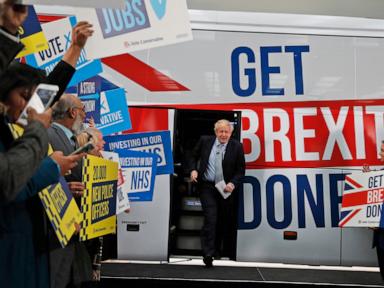
Ten years after the June 2016 referendum, the debate surrounding the United Kingdom’s departure from the European Union remains trapped in a binary rhetorical loop. Critics point to structural friction as a self-inflicted catastrophe, while proponents defend the departure as an incomplete transition toward national autonomy. Both narratives obscure the mechanistic realities of the past decade.
Brexit was not a single event, but a profound macroeconomic and institutional realignment. Evaluating its legacy requires moving past political sentiment to analyze the structural adjustments, friction points, and operational trade-offs that define the modern British state. You might also find this connected story interesting: The Mechanics of Backchannel Diplomacy: Switzerland as the Facilitator of US-Iranian Strategic De-escalation.
The Friction Function: Quantifying Structural Re-regulation
The core economic thesis of the leave campaign rested on replacing single market membership with a bespoke trade partnership. In practice, the implementation of the EU-UK Trade and Cooperation Agreement (TCA) substituted zero-tariff access for substantial non-tariff barriers. The economic cost of this transition can be understood through three distinct structural bottlenecks.
1. The Asymmetry of Non-Tariff Barriers
While the TCA eliminated direct tariffs on originating goods, it introduced pervasive non-tariff barriers including rules-of-origin certifications, sanitary and phytosanitary (SPS) checks for agricultural products, and duplicate customs declarations. As extensively documented in latest articles by Reuters, the effects are widespread.
The administrative burden of these requirements scales regressively. Large multinational enterprises possess the legal and compliance infrastructure to absorb increased transactional costs. Independent small and medium-sized enterprises (SMEs), conversely, face a steep cost-to-revenue ratio on small-batch exports. This structural imbalance has caused an aggregate drop in trade intensity, driving a notable contraction in the total number of British firms exporting to the European continent.
2. Divergence and Capital Starvation
The primary driver of the UK’s lagging gross domestic product (GDP) relative to its G7 peers is a long-term stagnation in business investment. Capital allocation requires predictable regulatory horizons.
By decoupling from the European Union Aviation Safety Agency, the European Chemicals Agency, and financial passporting frameworks, the UK introduced systemic policy uncertainty. International firms that previously utilized the UK as a friction-free, English-speaking gateway to the single market redirected capital expenditures toward mainland Europe. Independent analyses indicate this persistent investment deficit has left UK capital expenditure between 10% and 12% lower than pre-2016 trend lines would predict.
3. The Structural Drag on Productivity
A domestic economy’s long-term growth capacity is ultimately bounded by its productivity. By reducing total trade openness—the sum of imports and exports as a share of GDP—the UK insulated domestic industries from competitive pressures and disrupted highly optimized cross-border supply chains. The resulting friction acts as a systemic tax on efficiency, effectively lowering the UK's potential GDP growth rate by an estimated 4% to 6% compared to a counterfactual scenario of continued EU integration.
Labor Market Realignment: The Compositional Substitution
One of the most immediate exercises of post-Brexit sovereignty was the termination of the free movement of persons and the implementation of a points-based immigration system. The outcome has not been a net reduction in migration, but a dramatic shift in labor composition.
[Pre-2016 Labor Supply Model]
  EU Free Movement -> Low-wage, flexible seasonal labor (Hospitality, Agriculture, Logistics)

[Post-2016 Labor Supply Model]
  Points-Based System -> Non-EU visa pathways (Healthcare, Higher Education, Skilled Tech)
This structural shift broke the operational models of sectors reliant on low-wage, high-turnover European labor, such as hospitality, seasonal agriculture, and domestic logistics. Labor shortages in these fields did not trigger the widespread technology-driven automation or massive domestic wage growth promised by proponents. Instead, the adjustment occurred through reduced business output, operating hours, and higher consumer prices.
Simultaneously, immigration from non-EU nations reached historic highs, driven by targeted visa pathways for health, social care, and higher education. While this influx sustained aggregate population growth and supported public service staffing, its net effect on GDP per capita remains marginal. The UK substituted a highly responsive, market-driven regional labor supply for a highly bureaucratized visa apparatus, trading microeconomic agility for centralized administrative control.
Institutional Fragility and Governing Churn
The administrative reality of "taking back control" forced an unprecedented expansion of the domestic state machinery. Functions previously centralized in Brussels had to be duplicated natively within Whitehall, straining civil service capacity and triggering profound political instability.
The sheer complexity of unwinding forty years of legal integration converted the British political system into an engine of crisis management. Over the past decade, the office of Prime Minister has seen six distinct occupants. This unprecedented turnover reflects a fundamental structural mismatch: the executive branch was consistently forced to execute ideologically absolute mandates within a highly constrained legal and geographic reality.
The geographic friction is most visible in the fragile equilibrium of the devolved nations:
- The Northern Ireland Protocol and Windsor Framework: The necessity of avoiding a hard border on the island of Ireland forced a unique regulatory compromise, effectively placing an internal customs frontier in the Irish Sea. This structural anomaly repeatedly paralyzed the Stormont executive, demonstrating that legal sovereignty can be restricted by geographic and geopolitical imperatives.
- The Scottish Independence Vector: The divergent voting patterns of 2016—where Scotland voted overwhelmingly to remain—strained the constitutional fabric of the Union, handing the Scottish National Party a durable mechanism to challenge Westminster’s democratic mandate.
The Illusion of the Nimble Medium-Sized Player
The strategic foreign policy blueprint for post-Brexit Britain was branded as "Global Britain." The core hypothesis held that a nimble, unaligned UK could secure superior trade terms with rapidly growing Indo-Pacific markets and the United States, outpacing the bureaucratic EU.
This strategy was built on a late-stage globalization model that no longer exists. The current geopolitical landscape is defined by aggressive economic nationalism, weaponized supply chains, and large-scale industrial subsidies.
In a global trade system dominated by three massive regulatory blocs—the United States, the European Union, and China—a medium-sized economy lacks the market leverage to dictate terms. The highly anticipated comprehensive free trade agreement with the United States failed to materialize due to a fundamental shift in Washington toward protectionism.
While the UK successfully acceded to the Comprehensive and Progressive Agreement for Trans-Pacific Partnership (CPTPP) and signed bilateral deals with Australia and New Zealand, the macroeconomic yields of these agreements are mathematically insufficient to offset the structural losses incurred by distancing the nation from its closest geographic market. Transport costs scale with distance; trade gravity models dictate that market access to a neighbor matters far more than marginal tariff reductions half a world away.
Strategic Realignment Pathways
The current administration faces a structurally constrained deck. Reversing Brexit entirely is politically unviable for the foreseeable future, leaving policymakers with a narrow set of operational maneuvers to mitigate ongoing friction.
- Regulatory Alignment Windows: To lower non-tariff barriers, the UK must selectively pursue veterinary and sanitary-phytosanitary (SPS) agreements with the EU. This requires a pragmatic acceptance of "dynamic alignment"—adhering to EU standards without having a vote in their creation—to salvage SME export capacity.
- Targeted Professional Mobility: Negotiating reciprocal, sector-specific mobility frameworks for high-value services—such as legal, architectural, and financial consulting—is critical to protecting the UK’s strongest economic asset: its services sector.
- Infrastructure Capital Injection: To counteract the long-term investment drought, the state must deploy targeted fiscal incentives and regulatory fast-tracking for domestic green energy, life sciences, and defense technology. This is necessary to build domestic capacity where international capital has pulled back.
The structural lesson of the Brexit decade is clear: legal sovereignty is not identical to economic power. While the UK successfully recovered its formal legislative independence, it did so by trading away market integration and supply-chain efficiency. The ongoing task of British statecraft is not to celebrate an illusion of total autonomy, but to manage the permanent structural trade-offs of a mid-sized economy in a deeply fractured global market.