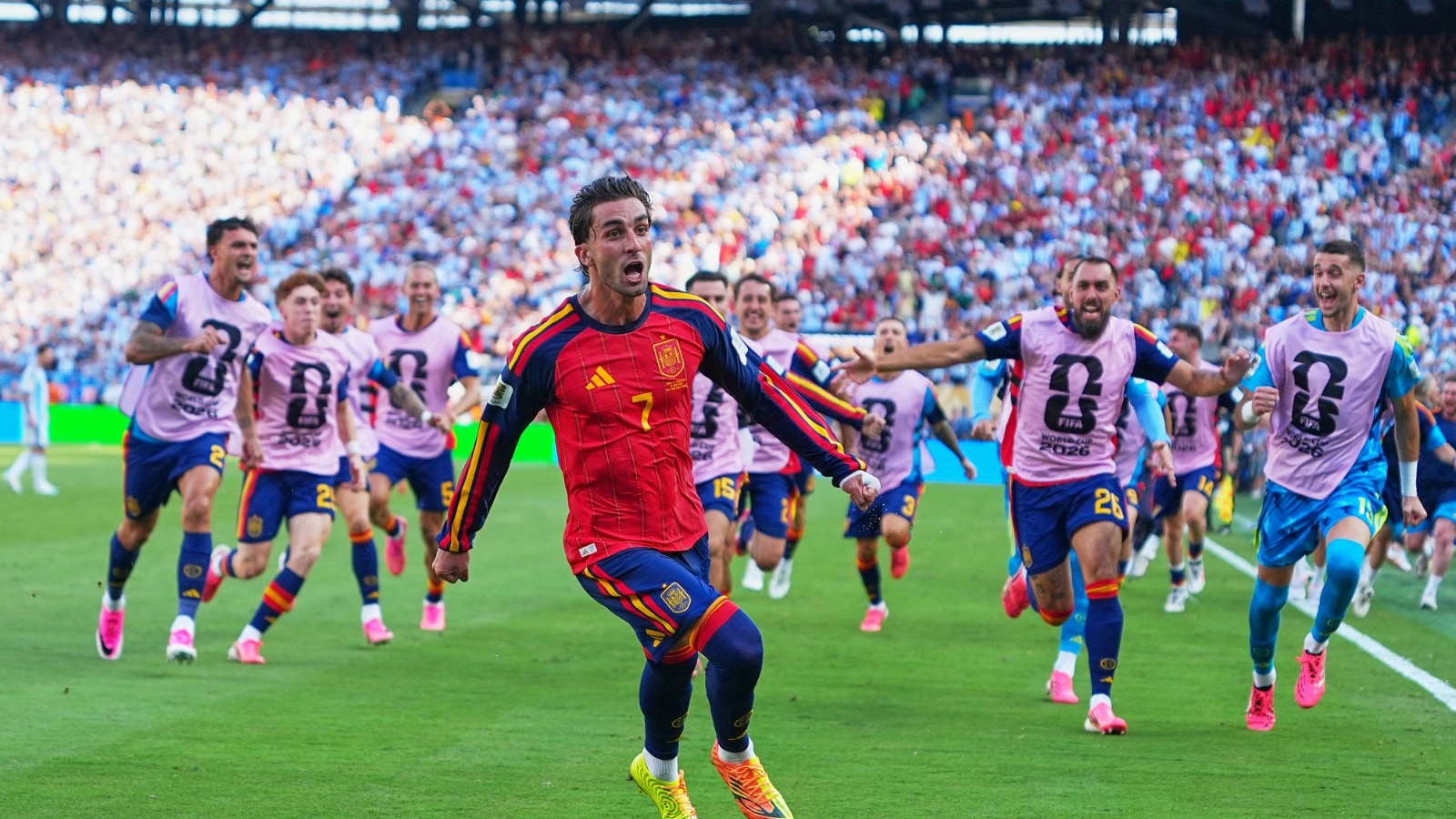
The 6-4 fixture between England and France in the third-place playoff of the 2026 FIFA World Cup serves as a pristine case study in the structural collapse of elite defensive systems under conditions of low tournament incentives. Traditional football analysis labels this ten-goal match a wild thriller. A tactical diagnostic reveals it was the direct outcome of extreme structural degradation in resting defensive shapes, coupled with highly asymmetrical transition phases across both halves.
When elite sporting units operate outside the high-stakes risk management constraints of a primary championship final, their tactical discipline deteriorates according to a predictable pattern. In this instance, England's 4-2-3-1 and France's 4-1-2-3 exposed gaping structural vulnerabilities. This article dissects the precise mechanisms behind this historic scoreline, mapping the specific systemic failures that enabled a historically anomalous offensive output.
The Asymmetrical First Half: Uncontested Zone 14 Access
The opening 45 minutes operated as a clinic in defensive passivity from France. Didier Deschamps utilized a mid-block that failed to disrupt England’s structural build-up. The functional breakdown occurred due to an isolation of Warren Zaïre-Emery within the lone defensive midfield pivot space. Because Rayan Cherki and Adrien Rabiot occupied advanced horizontal bands, England easily bypassed France’s first line of pressure.
This created a major bottleneck in France’s defensive consolidation. England capitalized on three discrete tactical failure modes during this phase:
- Sub-Optimal Rest Defending: France’s center-backs, Ibrahima Konaté and Maxence Lacroix, dropped deep prematurely. This expansion of vertical spacing left Zone 14 completely unmonitored.
- Ineffective Edge-of-Box Contesting: Declan Rice exploited this exact structural deficit in the third minute. He possessed the spatial luxury to execute a long-range strike without an immediate pressing trigger.
- Flank Isolation via High Full-Back Positioning: With Malo Gusto and Theo Hernández pushed high up the pitch, England's wide forwards pinned the French central defenders into wide-channel isolations.
France Defensive Disconnection (First Half):
[Forward Line]
     |  (Massive Vertical Space / Zone 14 Exploited by Rice & Saka)
[Zaïre-Emery Isolated]
     |  (Backline Dropping Deep Prematurely)
[Konaté] - [Lacroix]
Bukayo Saka’s first-half double (37th minute and 45+1 minute) derived from this systemic flaw. Thomas Tuchel’s side systematically engineered overloads on the left flank of France's defense. The lack of tracking from the French wide forwards forced Theo Hernández into a continuous two-versus-one dilemma, ultimately yielding a 4-0 halftime deficit.
The Half-Time Adjustments and the Reversal of Pressing Vectors
The tactical landscape inverted immediately following the interval. Deschamps executed a triple substitution at half-time, replacing Theo Hernández with Lucas Digne, Ibrahima Konaté with Dayot Upamecano, and introducing Bradley Barcola and Ousmane Dembéle. This reconfigured France’s pressing vectors from a passive 4-1-2-3 mid-block to an aggressive, high-pressing 4-3-3 structure designed to force central turnovers.
The secondary phase of the match can be formalized through an offensive efficiency function. England, playing with a four-goal cushion, exhibited a psychological deceleration that compromised their defensive structural integrity. Dean Henderson, starting ahead of Jordan Pickford, found his passing lanes blocked by France’s adjusted pressing triggers.
France Tactical Shift (Second Half):
High Aggressive Press (Barcola / Mbappé / Dembélé)
  --> Forces Central English Turnovers
  --> Direct Exploitation of Quansah / Guéhi Disconnection
France’s rapid-fire response highlighted the fragility of England’s central defensive pairing of Jarell Quansah and Marc Guéhi when deprived of protection from a declining double pivot. Kylian Mbappé’s strike in the 48th minute was the direct product of an aggressive recovery high up the pitch by Michael Olise, who fed Mbappé into the half-space.
Six minutes later, the same mechanism produced Bradley Barcola's goal. By squeezing the central channels, France compressed England’s build-up phase into high-risk areas, generating structural panic.
Statistical Ledger of Defensive Deviations
The historical anomaly of this match is fully visible when reviewing the chronological progression of goals, which showcases how tactical systems decayed as fatigue and personnel changes took effect.
| Minute | Team | Scorer | Tactical Catalyst | Systemic Failure Mode |
|---|---|---|---|---|
| 3 | England | Declan Rice | Uncontested Zone 14 Entry | Deep line dropping without midfield coverage |
| 18 | England | Ezri Konsa | Set-Piece Second Phase | Failed zonal clearing and box marking |
| 37 | England | Bukayo Saka | Flank Overload | Lack of wide forward tracking from France |
| 45+1 | England | Bukayo Saka | Rapid Transition | Midfield turnover during French build-up |
| 48 | France | Kylian Mbappé | High-Press Turnover | English central defensive deceleration |
| 54 | France | Bradley Barcola | Half-Space Penetration | Poor lateral shifting across England's back four |
| 66 | France | Kylian Mbappé | Direct Counter-Attack | Midfield detachment from Rice and Eze |
| 87 | England | Bukayo Saka (Pen) | Isolated Wide 1v1 | Malo Gusto lunging after Djed Spence's underlap |
| 90+6 | France | Ousmane Dembélé | Late Stoppage Overload | Chaotic box defending during low-block phase |
| 90+8 | England | Jude Bellingham | Elite Individual Dribble | Total fatigue-driven collapse of French tracking |
The Mechanism of Individual Brilliance vs. Tactical Fatigue
As the match entered its final quarter, the structural frameworks of both managers yielded entirely to individual quality and extreme physical fatigue. The introduction of Jude Bellingham in the 78th minute provided England with a vital injection of transition-breaking power.
Before Bellingham could restore structural order, Mbappé’s second goal (66th minute) exposed the physical drop-off of England’s midfield pivot. Declan Rice and Eberechi Eze failed to maintain vertical compactness, allowing Mbappé to exploit a vast expanse of green grass between the lines. This goal marked an individual milestone, elevating Mbappé to 22 career World Cup goals and solidifying his position as the all-time leading goalscorer in tournament history.
The final ten minutes illustrated how tactical fatigue breaks down defensive decision-making under intense pressure. Djed Spence’s underlapping run into the box forced a clumsy challenge from Malo Gusto, leading to Saka’s penalty in the 87th minute.
Even when Ousmane Dembélé pulled France within one goal during stoppage time (90+6 minute), it was not the product of sustained tactical structure, but rather chaotic box defending during a frantic low-block phase. Jude Bellingham’s solo goal two minutes later (90+8 minute) served as the final exclamation point, exposing a completely depleted French defensive block that had entirely abandoned its tactical shape.
The Strategic Balance Sheet
A structural breakdown of this 10-goal match reveals specific strategic limitations inherent to both squads as they look toward the next cycle:
- The Goalkeeper Dilemma: Dean Henderson's inability to manage his box under high-press conditions indicates a clear limitation in England's depth behind Jordan Pickford.
- The Single-Pivot Vulnerability: France's total dependency on a single deep midfielder leaves them structurally exposed to elite transition teams whenever their advanced central midfielders fail to track back.
- Consolation Bracket Biases: Teams consistently take significantly higher defensive risks when competing for third place rather than the primary trophy, heavily distorting baseline defensive data.
For Thomas Tuchel, the match confirms that while England possesses elite attacking weapons capable of ruthlessly punishing structural defects, their transitional defensive mechanics remain highly vulnerable when their pressing intensity drops. For France, this fixture marks the definitive end of Didier Deschamps’ historic tenure, showing an elite system that had lost its trademark defensive solidity.
Future tactical configurations must prioritize defensive structural integrity over attacking freedom, ensuring that numbers in possession do not permanently compromise the defensive rest shape.
To correct these systemic transition issues before upcoming continental qualifiers, national team setups must implement a strict rule: at least three players must remain in deep central defensive positions during sustained attacking phases, regardless of the scoreline or the tournament context.