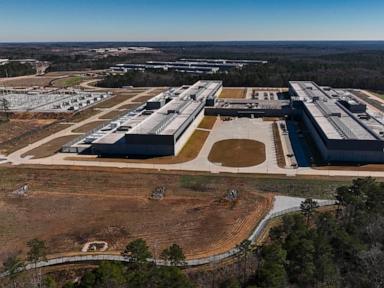
The rapid concentration of continental cloud infrastructure within South African borders has triggered an acute friction point between foreign capital deployment and municipal resource constraints. As hyperscale operators acquire prime municipal land parcels in Johannesburg and Cape Town to capture regional compute demand, civil society organizations have formally petitioned the South African Human Rights Commission to halt further approvals. At the core of this conflict lies an incomplete accounting framework: municipalities evaluate high-density computing facilities using traditional real estate zoning metrics rather than treating them as intensive industrial resource sinks.
The economic justification presented by state leadership positions South Africa as the primary digital gateway for the continent, hosting roughly 70 percent of Sub-Saharan data center capacity. Yet, this macroeconomic ambition collides directly with three quantifiable operational variables: electrical load allocation, evaporative water loss, and spatial opportunity cost. Analyzing these variables requires stripping away promotional narratives to examine the direct trade-offs inherent in building compute capacity within a constrained developing economy.
The Energy Cost Function and Grid Interaction
The primary technical friction centers on electrical consumption and its interaction with the national grid managed by Eskom. Hyperscale facilities are continuous load operations, requiring constant baseline power that differs fundamentally from intermittent commercial demand profiles.
- The Surplus Fallacy: Industry representatives frequently defend expansions by pointing to recent stability and temporary generation surpluses within the national grid. However, treating a temporary generation buffer as permanent capacity ignores reserve margin requirements. A single hyperscale campus can demand upwards of 160 megawatts, equivalent to a significant fraction of a metropolitan peak demand baseline.
- The Energy Mix Disconnect: While operators state that new facilities increasingly contract for renewable energy sources, the structural reality of the grid means that baseline stabilization often relies on legacy coal-fired generation assets. When data centers absorb available clean energy or rely on grid-backed power purchase agreements, they shift the macro-energy mix, altering wholesale pricing structures and potentially externalizing carbon costs onto residential ratepayers.
- The Capital Misallocation Loop: Foreign direct investment into digital infrastructure requires dedicated transmission and distribution upgrades. When state resources prioritize grid reinforcement for private server farms, capital is diverted from public electrification and grid hardening projects needed for broader industrial and residential stability.
The Hydro-Resource Equation
Water consumption models for high-density computing represent the second major vector of civic friction, particularly in municipalities with historical vulnerabilities to drought. Standard closed-loop and evaporative cooling designs dictate that maintaining optimal server operating temperatures requires millions of liters of water daily.
- Evaporative Loss Dynamics: Standard industrial cooling configurations reject heat via evaporation, meaning a significant majority of intake water is permanently lost to the atmosphere rather than recycled through local municipal treatment systems.
- Opportunity Cost in Water-Scarce Zones: In metropolitan areas like Cape Town, which navigated severe municipal water rationing during past crises, the aggregate annual draw of a single hyperscale campus can scale into the billions of liters. This consumption volume directly matches the baseline domestic needs of tens of thousands of households. The regulatory failure is the absence of mandatory efficiency floors that penalize evaporative cooling in regions facing hydrologic stress.
- Indirect Water Intensity: Beyond direct facility intake, the electricity required to power these servers carries an indirect water footprint. Coal-fired power generation consumes vast quantities of water for steam production and turbine cooling. Consequently, the true resource extraction multiplier of a data center is the sum of its direct cooling draw plus the water utilized at the point of power generation.
Spatial Hegemony and the Employment Multiplier
Land use policy governing digital infrastructure deployment reveals a deep structural mismatch between capital-intensive foreign assets and local socio-economic development needs.
- Spatial Inequity: Prime land parcels in economic hubs are finite. When multinational technology firms acquire large tracts for secure, low-density server compounds, they remove valuable acreage from mixed-use, residential, or labor-intensive industrial development. This reinforces historical spatial segregation patterns by directing well-located municipal land toward automated infrastructure rather than community-integrated economic projects.
- The Capital-to-Labor Ratio: Digital infrastructure exhibits a notoriously low employment multiplier relative to initial capital expenditure. While the construction phase generates temporary trades employment, the operational phase requires minimal on-site human capital. Billions of rand in foreign investment yield sparse permanent local job creation, resulting in an unfavorable ratio of community disruption to economic return.
- Value Extraction Asymmetry: Most hyperscale operators maintain foreign parent entities. Operational revenues, intellectual property licensing fees, and capital appreciation flow outward, while the permanent environmental externalities—diminished water tables, electronic waste streams, and grid wear—remain localized within municipal boundaries.
The Regulatory Deficit and Institutional Blind Spots
The current governance failure stems from a legislative vacuum. Municipal planning tribunals assess data center applications through standard commercial zoning bylaws, omitting mandatory impact thresholds for digital infrastructure.
Operators are not currently bound by statutory requirements to publicly disclose cumulative energy draws, water intake metrics, or lifecycle carbon accounting prior to receiving municipal land-use authorization. This creates an asymmetric negotiation environment where local authorities, lacking technical oversight tools, approve resource-intensive developments under the generalized banner of digital modernization.
To correct this market failure, policy development must pivot from voluntary corporate ESG pledges to binding legislative frameworks. Municipalities must institute a mandatory digital infrastructure register, enforce public disclosure of resource utilization coefficients prior to zoning approval, and tie tax incentives directly to verified local job creation and closed-loop water recycling thresholds. Capital deployment without baseline transparency guarantees that private operational efficiencies will continue to be subsidized by public resource depletion.