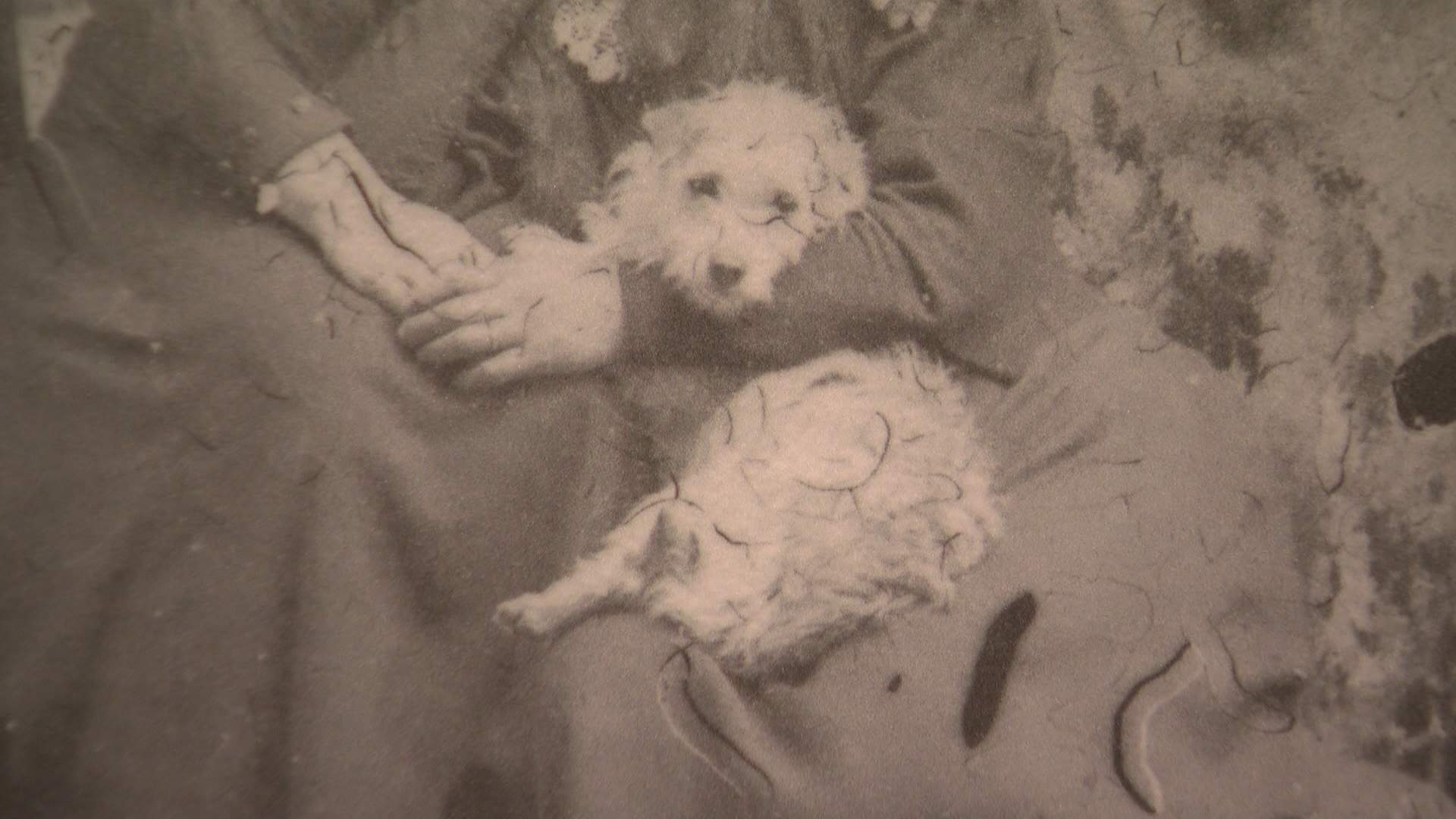
The return of the sole surviving Coast Salish woolly dog pelt to British Columbia after more than a century and a half in storage at the Smithsonian Institution provides a rare empirical anchor for examining an entire destroyed biological and economic system. Named Mutton and collected in 1859 by naturalist George Gibbs, this single artifact breaks a 160-year geographic isolation, landing at the Museum of Anthropology at the University of British Columbia. Yet, treating this event merely as a sentimental homecoming misses the structural reality. The pelt is a high-resolution data point representing an extinct domestic livestock economy, a suppressed Indigenous biotechnology, and a deliberate colonial disruption of husbandry practices that spanned millennia.
The Domestic Economy of Coast Salish Textile Production
Before the systemic imposition of colonial policies, Coast Salish and Makah communities operated an intensive, highly selective animal husbandry framework. The woolly dog (Canis familiaris) was not a casual pet, nor was its maintenance left to chance. Historical accounts and recent genomic sequencing of Mutton’s pelt indicate that these animals were managed as specialized fiber-producing livestock.
The operational inputs and outputs of this economy can be categorized through three structural variables:
- Dietary Investment: Communities expended high-value caloric resources—specifically fresh salmon and elk—to feed the dogs. This dietary restriction was chemically calculated; isotope analysis of Mutton's pelt confirms a protein-rich diet designed to optimize hair follicle growth, tensile strength, and texture.
- Reproductive Isolation: Genomic analysis reveals that approximately 85 percent of Mutton’s ancestry remained untainted by European dog breeds introduced during early colonization. This demonstrates strict phenotypic and genotypic management over centuries, preventing genetic drift and maintaining a specialized double-coat mutation characterized by dense, short underhairs and long, crimped guard hairs.
- Harvest Yield and Processing: Sheared annually like sheep, the harvested undercoat was rarely spun pure. It was systematically blended with mountain goat wool, down feathers, and plant fibers to alter the friction coefficients, weight, and thermal properties of the resulting yarn. The output was transformed into ceremonial blankets and regalia that functioned as standardized units of wealth, status, and economic exchange across Pacific Northwest trade networks.
The Mechanics of Extinction
The disappearance of the woolly dog in the late 19th century is frequently misattributed in casual historical accounts to simple technological obsolescence—the naive assumption that cheap, machine-woven trade blankets rendered animal-hair textiles redundant. A rigorous structural analysis refutes this narrative. Complex domestic systems do not vanish organically when minor substitutes appear; they are dismantled by external shocks.
The actual drivers of extinction operate on two distinct axes:
The first axis is regulatory and spatial displacement. Settler colonialism disrupted Indigenous land tenure, seasonal migration patterns, and village settlement structures. Maintaining specialized livestock requires dedicated infrastructure, secure foraging zones, and communal oversight. As colonial authorities criminalized traditional Indigenous practices, forced children into residential systems, and restricted movement, the labor-intensive social structures required to feed, groom, and shear the dogs collapsed within two generations.
The second axis is biological disruption via unmanaged introgression. While Indigenous breeders successfully walled off the woolly dog genome for decades after European contact, the exponential influx of European stray and working canids eventually overwhelmed isolated rural communities. Uncontrolled mating degraded the specialized recessive traits responsible for the unique wool phenotype, effectively absorbing the remaining population into the broader, mongrelized canine demographic of the frontier.
Genomic Signatures and Biological Architecture
Modern molecular analysis of Mutton’s pelt has transformed the specimen from an ethnographic curiosity into a genetic blueprint. Sequencing data extracted from the preserved hair and skin tissue isolates 28 distinct gene variants associated with hair follicle development, skin physiology, and keratin production.
Crucially, one of these identified variants corresponds directly to a genetic mutation that causes woolly hair phenotypes in humans, and bears regulatory similarities to hair-growth gene activations found in prehistoric woolly mammoths. This convergence of mammalian adaptation highlights that the Coast Salish had successfully selected for a rare, highly specialized natural mutation that did not occur natively in any other known domestic dog population globally. The extinction of the breed thus represents a permanent, irreversible pruning of mammalian genetic diversity within the canine lineage.
The Contemporary Resurgence
The temporary relocation of Mutton’s pelt to British Columbia intersects with an active, broader renaissance in Coast Salish textile arts. Contemporary weavers, such as those from the Musqueam, Squamish, and Stó:lō nations, have spent decades reviving dormant spinning and weaving techniques that were nearly severed by state intervention.
Examining the physical artifact under a microscope allows modern artisans to map twist angles, fiber diameters, and blending ratios that confirm oral histories passed down through generations. The return of the pelt functions not as a passive museum exhibition, but as an empirical calibration tool for cultural practitioners seeking to understand the exact tactile and structural qualities of pre-colonial textiles.
Embed the analysis of this artifact into institutional frameworks that treat Indigenous oral history not as folklore, but as primary data storage. Direct ongoing research grants toward mapping the remaining fragments of historical Salish textiles in global archives to reconstruct the full geographic distribution of the woolly dog breed prior to its 19th-century collapse.


