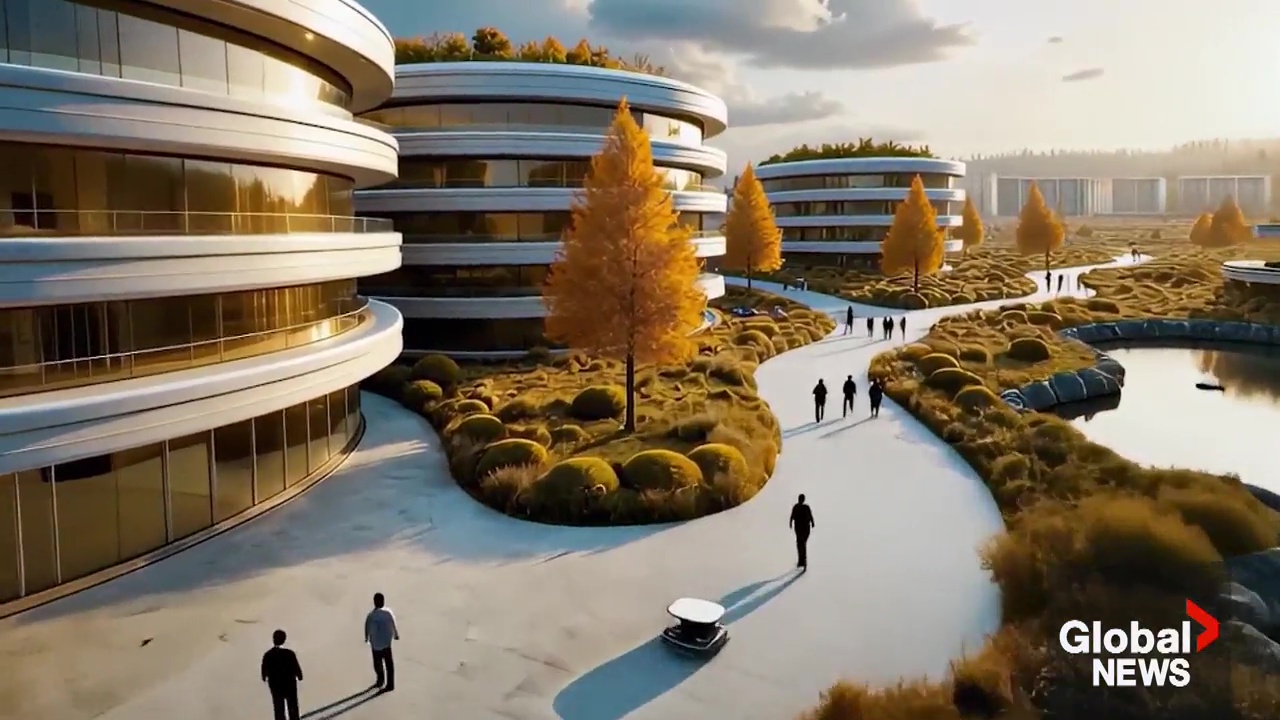
The scaling laws of artificial intelligence dictate a deterministic relationship: exponential growth in model parameters requires a matching exponential expansion in physical infrastructure. When a project aims to achieve unprecedented scale, it ceases to be a mere technology asset and transforms into a heavy industrial intervention. The proposed $70-billion Wonder Valley AI data center campus in the Municipal District of Greenview, Alberta, represents this transition. Planned as a 9-gigawatt, 64-square-kilometer computing enclave backed by O’Leary Digital, the project has triggered a precedent-setting legal challenge from the Sturgeon Lake Cree Nation. This conflict highlights a structural blind spot in current regulatory frameworks: the mismatch between provincial industrial permitting models and the cumulative environmental load of gigascale computing architecture.
To understand the friction between the developers, the provincial government, and the Sturgeon Lake Cree Nation, the project must be evaluated not through commercial promotion, but through the fundamental thermodynamic, hydrological, and jurisdictional mechanics that govern its implementation.
The Thermodynamic Footprint: Understanding the Smelter Mechanics
The standard public narrative frames data centers as clean, digital infrastructure. In reality, a 9-gigawatt facility operates under the exact same thermodynamic principles as a heavy industrial smelting plant. Every watt of electrical energy delivered to a graphics processing unit (GPU) cluster must ultimately be dissipated as ambient waste heat.
The total thermal load of a computing facility is defined by its power consumption and the efficiency of its cooling infrastructure, expressed through Power Usage Effectiveness (PUE). The complete heat dissipation formula for the facility is:
$$Q_{\text{total}} = P_{\text{compute}} \times \text{PUE}$$
Where $P_{\text{compute}}$ represents the direct power consumed by the IT equipment, and $Q_{\text{total}}$ is the total thermal energy rejected into the environment. At a 9-gigawatt scale, even an optimized PUE of 1.2 yields a continuous thermal output exceeding 10.8 gigawatts.
This concentrated heat rejection alters local microclimates. The thermal dissipation from thousands of high-density server racks creates a permanent artificial heat island. In northern Alberta—a region increasingly vulnerable to severe drought and recurring wildfire cycles—layering an industrial heat source of this magnitude onto a stressed ecosystem creates a compounding risk matrix. The environmental impact is not merely additive; it scales non-linearly when interacting with baseline atmospheric warming and reduced forest moisture levels.
The Hydrological Trade-Off Matrix
Cooling a gigascale computing campus requires choosing between two resource-intensive mechanisms: direct water consumption or increased electrical overhead. Developers frequently cite cold-weather locations like Alberta as ideal for ambient air cooling. However, when ambient temperatures rise or peak compute loads are required, supplementary cooling systems must engage.
The project’s current design relies on drawing up to six million cubic metres of water annually from the Smoky River system. To manage this without permanent physical infrastructure, developers have proposed a floating barge system and turbo-cell technologies. This approach minimizes the physical footprint on the riverbank but does not alter the underlying hydrological mass balance.
Data center water consumption occurs primarily through evaporation in cooling towers to lower processing temperatures. This creates a direct operational conflict with regional water security:
- Upstream Depletion: The extraction of six million cubic metres annually reduces downstream volumetric flow, altering sediment transport and thermal stratification in the river.
- Thermal Pollution: Water returned to the ecosystem from industrial cooling processes carries a higher thermal baseline, reducing dissolved oxygen levels and threatening local aquatic biology.
- Cumulative Stress: The Smoky River basin already sustains agricultural demand and resource extraction industries. The addition of a continuous, non-discretionary municipal or industrial water draw during declared agricultural drought periods introduces severe structural risk to the regional water table.
Regulatory Arbitrage and Jurisdictional Friction
The legal action initiated by the Sturgeon Lake Cree Nation exposes a significant gap in provincial industrial policy. In April, Alberta’s Ministry of Environment and Protected Areas exempted the Wonder Valley project from a formal provincial Environmental Impact Assessment (EIA). The exemption was granted on the grounds that the facility utilizes standard power and water systems, thereby bypassing a comprehensive cumulative impact review.
This decision reflects a regulatory framework designed for isolated, twentieth-century industrial installations rather than interconnected, gigascale digital infrastructure. By evaluating components individually—such as treating an off-grid natural gas generation facility and a commercial warehouse district as separate elements—the framework fails to account for the total cumulative impact of the asset.
The Sturgeon Lake Cree Nation’s legal challenge focuses on this specific regulatory gap, raising two primary arguments:
1. The Erosion of Constitutional Consultation
The Crown maintains a constitutional duty to consult First Nations regarding projects executed within Treaty 8 territory that may affect harvesting and treaty rights. The transfer of Crown land to the Municipal District of Greenview, combined with the subsequent approval of water permits without direct Indigenous consultation, represents a procedural vulnerability. A recent provincial court ruling against the province on unrelated jurisdictional matters affirmed that the duty to consult applies broadly to systemic land and resource decisions, challenging the province's stance that consultation is only required for a narrow subset of major projects.
2. Transboundary Air and Climate Feedbacks
Because the facility will generate its own power off-grid, primarily via natural gas and geothermal sources, its emissions profile is substantial. Independent estimates suggest the full build-out could generate between 25.7 and 33 million tonnes of greenhouse gases annually. For context, this volume would neutralize a significant portion of the emissions reductions achieved across the entire province over the past two decades. Because greenhouse gas emissions cross borders and impact broader climate systems, they justify requests for an overarching federal impact assessment under transboundary provisions, bypassing provincial exemptions.
Structural Realities of the Self-Powered Data Center Model
To prevent overloading the provincial electrical grid and protect consumer utility rates, Alberta policy requires large-scale data centers to deploy independent, on-site power generation. While this protects public ratepayers from immediate grid instability, it introduces clear operational limitations for project execution.
The table below outlines the primary energy sources available for gigascale data centers, illustrating the trade-offs between reliability, carbon intensity, and deployment speed.
| Power Generation Type | Operational Availability | Capital Expenditure Intensity | Carbon Footprint | Scaling Bottlenecks |
|---|---|---|---|---|
| Simple/Combined Cycle Natural Gas | Continuous (99.99%) | Moderate | High | Fuel pipeline access; carbon taxation exposure |
| Geothermal Systems | Continuous (95%+) | Extremely High | Negligible | Subsurface exploration risk; long construction timelines |
| Grid-Tied Renewables + Storage | Intermittent | High | Low | Battery storage capacity limits; grid connection queues |
Deploying 9 gigawatts of off-grid capacity forces reliance on natural gas as the primary baseline power source for the next three to five years. Geothermal and advanced cooling technologies remain long-term options rather than immediate solutions. Consequently, the project's near-term viability depends on continuous fossil-fuel combustion. This directly contradicts the net-zero sustainability pledges established by the enterprise hyperscalers who represent the primary lease tenants for this type of computing space.
The Strategic Path Forward
The conflict over Wonder Valley demonstrates that the execution of gigascale AI infrastructure can no longer rely solely on securing land and power contracts. The path to operational readiness requires a fundamental shift in deployment strategy.
Developers must abandon regulatory minimization tactics and proactively initiate a comprehensive, multi-jurisdictional environmental and cultural review. This approach must include binding hydrological guarantees, such as dry-cooling closed-loop architectures that eliminate evaporative consumption, alongside clear revenue-sharing and co-management frameworks with local Treaty nations.
Concurrently, the provincial government must establish clear, data-center-specific regulatory frameworks. Treating a 9-gigawatt computing campus under standard commercial zoning or basic industrial permitting creates severe litigation risks for developers and compromises regional environmental stability. Until these regulatory updates match the true physical and thermodynamic scale of modern computing infrastructure, massive digital projects will face lengthy delays in courtrooms, turning theoretical computing advantages into stranded capital.
The legal and environmental challenges facing the Wonder Valley project underscore the complex realities of building large-scale AI infrastructure. This video provides deep architectural insights into the design, resource constraints, and engineering challenges of modern hyperscale computing facilities.