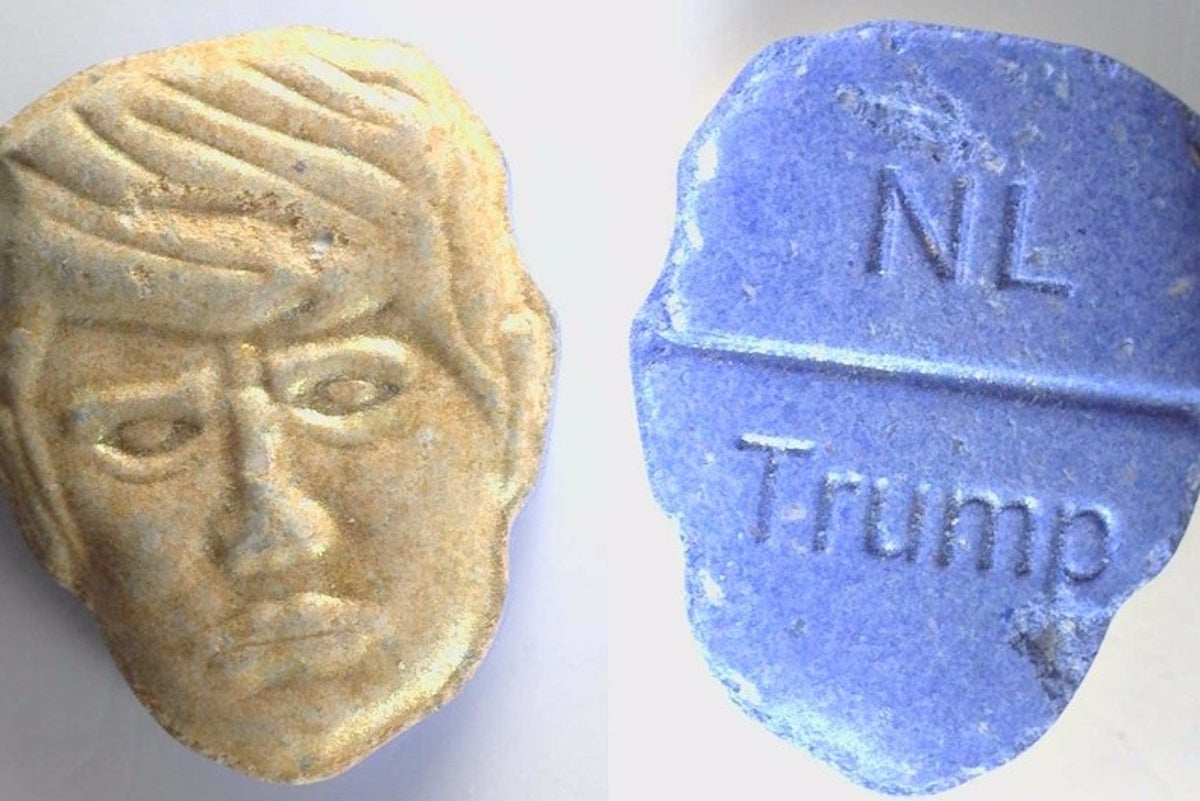
When public health institutions issue emergency warnings regarding branded illicit substances, the media typically focuses on the novelty of the physical design rather than the underlying chemical economics. A recent advisory from the Trimbos Institute in the Netherlands highlights a high-profile manifestation of this phenomenon: ecstasy tablets molded into the likeness of U.S. President Donald Trump, containing para-methoxymethamfetamine (PMMA) instead of standard 3,4-methylenedioxymethamphetamine (MDMA). Analyzing this event requires moving past the cultural sensationalism to examine the precise chemical substitution mechanics, underground supply chain branding strategies, and the physiological toxicity functions that create acute consumer risk.
The Economics of Chemical Substitution
Illicit drug manufacturing operates under strict margin pressures dictated by precursor availability and regulatory enforcement. Synthesizing authentic MDMA requires precursor chemicals like PMK (piperonal methyl ketone), which are subject to stringent international monitoring and diversion controls. When these supply channels experience friction, underground chemists face a cost-function optimization problem: maintain product output using expensive or restricted precursors, or substitute cheaper, readily available analogues.
PMMA functions as a direct chemical substitute in illicit synthesis pathways because its production precursors can be acquired with fewer regulatory bottlenecks. However, the operational tradeoff is severe. While MDMA triggers a rapid release and reuptake inhibition of serotonin, dopamine, and norepinephrine accompanied by manageable thermoregulatory fluctuations in controlled doses, PMMA possesses a significantly narrower therapeutic index. The pharmacokinetics of PMMA involve a delayed onset of action. This kinetic lag breaks the feedback loop normally relied upon by consumers, creating a dangerous incentive structure where users misinterpret delayed psychoactive effects as product inertia and ingest additional doses.
The Branding Mechanics of Underground Pharmaceuticals
Product differentiation in unregulated markets relies entirely on visual and tactile markers. In a mature illicit market such as the Dutch festival and club circuit—where government data indicates hundreds of thousands of annual users—anonymous white or beige powders face high consumer resistance. Trademark stamping and custom press molds solve this verification problem for underground syndicates.
Shaping a tablet into a recognizable cultural icon serves three distinct functions within the criminal supply chain:
- Quality Signaling: Distinctive shapes create an artificial heuristic for potency among end-users, convincing buyers that a specific mold represents a superior or exclusive batch.
- Traceability and Accountability: Stamping markers such as "NL" or specific political figures allows wholesale distributors to track batch performance across decentralized distribution networks.
- Brand Loyalty: Cultivating a recognizable visual identity mimics legitimate consumer goods marketing, encouraging repeat purchasing behavior from specific clandestine laboratories.
This branding strategy is not novel; iterative variations featuring political iconography have surfaced globally over multiple years, demonstrating that underground supply chains recycle marketing frameworks just like legitimate consumer goods industries.
The Toxicological Failure Mode
The primary danger of the Trump-branded tablets identified by public health testing networks lies in the physiological mismatch between user expectation and pharmacological reality. When a consumer ingests a tablet believing it contains standard MDMA, their behavioral model is calibrated to an onset window of 30 to 60 minutes.
PMMA operates on a slower metabolic timeline. The biological clearance rate and receptor-binding profile of PMMA result in a delayed peak plasma concentration. This delay triggers a compounding error in dosing logic. The user, experiencing a muted initial effect, consumes a second tablet. The cumulative plasma concentration then surpasses the critical toxicity threshold, inducing severe hyperthermia, tachycardia, and serotonin syndrome. The physiological mechanism of death from PMMA toxicity is frequently linked to malignant hyperthermia—an uncontrolled elevation in core body temperature that causes multi-organ failure and disseminated intravascular coagulation.
Systemic Mitigation and Harm Reduction Infrastructure
Traditional law enforcement interdiction strategies—such as highway seizures or localized arrests—fail to disrupt the underlying market incentives for chemical substitution. Because clandestine labs can alter press molds and substitute chemical compounds within hours, physical interdiction acts as a lagging indicator of market activity.
Effective containment relies instead on decentralized harm reduction infrastructure, specifically anonymous drug-checking networks. Facilities that allow consumers to submit samples for spectroscopic or chromatographic analysis before ingestion shift the information asymmetry back toward the user. By identifying dangerous substitutions like PMMA and immediately broadcasting municipal "Red Alerts" via digital channels, public health agencies short-circuit the delayed-dosing feedback loop that drives acute fatalities.
Track real-time adulterant trends through regional early-warning networks and utilize point-of-use reagent testing kits to verify chemical composition independently before consumption in high-risk environments.