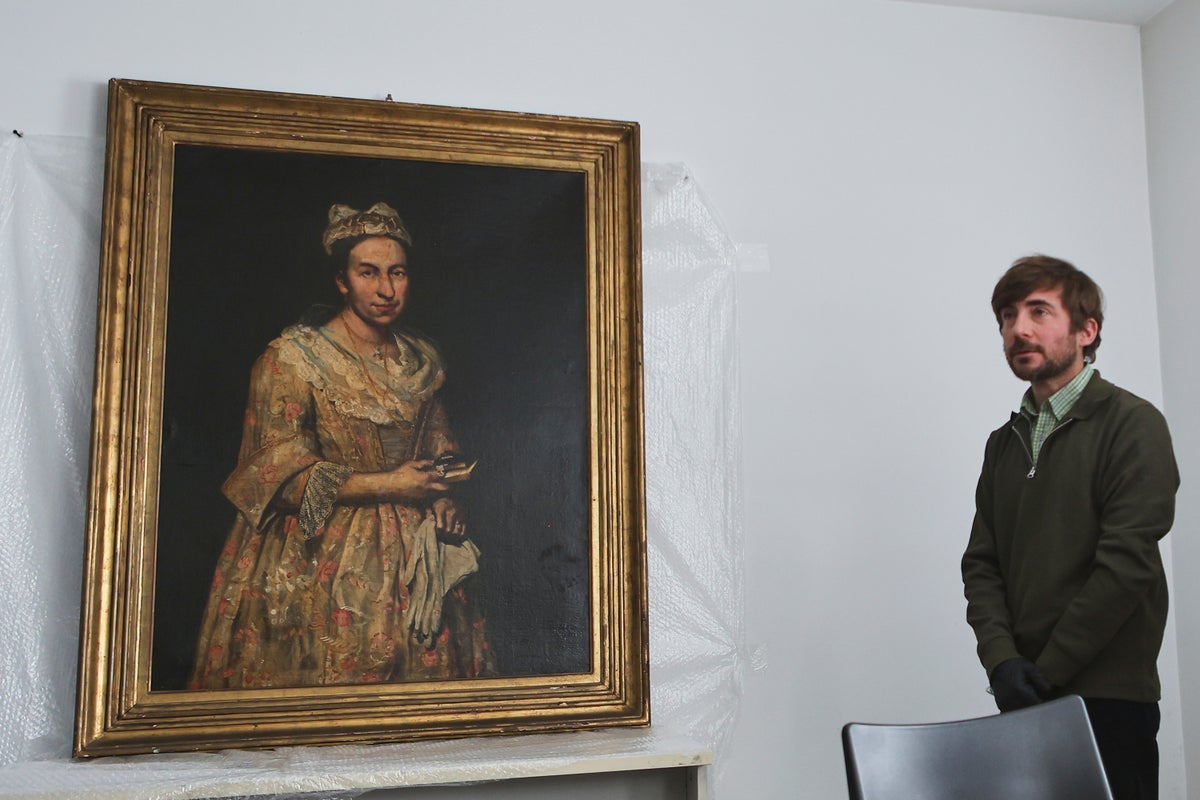
The recovery of high-value cultural assets displaced during systemic state violence relies on an asymmetric information loop between clandestine holders and open-source intelligence vectors. When an 18th-century canvas, specifically Giacomo Ceruti’s "Portrait of a Lady," was identified hanging above a green velvet sofa in a Mar del Plata real estate advertisement, it exposed the operational vulnerabilities of generational asset laundering. This event triggers a necessary economic and legal teardown of how looted art survives eighty years of geopolitical shifts, how modern digital footprints compromise private concealment, and how legal settlement mechanisms trade criminal liability for asset surrender.
The Information Leak Vector
The persistence of illicit artifacts depends on the minimization of public exposure vectors. For decades, the asset remained sequestered within the familial network of Friedrich Kadgien, a high-ranking financial official for the Nazi regime who managed foreign currency and confiscated property before fleeing to South America.
The structural failure of this concealment strategy occurred through a routine commercial transaction: an open-market digital real estate listing. Investigative journalists utilizing digital open-source intelligence bypassed physical security parameters entirely.
- The Asset Exposure Loop: Traditional art tracking relied on physical registries, museum exhibitions, and Interpol notices. The modern vulnerability vector is consumer-facing digital media, where real estate staging photographs inadvertently capture cataloged provenance.
- The Metadata Hazard: High-resolution imagery published for asset liquidation creates an immutable digital ledger. Once indexed by search algorithms, physical location data maps directly to historical missing art inventories.
- The Compression Rate: The time elapsed between digital publication, OSINT discovery, and archival deletion shrank to a matter of hours, demonstrating that closed networks cannot safely interface with open digital marketplaces.
The Mechanics of Duress Transfer and Value Capture
The economic architecture of wartime asset displacement operates on forced liquidation under physical and existential duress. Jacques Goudstikker, a prominent Amsterdam art dealer, managed a vast inventory that was systematically dismantled after the German invasion in May 1940.
The transfer of ownership from Goudstikker to the Nazi apparatus was structured as a commercial transaction under legalistic coercion. This establishes a baseline economic distortion where market value is suppressed to zero for the seller while extraction value is maximized for the state apparatus.
- Asset Valuation Realignment: Initially misattributed in historical records to Giuseppe Vittore Ghislandi, forensic re-examination by Argentina's National Academy of Fine Arts recalibrated the attribution to Giacomo Antonio Melchiorre Ceruti, establishing a baseline market valuation of approximately 250,000 euros.
- The Chain of Custody Depreciation: Illicit transit across international borders introduces a liquidity discount. Because stolen masterworks cannot be freely traded on the open primary market, holders must absorb high transaction secrecy costs, locking the asset into private, non-liquid domestic display environments.
Legal Settlement Optimization and Criminal Liability Mitigation
The judicial resolution orchestrated by Argentine federal courts establishes a functional trade-off between penal enforcement and asset recovery. Patricia Kadgien and her husband faced charges of aggravated concealment after law enforcement raids failed to immediately locate the asset, which was subsequently surrendered via legal representation.
The negotiated settlement bypasses protracted criminal trials by substituting penal incarceration with conditional diversion frameworks.
- The Plea Optimization Matrix: The holders exchanged ownership claims and accepted two years of court supervision alongside nominal restitution payments to a local hospital in Mar del Plata. This minimizes state judicial expenditure while securing the primary objective: physical restitution to the legal heir, Marei von Saher.
- The Enforcement Trade-Off: Criminal prosecution requires proving subjective intent regarding the provenance chain over decades. By leveraging the threat of trial against the holders, prosecutors convert an evidentiary burden into a mandatory surrender contract, accelerating the closure of a legacy restitution claim without risking judicial dismissal.
Systemic Residuals and Global Asset Dispersion
The recovery of the Ceruti canvas highlights the structural incompleteness of post-war restitution infrastructure. The Dutch state recovered a fraction of Goudstikker's inventory post-1945, yet significant allocations remain unaccounted for globally.
The presence of secondary holdings—evidenced by concurrent seizures of 19th-century works during raids on related properties—indicates that displaced collections often function as diversified portfolios within closed familial estates. Each recovery event forces a systemic audit of remaining private collections, tightening the verification protocols required for international art transfers and closing the operational window for legacy asset concealment.
Execute formal restitution demands by anchoring claims to open-source digital surveillance vectors rather than relying on voluntary provenance disclosures from private holders. Prioritize real-time web scraping of regional property markets in historical sanctuary jurisdictions to intercept secondary-market exposure of unrecovered cultural assets.