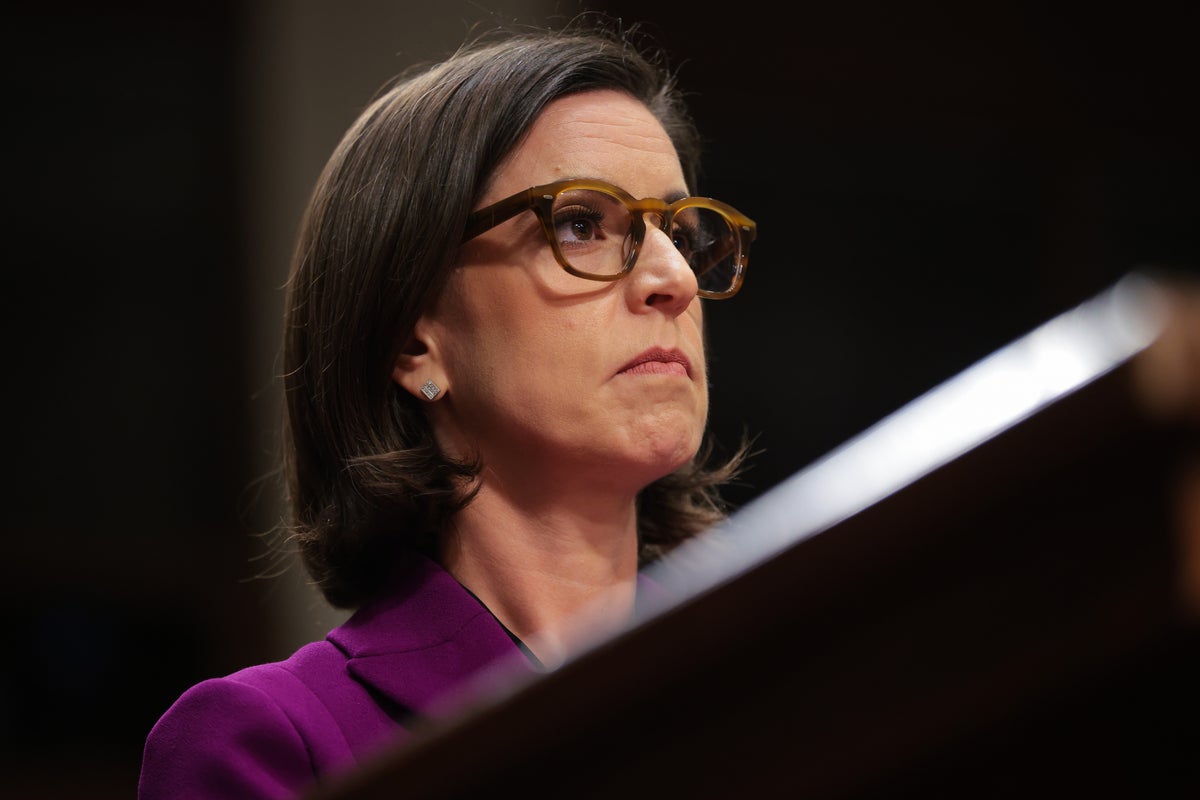
The recent federal lawsuit filed by former United States Pardon Attorney Elizabeth Oyer against the Department of Justice exposes the operational friction points that occur when political patronage intersects with statutory civil service protections. Oyer's complaint, lodged in the United States District Court for the District of Columbia, targets her March 2025 termination following an internal dispute over firearm rights restoration for high-profile individuals. By examining the mechanics of this litigation through an analytical lens, observers can deconstruct how institutional integrity is stressed when executive priorities bypass traditional administrative filtration channels.
The Three Pillars of Administrative Autonomy
To understand the weight of the Oyer litigation, one must isolate the structural mechanisms designed to protect career bureaucrats from political extraction. Federal administrative law relies on three core tenets to maintain systemic neutrality:
- Statutory Insulation: Career positions, such as the Pardon Attorney, are theoretically insulated by civil service frameworks like the Civil Service Reform Act, preventing arbitrary dismissal based on non-performance factors.
- Evidentiary Standardized Review: The Office of the Pardon Attorney evaluates clemency and firearm restoration petitions through standardized criteria, weighing public safety indices, rehabilitation metrics, and statutory disqualifications—such as misdemeanor domestic violence convictions.
- Procedural Separation: Administrative recommendations are designed to emerge from decoupled evaluation processes, ensuring that personal political alignments or executive preferences do not distort technical risk assessments.
The core of Oyer's legal argument rests on the assertion that her removal bypassed these administrative safeguards. According to court filings, the friction escalated when leadership requested a favorable evaluation for actor Mel Gibson—who faced statutory firearm prohibitions stemming from a 2011 domestic violence conviction—under the premise of an independent administrative conclusion. When an institutional office is compelled to manufacture a predetermined conclusion, the structural integrity of the administrative state experiences immediate degradation.
The Cost Function of Political Compliance
When political appointees interface with career civil servants, divergent operational incentives create a severe institutional cost function. Political leadership operates on short temporal horizons dictated by electoral cycles, alliance maintenance, and policy implementation speed. Conversely, career officials operate on long temporal horizons governed by regulatory consistency, legal precedent, and risk mitigation.
When executive leadership demands the circumvention of standard review protocols to execute political favors for partisan allies, the internal transaction costs skyrocket.
- The Compliance Tax: Subordinates must choose between institutional compliance (adhering strictly to statutory guidelines) and executive compliance (aligning with political directives).
- The Retention Penalty: Forcing compliance with irregular directives triggers high turnover among high-capability career personnel, replacing institutional memory with compliance-driven inertia.
- The Litigation Liability: As demonstrated by Oyer seeking remedy through the federal courts after administrative avenues like the Merit Systems Protection Board stalled, unlawful dismissals convert internal operational friction into expensive, public legal liabilities.
The Divergent Causality Models
The official justification provided by Department of Justice leadership diverges sharply from the narrative established in the federal complaint, creating a classic evidentiary conflict.
Leadership maintains that Oyer's termination was structurally decoupled from the firearm restoration dispute, pointing instead to broader policy disagreements regarding executive clemency recommendations made during the transition phase. Under this causal model, the dismissal was a standard performance-based realignment of executive branch personnel to match incoming policy mandates.
Conversely, the plaintiff's causal model frames the termination as a retaliatory extraction mechanism. The proximity—reportedly occurring within a 24-hour window following the drafting of a memorandum detailing public safety objections—serves as the primary behavioral indicator for the retaliation claim. In administrative litigation, establishing this tight temporal sequence shifts the analytical focus toward proving whether the secondary justification (clemency policy divergence) was constructed ex post facto to sanitize an unconstitutional firing.
Systemic Vulnerabilities in Civil Service Protections
The trajectory of this lawsuit highlights structural vulnerabilities within federal employment protections. When oversight bodies such as the Merit Systems Protection Board experience backlogs or operational gridlock, career employees are left in prolonged limbo. This administrative bottleneck reduces the deterrent effect of civil service laws, as executive leadership can absorb the friction of temporary vacancies or protracted litigation costs more effectively than an individual career civil servant can sustain prolonged professional displacement.
Furthermore, invoking First Amendment protections based on perceived political affiliation introduces complex constitutional questions regarding the threshold where policy disagreement ends and viewpoint-based discrimination begins. If the judiciary establishes that refusing to bend technical review standards constitutes protected professional conduct rather than insubordination, it redefines the legal boundaries governing executive control over specialized bureaucratic agencies.
To restore equilibrium to administrative offices handling sensitive executive privileges, structural reforms must enforce stricter evidentiary transparency when career personnel are dismissed immediately following high-stakes internal policy disputes. Without enforceable boundaries separating technical legal evaluation from executive patronage, executive agencies will continue to risk institutional capture, translating internal procedural disagreements into high-exposure constitutional battles.
DOJ official fired over Mel Gibson gun rights request speaks out
This interview provides primary broadcast coverage and direct commentary from the dismissed official regarding the administrative timeline and the disputed firearm restoration request.