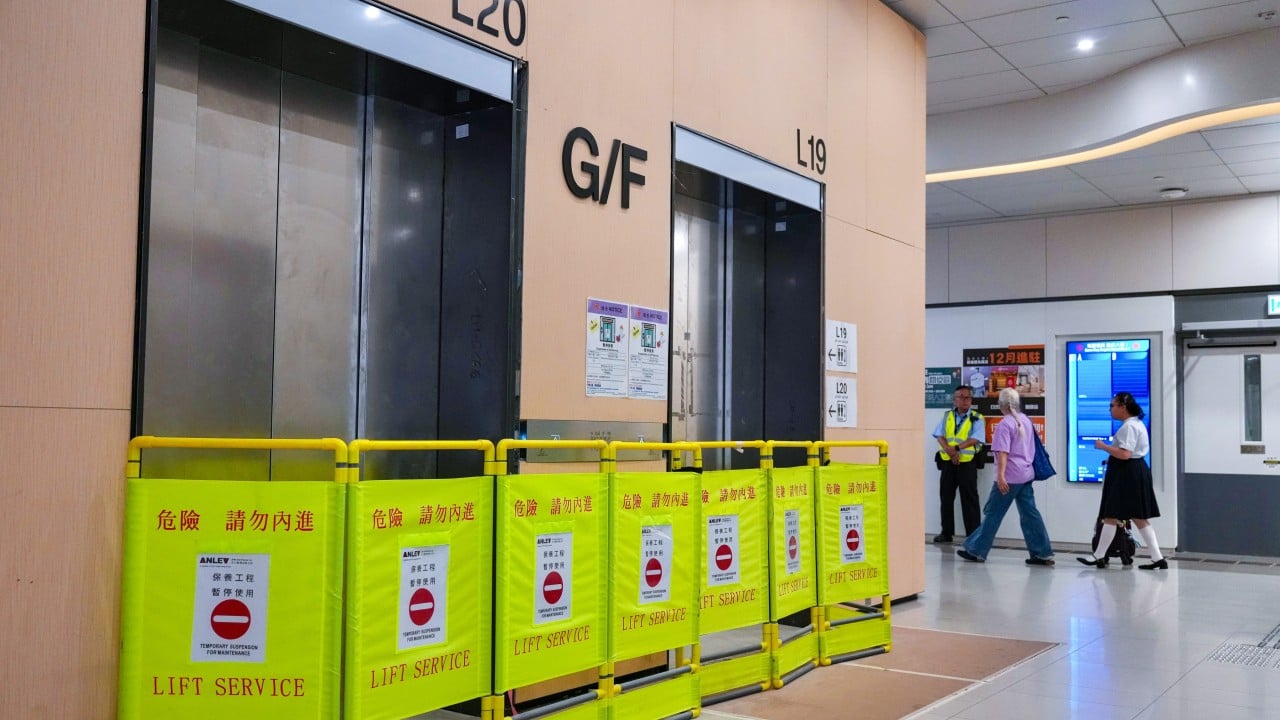
Infrastructure delivery failures rarely stem from a single catastrophic error. Instead, they represent the systemic collapse of interconnected verification layers. The operational breakdown of twenty-eight elevators within the new Clinical Block of Queen Mary Hospital provides a clear case study in public sector project management failure. Rather than viewing this event as an isolated mechanical glitch, it must be analyzed through the failure modes of its governance, oversight mechanics, and contractor incentives.
The Mechanics of the Oversight Breakdown
Public works projects rely on a multi-tiered defense system designed to catch deviations before they manifest as operational hazards. In the Queen Mary Hospital deployment, this structure featured three explicit lines of procedural checks involving the Architectural Services Department, the Electrical and Mechanical Services Department, and external contractors.
When a project of this magnitude suffers widespread failures—ranging from structural guide-rail verticality deviations to unbalanced car centers of gravity—it indicates that these lines of defense experienced correlated failure rather than independent operation.
The Architectural Services Department failed to adhere to internal guidelines when issuing completion certificates. This administrative shortcutting transformed a verification checkpoint into a rubber stamp. Simultaneously, the Electrical and Mechanical Services Department processing units performed superficial field reviews, missing glaring physical discrepancies.
When supervisory entities operate under implicit velocity targets—prioritizing milestone completion dates over verification rigor—the probability of error propagation increases exponentially. The system was not structurally hollow; rather, human compliance collapsed across every link in the chain.
Contractor Incentives and Performance Deviations
The root cause of substandard physical installation—such as flawed lift shaft alignments and compromised fire-barrier components—lies within contractor execution incentives. When bidding processes prioritize cost minimization without matching enforcement mechanisms, contractors deploy margin-protection strategies. These strategies include utilizing lower-tier subcontractors with inadequate technical capabilities and rushing installation phases to avoid liquidated damages.
The technical findings of the investigation highlighted specific mechanical failures:
- Deviations in verticality across lift guide rails and shaft walls.
- Unbalanced centers of gravity within the elevator cars.
- Omission of critical smoke and flame containment components in lift shafts.
These deficiencies point directly to a lack of craftsmanship quality control during the construction phase. When on-site supervision is absent, labor forces substitute engineering precision with expediency. The financial penalties associated with project delays create an adverse incentive structure where passing a superficial inspection supersedes long-term operational integrity.
The Cost Function of Delayed Healthcare Infrastructure
The economic and social damage of this infrastructure failure extends far beyond repair bills and replacement components. In high-density urban environments, medical infrastructure operates under tight capacity constraints. The delay in fully opening a major clinical block forces a reallocation of patient flow across an already strained hospital network.
The cost function of this delay can be modeled across three variables:
- Opportunity cost of unutilized clinical space and advanced medical machinery.
- Increased waiting times for patients requiring specialized interventions.
- Administrative overhead required to conduct multi-departmental forensic investigations and legal proceedings.
Financial recovery through litigation or asset seizure recovers only a fraction of the total societal loss. When an asset intended to alleviate healthcare bottlenecks is rendered unusable due to mechanical and administrative negligence, the public pays the primary cost through degraded service availability.
Reengineering Accountability Mechanisms
Punitive measures, including disciplinary proceedings against civil servants and sanctions against contractors, address moral hazard after the fact. However, true reform requires altering the structural parameters of project delivery.
To eliminate systemic vulnerabilities in future public developments, governance frameworks must decouple the issuance of operational permits from schedule-driven political pressures. Independent audit bodies must possess the statutory authority to halt handovers upon the detection of micro-deviations in structural tolerances.
Accountability must transition from retrospective blame assignment to real-time process interruption. Until verification protocols carry institutional weight equal to milestone delivery targets, complex infrastructure projects will remain vulnerable to cumulative human and procedural failures.


