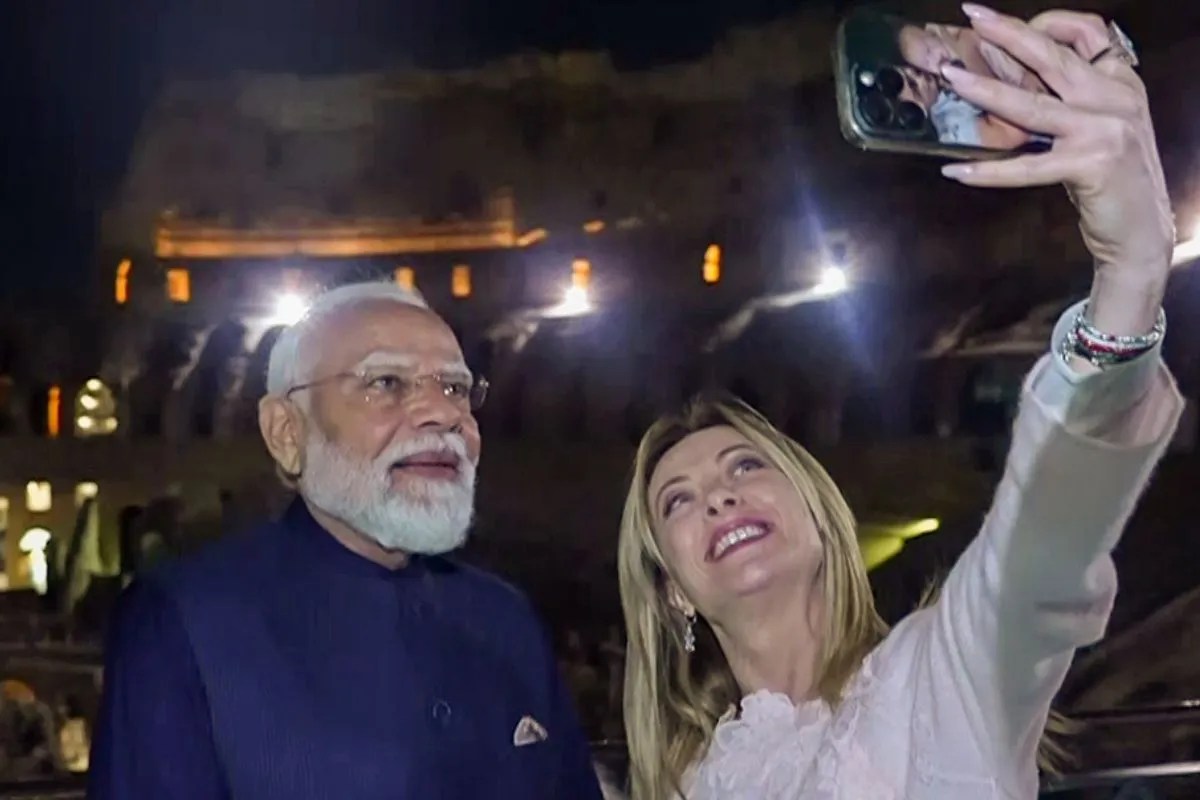
Italian political stability has historically functioned as an oxymoron, characterized by frequent cabinet collapses and short-lived coalition governments. Giorgia Meloni has fundamentally altered this baseline. Crossing 1,413 consecutive days in office, her administration surpassed the postwar continuous tenure record previously established by Silvio Berlusconi. Analyzing this durability requires moving past standard media narratives of interpersonal diplomacy, such as public exchanges with Indian Prime Minister Narendra Modi, to evaluate the structural mechanics enabling executive survival in a historically volatile parliamentary system.
The Structural Drivers of Executive Continuity
The Italian Republic has experienced dozens of governments since the conclusion of the Second World War, averaging a lifespan of roughly one year per administration. Government survival depends on legislative coherence, coalition management, and the neutralization of junior partner blackmail potential. Meloni achieved longevity through three distinct operational adjustments.
First, the consolidation of the right-wing bloc under a single dominant party eliminated internal ideological fragmentation. Previous Italian administrations often suffered from acute vulnerability due to pivotal centrist parties holding disproportionate leverage. By establishing Fratelli d'Italia as the unquestioned anchor of the ruling coalition, Meloni reduced intra-coalition friction.
Second, fiscal prudence paired with calculated populist messaging created a buffer against immediate market panic and European Union scrutiny. Managing public finances with perceived seriousness prevented the bond market spikes that historically triggered technocratic interventions or presidential dismissals of Italian prime ministers.
Third, international pragmatism insulated her domestic standing. Despite historical eurosceptic rhetoric originating from her political lineage, her administration maintained strict alignment with North Atlantic Treaty Organization commitments and European fiscal frameworks. This alignment neutralized external pressure points from Brussels and Washington, removing the primary catalyst for foreign-backed executive destabilization.
The Geopolitical Utility of Bilateral Alignment
External statecraft under Meloni shifted from reactive diplomacy to strategic asset accumulation. The strengthening of the India-Italy Special Strategic Partnership illustrates this calculated alignment. Bilateral cooperation spanning defense industrial bases and the conceptual architecture of the India-Middle East-Europe Economic Corridor provides economic narratives that project stability back to domestic constituents.
Public validation from global counterparts, exemplified by high-profile diplomatic interactions and social media visibility, functions domestically as a signal of international normalization and state competence. When foreign leaders emphasize trust and institutional reliability, local electorates perceive lower risk in executive continuity.
The Limitations and Structural Fragilities
Despite setting the postwar continuity benchmark, the administration faces persistent structural vulnerabilities. Italy faces long-term macroeconomic constraints, including low productivity growth, demographic decline, and high sovereign debt ratios that restrict fiscal maneuverability.
The concentration of political capital within a single dominant party creates succession risks and policy bottlenecks. If economic indicators deteriorate beyond acceptable tolerances, the insulation provided by ideological alignment and international partnerships will degrade rapidly. Legislative durability in proportional representation systems remains conditional on continuous economic management rather than permanent institutional capture.
Execute a strategic audit of public expenditure allocations targeting demographic growth and small-to-medium enterprise productivity before the next fiscal cycle exposes structural tax collection deficits.