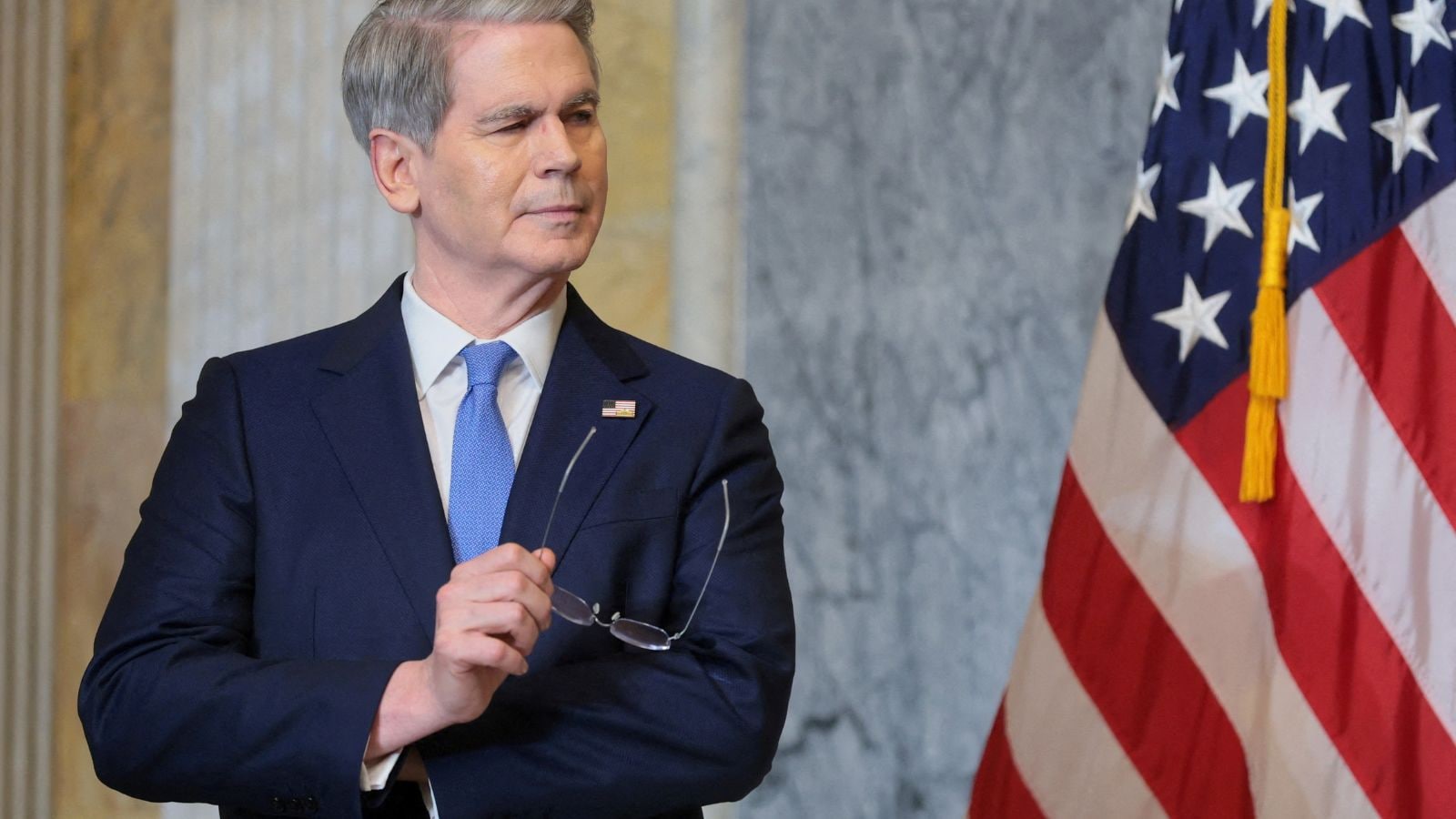
Economic statecraft operates on a calculus of friction, resource deprivation, and supply chain interception. When Treasury Secretary Scott Bessent announced a dual-track strategy combining a physical naval blockade in the Strait of Hormuz with unprecedented financial prohibitions, he outlined a mechanism designed to exhaust a state actor's fiscal reserves before military escalation becomes unavoidable. Deconstructing this maneuver requires moving past political rhetoric to evaluate the structural stress points of the target economy, the elasticity of secondary energy markets, and the enforcement friction inherent in unilateral secondary sanctions.
The Dual Architecture of Financial and Physical Interdiction
Strategic isolation requires simultaneous pressure on capital flows and physical commodity exchanges. The announced policy relies on a synchronized pairing of trade restrictions and naval positioning.
- Capital Strangling: Financial isolation targets the interface between domestic banks and international clearing networks. By criminalizing foreign financial institutions that process transactions for Iranian entities, the Treasury forces global counterparties to choose between access to the dollar-denominated clearing system and the marginal utility of Iranian trade.
- Physical Squeegees: The naval blockade at maritime choke points acts as a physical barrier, preventing seaborne export of crude oil. Without export volumes, the state budget loses its primary mechanism for earning foreign exchange reserves.
This architecture creates a structural deficit within the target's fiscal framework. State-directed expenditures, including military payrolls and internal security subsidies, depend directly on petroleum rentier revenues. When export revenues drop to near zero, the domestic currency undergoes severe depreciation, importing inflation into basic food and energy sectors.
The Enforcement Friction and Secondary Sanction Dynamics
Executing total economic isolation against a sovereign state involves navigating complex compliance networks, particularly involving major importers of Middle Eastern energy. China absorbs a substantial majority of Iran's seaborne oil exports, utilizing independent refiners and non-transparent financial channels to bypass traditional maritime tracking.
The strategic tension centers on secondary enforcement. For Treasury directives to achieve absolute efficacy, Washington must signal a willingness to penalize primary corporate and sovereign buyers in Beijing or elsewhere. However, applying punitive measures against major industrial economies introduces severe systemic risk to global trade relations and debt markets. The mechanism therefore relies on deterrence through credible threats rather than universal immediate penalization, creating a diplomatic bargaining zone where secondary actors must calculate their own exposure to dollar system exclusion.
Market Misinterpretation and Kinetic Substitution
Commodity pricing mechanisms frequently misread the substitution effect of maximum economic pressure policies. Following the announcement, energy markets experienced upward pricing friction, driven by concerns over supply disruptions in the Gulf. From a strategic vantage point, intensified economic warfare functions as a substitute for large-scale kinetic military operations.
By substituting active combat with systemic financial strangulation, the state aims to degrade the opponent's capacity to project regional proxy power without triggering the economic shocks associated with protracted regional warfare. The core economic premise posits that reducing the adversary's financial liquidity forces a contraction of external military operations, achieving strategic objectives through balance-sheet exhaustion rather than tactical bombardment.
Operational Execution for State Actors
Implement the framework by establishing clear jurisdictional enforcement thresholds through the Office of Foreign Assets Control, issuing targeted secondary warnings to non-compliant maritime insurers and port operators, and monitoring tanker transponder manipulation through real-time satellite telemetry to close maritime loophole vectors.