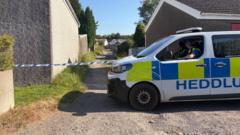
The asphalt on a country road at 2:00 AM doesn’t look like a stage. It looks like nothing. It is a vacuum of ink and damp air, swallowing the high beams of anyone brave or foolish enough to be awake. But on a Tuesday night just outside the city limits, this stretch of blacktop became a crucible.
Two teenagers. Two cars. One devastating impact.
When the metal stopped grinding and the dust settled into the ditches, an 18-year-old man lay dead. Another teenager, barely old enough to vote, stood shivering in the flashing blue lights, suddenly stripped of his youth and wrapped in the heavy, suffocating weight of a murder charge.
The police blotter will tell you the clinical facts. It will list the speed, the vehicle models, the precise time the emergency call crossed the dispatcher's desk. It will state that a young life was lost and a suspect was apprehended. But a police report is a skeleton. It lacks the muscle, the blood, and the terrifyingly human choices that lead up to the moment the sirens start wailing. To understand how a midnight drive turns into a lifetime behind bars, we have to look past the shattered glass.
The Illusion of the Empty Road
Every driver remembers the intoxicating freedom of their first year with a license. The car isn't just transportation; it is a declaration of independence. When you are seventeen or eighteen, the engine beneath the hood feels like an extension of your own pulse. You feel invincible.
Psychologists call this the fable of invulnerability. It is a documented cognitive bias where young minds genuinely believe that tragedy happens to other people, never to them. Combine that psychological blind spot with a two-ton machine capable of tearing through space at eighty miles per hour, and the margin for error vanishes.
Consider what happens when that invincibility meets a quiet night. The road seems abandoned. The world is asleep. The temptation to push the pedal just a fraction deeper feels harmless.
But roads are never truly empty. They hold hidden dips, unexpected deer, and other young drivers operating under the exact same illusion of solitude. When two of these trajectories cross, the math of momentum takes over. It doesn’t care about intentions. It doesn’t care about youth.
When Negligence Crosses into Malice
The transition from a tragic traffic accident to a murder charge is a profound legal and emotional chasm. Most fatal crashes result in charges of manslaughter or vehicular homicide—crimes of recklessness, of failing to perceive a risk that a reasonable person would have avoided.
A murder charge changes the narrative entirely.
It implies a level of conscious disregard for human life that shocks the system. In many jurisdictions, this falls under the umbrella of "depraved indifference" or "implied malice." The prosecution isn't necessarily arguing that the teenager set out that night with the specific intent to kill a peer. Instead, they are arguing that the driver’s actions were so inherently dangerous, so wildly volatile, that they showed an utter lack of regard for whether someone lived or died.
It is the legal equivalent of firing a gun into a crowd and claiming you didn't mean to hit anyone specific.
The distinction is brutal for families on both sides of the courtroom aisle. For the family of the 18-year-old who died, it provides a cold, harsh acknowledgment that their son’s life was taken by more than just bad luck. For the family of the accused, it is a sudden, terrifying descent into a legal system that views their child not as a kid who made a catastrophic mistake, but as a criminal facing decades in a concrete cell.
The Echoes in the Quiet
The worst part of these tragedies isn't the crash itself. It is the silence that follows.
It is the silence in a bedroom that will never be slept in again, where high school graduation tassels still hang from the rearview mirror of a car that didn't make it home. It is the silence of a friend group suddenly fractured, forced to navigate the vocabulary of grief and court dates instead of college applications and weekend plans.
We tend to consume these stories in short, sharp bursts on our feeds. We read the headline, feel a fleeting pang of sympathy or anger, and swipe to the next piece of content. But for the community anchored to that stretch of road, the story never really ends. Every time a car accelerates too quickly down the street, a parent's stomach drops. Every time the clock strikes 2:00 AM, the memory of that night bleeds back into the present.
The legal battle will drag on for months, perhaps years. Lawyers will dissect telemetry data, argue over skid marks, and debate the precise definition of intent. The teenager in the mugshot will age behind glass, his face hardening as the reality of his situation settles in.
But no verdict can rewrite the physics of that midnight encounter. The metal remains twisted, the road remains scarred, and a family is left to count the days by the absence of a voice they will never hear again.