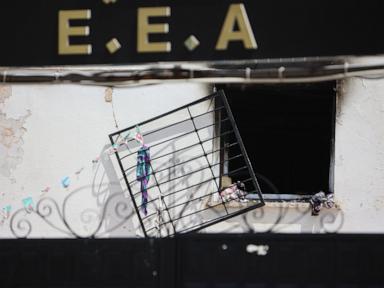
The fatal fire at the Childhood Relief Institution in Mohammedia, an eastern suburb of Algiers, represents more than an isolated infrastructure failure. Occurring at approximately 3:30 a.m. local time on July 16, 2026, the blaze claimed 11 lives and left 19 injured. To view this tragedy solely through the lens of a localized accident overlooks the systemic convergence of severe seasonal climate stress, institutional vulnerability, and municipal resource limitations.
By analyzing the tragedy through structured risk frameworks, we can isolate the operational variables that turn localized ignitions into mass-casualty disasters.
The Systemic Vulnerability Vector
Institutional care facilities house concentrated populations with varying degrees of mobility. The Mohammedia facility operated as a two-story residential care center designed for orphans, abandoned minors, and children with special needs. This demographic mix introduces a high-risk operational profile when evaluating emergency egress capabilities.
The vulnerability of such institutional settings is governed by three primary systemic pillars:
                  ┌──────────────────────────────────────────┐
                  │      INSTITUTIONAL VULNERABILITY         │
                  └────────────────────┬─────────────────────┘
                                       │
         ┌─────────────────────────────┼─────────────────────────────┐
         ▼                             ▼                             ▼
┌──────────────────┐         ┌──────────────────┐          ┌──────────────────┐
│ MOBILITY RATIO   │         │ STRUCTURAL PATH  │          │ STAFF TO PATIENT │
│ Physical/Mental  │         │ Vertical Egress  │          │ Supervision and  │
│ Limitations      │         │ & Containment    │          │ Active Response  │
└──────────────────┘         └──────────────────┘          └──────────────────┘
1. The Mobility Ratio
The presence of residents with physical or cognitive limitations drastically alters the evacuation timeline. During this incident, emergency responders successfully evacuated five residents with special needs. In any facility where a portion of the population cannot self-evacuate, the time required to clear the building increases exponentially, moving from a standard self-preservation model to an assisted-rescue model.
2. Structural Pathing and Vertical Egress
The facility in Mohammedia is a two-story structure. In multi-level residential structures, vertical smoke migration creates rapid asphyxiation hazards in upper corridors. First responders treated ten victims for varying degrees of burns and two for severe respiratory distress due to smoke inhalation. This points to a failure in structural compartmentalization—where open corridors and stairwells act as chimneys, channeling toxic combustion gases directly into sleeping quarters.
3. The Staff-to-Patient Response Ratio
The fire broke out during nocturnal hours (3:30 a.m.) when staffing levels are historically at their lowest. When the ratio of supervisors to high-dependency residents is low, early-stage suppression and orderly evacuation are mathematically compromised. The lack of reported adult casualties suggests that the initial on-site response struggled to manage the physical extraction of the residents under their care before the environment became untenable.
Environmental Catalyst and the Grid Infrastructure Loop
The disaster in Mohammedia did not occur in a vacuum. It coincided with an intense regional heatwave that has sparked nearly 1,000 wildfires across Algeria over the preceding week. This macro-environmental stressor directly degrades municipal and structural safety through a predictable loop of infrastructure strain.
                      ┌───────────────────────────┐
                      │    Prolonged Heatwave     │
                      └─────────────┬─────────────┘
                                    │
                                    ▼
                      ┌───────────────────────────┐
                      │ Overburdened Power Grid   │
                      └─────────────┬─────────────┘
                                    │
                                    ▼
                      ┌───────────────────────────┐
                      │ Transformer/Wiring Failure│
                      └─────────────┬─────────────┘
                                    │
         ┌──────────────────────────┴──────────────────────────┐
         ▼                                                     ▼
┌──────────────────┐                                 ┌──────────────────┐
│  Local Ignition  │                                 │ Substation Trip  │
│  in Institution  │                                 │  and Blackout    │
└──────────────────┘                                 └──────────────────┘
When ambient temperatures remain elevated, the cooling capacity of electrical distribution equipment diminishes. Concurrently, demand for active mechanical cooling (air conditioning units) rises to peak levels. This dual-stress scenario causes:
- Insulation Degradation: High thermal loads degrade wire insulation in aging structures, drastically increasing the probability of short-circuits and electrical arc ignitions.
- Overloaded Transformers: Substations and distribution transformers operate near thermal limits, leading to localized voltage fluctuations and brownouts.
- Emergency Response Dilution: On July 15 alone, more than 130 wildfires were reported across the nation. When municipal civil protection forces are actively deployed to combat massive wildland fires, urban fire suppression assets are stretched thin, directly impacting response times to structural incidents.
The Physics of Passive Containment Failure
While a judicial investigation is underway to establish the precise ignition source of the Mohammedia fire, the transition from a localized ignition to a multi-casualty event is governed by thermodynamic principles.
In residential facilities, the safety margin—defined as the Available Safe Egress Time (ASET) minus the Required Safe Egress Time (RSET)—is determined by passive fire protection systems.
$$\text{Margin of Safety} = \text{ASET} - \text{RSET}$$
If a facility lacks self-closing, fire-rated doors (typically rated for 20 to 90 minutes of thermal barrier integrity), the fire quickly transitions from fuel-controlled to ventilation-controlled.
Once doors or windows fail, the sudden influx of oxygen induces a rapid pressure differential. Hot, toxic gases ($CO$, $HCN$, and $CO_2$) are propelled along corridors at velocities that outpace human movement, cutting off escape routes and inducing immediate cognitive and physical impairment in sleeping occupants. The fact that seven individuals required treatment for severe psychological shock highlights the extreme, chaotic nature of the fast-moving thermal threat.
Actionable Structural Remediation
Preventing future mass-casualty events in high-vulnerability residential facilities requires abandoning passive reliance on municipal response forces and implementing hard engineering controls.
Decoupled Micro-Grids and Localized Generation
Critical social infrastructure must be decoupled from the main municipal electrical grid during peak thermal events. Installing localized solar photovoltaic systems paired with battery storage allows facilities to run cooling systems without drawing high current from a strained municipal grid, mitigating the risk of electrical arc fires.
Retroactive Passive Compartmentalization
All multi-story care facilities must be retrofitted with automatic magnetic door-release systems tied directly to localized smoke detection networks. In the event of smoke detection, all corridor and bedroom doors must automatically close, isolating the thermal and toxic gas threat to its zone of origin and extending the ASET for high-dependency residents.
Mandated Dry-Pipe Sprinkler Systems
Relying on external fire service arrival during regional wildfire crises is a high-risk operational strategy. Installing self-contained, gravity-fed dry-pipe sprinkler systems ensures that suppression begins within seconds of ignition, regardless of external water pressure drops or fire department response delays.


:max_bytes(150000):strip_icc():focal(406x0:408x2)/taylor-swift-travis-kelce-juju-wedding-071026-5-ac94362e999a412e96b56078e14c5a92.jpg)
