The operational maturity of a long-duration orbital space station is dictated not by its maximum upmass capacity, but by its weakest bottleneck: return logistics. Without an efficient vehicle to return physical experimental samples, manufactured microgravity components, and degraded instrumentation to Earth, a space station functions as a data-generation factory trapped behind a high-friction data-transfer barrier. The launch of China’s Shenzhou-23 mission marks a structural shift in the Tiangong space station program, moving from architectural consolidation to maximum utilization.
A technical breakdown of the Shenzhou-23 vehicle reveals two distinct operational interventions. The first is an aggressive reconfiguration of internal architecture designed to expand return payload constraints. The second is an accelerated, reactive engineering change to the vehicle's structural shielding, triggered by a critical space debris impact event on a previous hull. Together, these modifications establish a new performance baseline for the Shenzhou platform while highlighting the compromises inherent in managing high-velocity orbital risks.
The Downmass Constraint: Breaking the 50-Kilogram Bottleneck
Orbital return vehicles are governed by a punishing mass-energy equation where every additional kilogram of returned payload demands a non-linear increase in thermal protection materials, attitude control propellant, and parachute structural mass. Historically, the Shenzhou return capsule operated under a restrictive structural allocation that limited return payload capacity to a functional specification of 50 kilograms. This limit severely restricted the volume of physical science samples—such as crystallized proteins, metal alloys, and biological cultures—that could be recovered for terrestrial laboratory analysis.
The Shenzhou-23 architecture circumvents this mass-energy penalty not by increasing the gross weight of the spacecraft, but by executing an internal volume and weight optimization strategy. This intervention relies on two engineering mechanics:
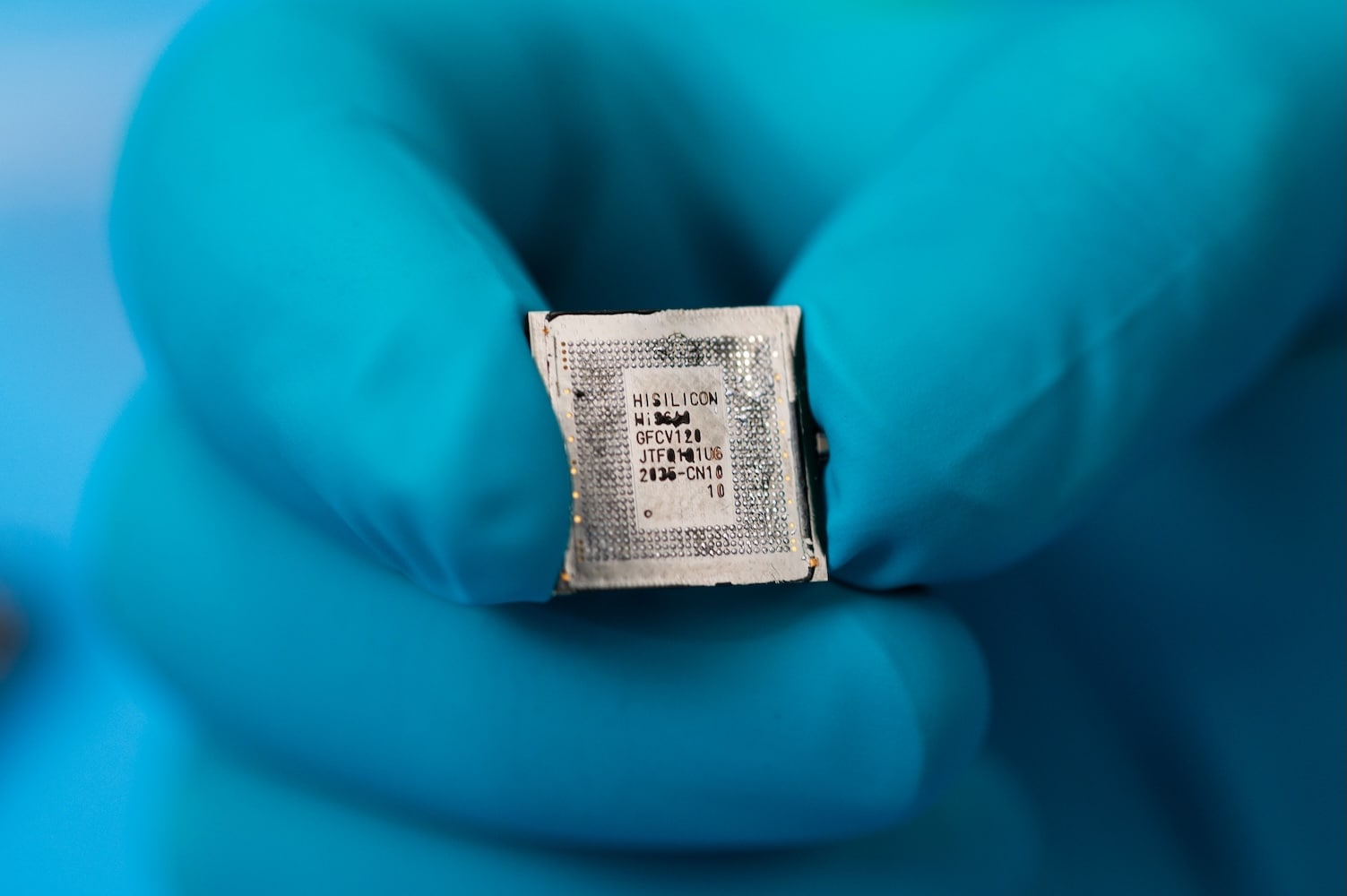
- Instrumentation Miniaturization: Core avionics, power distribution systems, and environmental control units inside the return capsule were upgraded to higher-density, integrated semiconductor architectures. By reducing the physical volume and mass of the vehicle's internal operational systems, engineers reclaimed foundational mass budget without sacrificing component reliability.
- Intensive Interior Layout Reconfiguration: The physical placement of cabin instrumentation was consolidated into highly compact, unified equipment racks. This spatial compression eliminated dead volume between modular components.
The direct result of this spatial optimization is a threefold expansion of available payload volume and a 100 percent increase in mass capacity, raising the maximum return downmass from 50 kilograms to over 100 kilograms. This newly unlocked capacity directly services the expanded operational phase of the Tiangong station, which on this mission includes returning high-mass payload apparatuses like the 80-kilogram greenhouse gas emission detection sensor developed by the Hong Kong University of Science and Technology.
Orbital Debris Mechanics and Reactive Structural Redundancy
Low Earth Orbit (LEO) is an increasingly hostile environment where micrometeoroids and orbital debris (MMOD) present high-velocity kinetic threats. The urgency of this threat was realized during the Shenzhou-20 mission, when a suspected hypervelocity space debris impact breached the external surface of the return capsule's viewport window.
While that mission ended safely via an intricate contingency operation—wherein the Shenzhou-20 crew remained in orbit until returning via Shenzhou-21, triggering an emergency logistical chain that required launching Shenzhou-22 as a replacement rescue vessel—the vulnerability of the single-layer window architecture required a fundamental redesign.
The original engineering timeline scheduled a modified viewport assembly for Shenzhou-24. However, the severity of the Shenzhou-20 impact forced an accelerated engineering intervention, requiring engineers to execute complex structural upgrades directly at the Jiuquan Satellite Launch Center on a vehicle that had already completed primary integration.
The structural redesign replaces the single-point-of-failure window configuration with a triple-layer redundant system:
- Primary External Anti-Ablation Shield: The outermost layer consists of high-purity anti-ablation glass designed to absorb the extreme thermal flux of atmospheric re-entry while serving as the initial kinetic buffer against hypervelocity particle impacts.
- Secondary Redundant Anti-Ablation Layer: A second, identical layer of anti-ablation glass is positioned directly behind the first. This configuration introduces true dual redundancy: if an orbital particle shatters or cracks the primary external layer, the secondary layer maintains the pressure hull integrity and thermal defense boundary during re-entry.
- Internal Safeguard Membrane: An additional protective structure is installed inside the cabin interior, serving as a final physical barrier to prevent spallation—the projection of fragmented inner-wall material into the cabin—from injuring the crew in the event of an energetic impact.
The Launch-Site Integration Challenge
Executing this structural modification at the launch site introduced substantial engineering risks. Under standard operating protocols, viewport windows are integrated into the bare hull structure within highly controlled assembly facilities in Beijing prior to final module mating.
Because Shenzhou-23 was already fully assembled and serving as an active emergency standby vehicle at the Jiuquan launch site, technicians had to install the updated triple-layer window system from within the highly cramped confines of an integrated return module. This restricted space amplified the risk of introducing microscopic contaminants or structural misalignments into the window sealing interfaces. The successful execution of this process indicates highly adaptable field-engineering protocols, though it highlights the reactive, high-risk nature of the intervention.
Validation of the Rolling Backup Paradigm
The structural modifications to Shenzhou-23 cannot be decoupled from China’s broader operational framework for station sustainability: the "rolling backup" strategy. The rapid escalation of the Shenzhou-20 viewport incident proved that long-duration orbital habitats require continuous, rapid-response rescue capabilities.
[Active Mission: Launch + Docking]
             │
             ▼
[Backup Mission: Assembled + Standby at Launch Site]
             │
             ├─ (Normal Conditions) ──► Transitions to Next Active Mission
             │
             └─ (Orbital Contingency) ─► 20-Day Emergency Launch Window
The rolling backup system functions as a continuous, overlapping logistics loop. For every crewed vehicle actively docked to the Tiangong station, an identical vehicle-and-rocket combination is fully assembled, tested, and placed on permanent emergency standby at the Jiuquan Satellite Launch Center.
When the Shenzhou-20 window compromise occurred, this strategy allowed the mission control framework to pivot within a compressed 20-day window, repurposing the standby asset into an operational asset. This mechanism eliminates the catastrophic vulnerability inherent in traditional linear launch schedules, where an orbital failure can trap a crew on station without a viable path home.
The vulnerability of this system, however, lies in its compounding logistical stress. Accelerating a backup vehicle to active flight status forces a downstream acceleration of the entire manufacturing and assembly pipeline. The fact that the triple-layer window upgrade had to be applied in a retrofitted, cramped environment at the launch pad is a direct consequence of this systemic stress; the manufacturing pipeline could not afford to ship the vehicle back to Beijing without breaking the continuity of the rolling backup chain.
Future Strategic Playbook for Long-Duration Station Logistics
The engineering adaptations realized on Shenzhou-23 establish a definitive blueprint for the next decade of Tiangong orbital operations. To maximize the return on investment of the station's scientific capabilities, mission planners must now execute three strategic steps:
- Transition from Mass-Constrained to Volume-Constrained Experiment Design: With downmass limits expanded to 100 kilograms, the primary limiting factor for material return shifts from gross weight to volumetric optimization. Future payload development should focus on high-density geometric packing and modular, nesting sample containers to fully exploit the threefold volume increase.
- Institutionalize Automated External Shielding Inspection: The reliance on human crews to notice viewport or hull degradation is a critical flaw. Automated robotic arms equipped with high-resolution optical sensors must perform routine, standardized scans of all critical hull surfaces, windows, and thermal docking ports every 30 days to detect micro-impact anomalies before they necessitate emergency vehicle switches.
- Expand the Mass Margin via Advanced Composite Avionics: To push the downmass boundary beyond the current 100-kilogram limit without altering the external capsule dimensions, the next generation of spacecraft must replace remaining metallic internal support brackets with carbon-matrix composites, systematically hunting for fractional weight savings across every passive structural component inside the cabin.