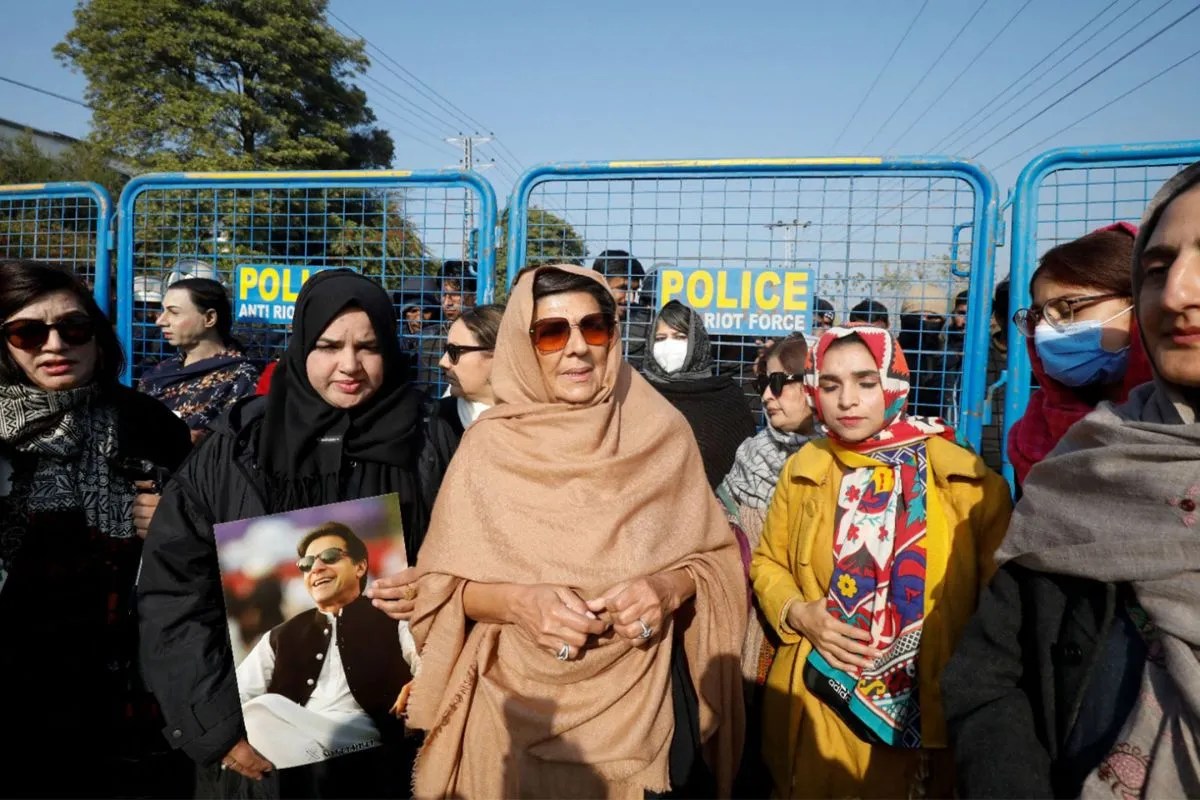
When an administrative apparatus targets the familial network of a primary political opposition figure, it triggers a predictable sequence of state actions, legal friction, and international appeals. The mechanisms surrounding the detention of Aleema Khan, sister of former Pakistani Prime Minister Imran Khan, and the subsequent emergency application filed with the United Nations Working Group on Arbitrary Detention by international human rights counsel Michael Polak, offer a clear blueprint for analyzing high-stakes political crackdowns.
The Administrative Detention Framework
The operational logic deployed by state authorities relies on specialized legal instruments designed to bypass standard judicial oversight. Rather than processing targets through criminal courts where evidentiary burdens apply, authorities frequently utilize statutes such as the Maintenance of Public Order (MPO) Ordinance. Don't forget to check out our earlier coverage on this related article.
- Preventive Seizure Vectors: State actors execute detentions prior to scheduled political mobilizations to preemptively neutralize organizational capacity. This creates a temporal correlation between planned protests and sweeping law enforcement actions.
- Information Blackouts and Custodial Ambiguity: Initial denials of custody or delayed confirmations function as tactical friction. This informational vacuum forces legal teams into reactive verification loops, consuming resources and delaying habeas corpus filings.
- The MPO Mechanism: Section 3 of the MPO grants administrative branches the authority to detain individuals without formal charges or immediate trial access for extended periods. The legal justification hinges on subjective assessments of public safety rather than objective criminal conduct.
Expanding the Coercive Radius
A defining characteristic of this administrative strategy involves widening the target set beyond primary political actors to include extended family members. When siblings, children, and collateral relatives are subjected to sudden apprehension or house entries, the systemic objective shifts from individualized law enforcement to psychological attrition.
- Deterrence by Proxy: By imposing custodial costs on non-political relatives, the state increases the personal toll of political opposition.
- Resource Depletion: Legal representation must simultaneously manage multiple detention proceedings across different jurisdictions, straining the defense apparatus of the political party.
- Disarticulation of Leadership Networks: Removing prominent family members who act as surrogate voices or organizational anchors serves to fracture the command chain of mass movements.
International Legal Recourse and UN Special Procedures
Domestic judicial systems operating under severe executive pressure frequently struggle to provide effective remedies in high-stakes political contexts. Consequently, legal strategy shifts to international accountability frameworks. If you want more about the history of this, The New York Times provides an informative breakdown.
The utilization of urgent complaints submitted to United Nations Special Procedures and the Working Group on Arbitrary Detention introduces external oversight. While these bodies lack direct enforcement mechanisms, international petitions alter the diplomatic calculus of the state:
- Codification of Violations: Formal documentation by international jurists establishes a verified record of human rights breaches, stripping administrative actions of procedural legitimacy.
- Diplomatic Friction: Regularized findings of arbitrary detention complicate bilateral relations, foreign financial assistance negotiations, and trade dialogues.
- Legal Precedent for Accountability: International filings lay the groundwork for future universal jurisdiction claims or targeted sanctions against responsible administrative officials.
Systemic Outcomes and Strategic Feedback Loops
The interaction between state containment tactics and opposition mobilization follows a recursive pattern. Intensive crackdowns aimed at dissolving protests often generate counter-mobilization effects by intensifying public grievances over rule-of-law erosion. Conversely, prolonged legal battles in international forums test the endurance of state machinery against sustained diplomatic pressure.
To alter this trajectory, legal strategists must pair domestic challenge mechanisms with continuous international documentation, while political organizations adapt their logistical structures to withstand leadership decapitation. The friction point remains the capacity of administrative bodies to sustain extra-judicial detentions under the weight of coordinated domestic resistance and external scrutiny.