Catastrophic flash flooding along the Nepal-Tibet border transformed subterranean infrastructure into death traps, leaving hundreds of hydropower workers unaccounted for inside mud-filled tunnels. Operational chaos immediately followed the initial disaster vector, exposing structural vulnerabilities in emergency response frameworks across the Himalayan corridor.
The Mechanics of Subterranean Entrapment
Hydroelectric project sites rely on extensive subterranean excavation networks, including desanding basins, headrace tunnels, and tailrace channels. When glacial instability or ice avalanches trigger sudden, high-velocity inundation, these engineering conduits change function entirely. Instead of controlling fluid dynamics, they become pressurized hydraulic tubes.
The physical configuration of these tunnels dictates survival probabilities through three distinct variables:
- Elevation Gradient and Velocity: Water entering a gradient slope accelerates rapidly, carrying heavy bedloads of rock, silt, and debris that act as abrasive slurry.
- Air Pocket Formation: Large-diameter tunnels—often scaling dimensions capable of accommodating commercial vehicles—can retain compressed air pockets if blockage occurs at both terminals simultaneously.
- Ingress-Egress Ratio: Most construction sites maintain limited access portals relative to total tunnel length, creating bottlenecks when evacuation orders trigger simultaneous movement.
Workers caught hundreds of meters deep face immediate asphyxiation hazards from displaced oxygen, structural cave-ins, and hypothermia induced by cold glacial runoff. Survivors who manage to secure positions on overhead infrastructure, such as ventilation mountings or roof-fixed service ladders, must endure prolonged isolation while awaiting external extraction.
The Logistics Failure Matrix in High-Altitude Operations
Rescue execution in remote mountain terrain is bounded by severe physical and mechanical constraints. Traditional disaster response protocols fail when applied to mountainous river basins where transport arteries are completely obliterated.
The operational bottleneck is defined by three compounding factors:
- Access Infrastructure Erasure: Roads adjacent to the Bhotekoshi and Trishuli rivers suffered total structural washout, leaving heavy earth-moving equipment stranded miles from operational zones.
- Material Density of Debris: Tunnels plugged with compacted glacial silt and boulder matrices cannot be cleared manually. The transition from muck removal to mechanical excavation requires specialized heavy machinery that must often be dismantled and airlifted piece by piece.
- Information Asymmetry: Initial communication loops break down instantaneously when power grids and relay towers collapse, leaving command units blind regarding the exact spatial distribution of survivors within buried infrastructure.
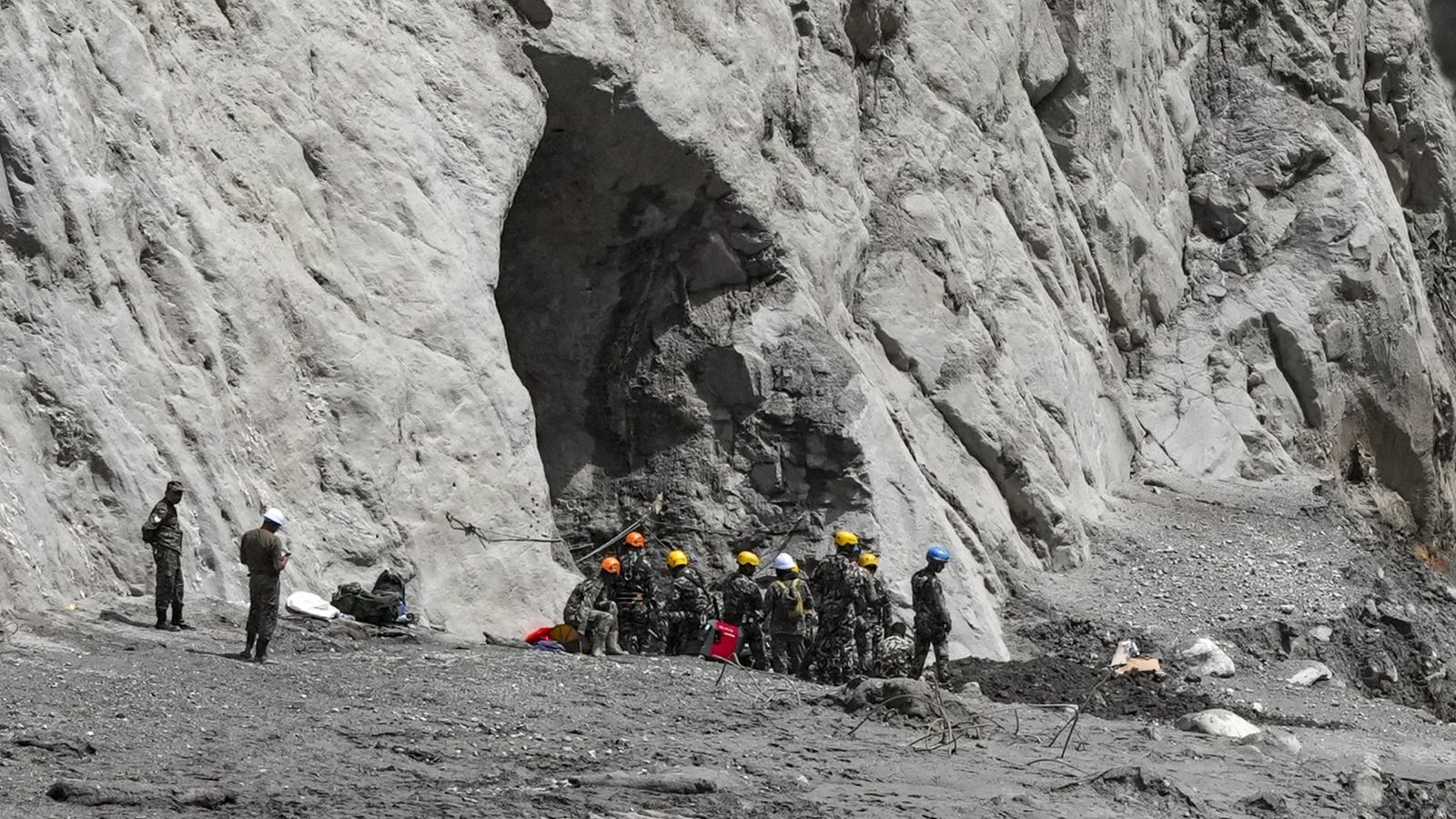
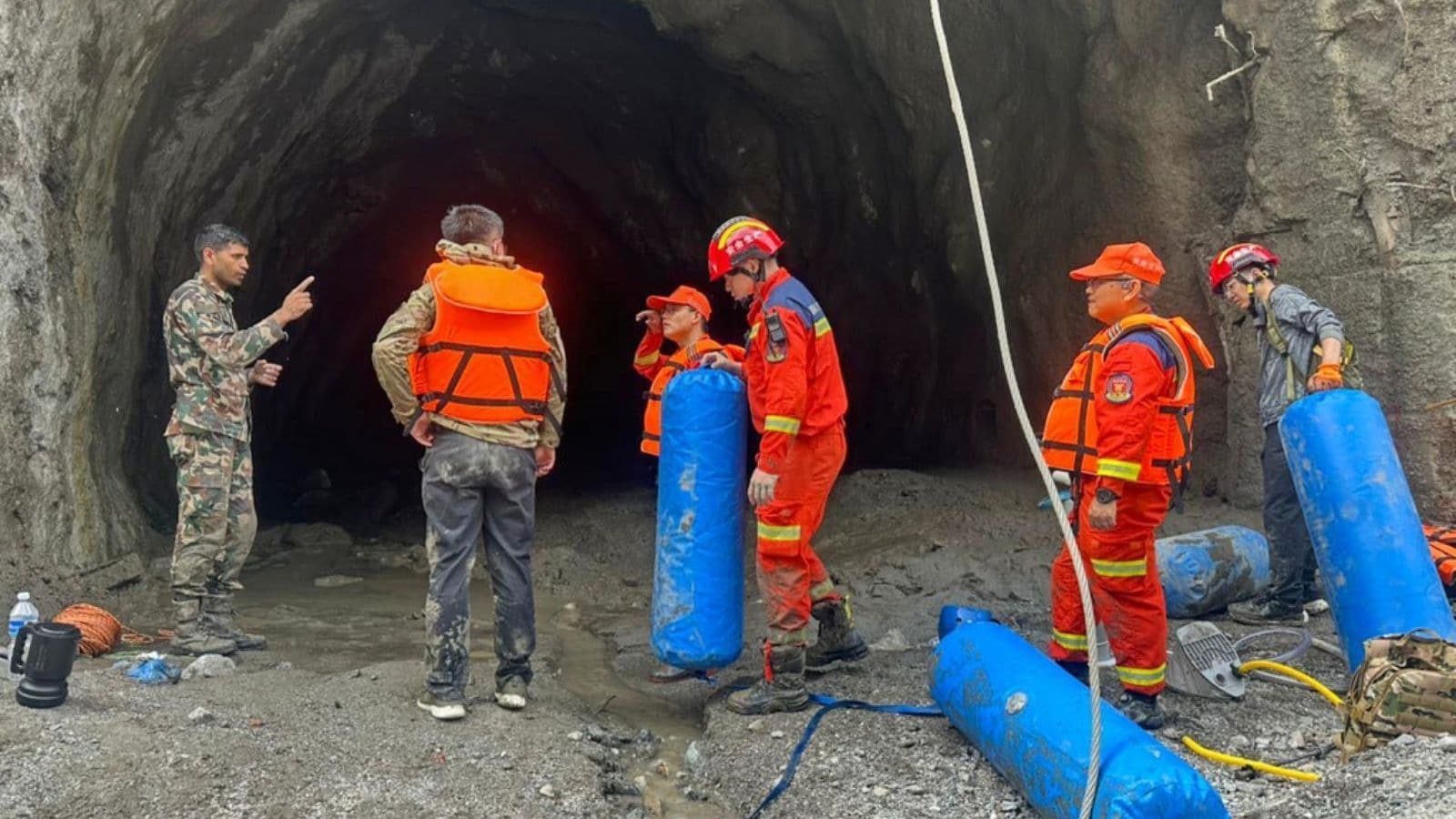
Joint military and civilian task forces deployed to sites like the Upper Trishuli-3A and Upper Trishuli-1 projects operate under extreme kinetic limitations. Controlled blasting to create vertical access shafts into the crown head of a tunnel carries the inherent risk of secondary structural collapse, risking both the trapped personnel and the extraction teams.
Resource Allocation and Triage Efficiency
With hundreds of individuals remaining missing or untraced across multiple independent project sites, disaster management authorities face an acute optimization problem. Triage protocols must balance immediate search-and-rescue operations against recovery and identification procedures as the survival window narrows past the critical 72-hour threshold.
Resource allocation models in these scenarios rely on probability matrices derived from survivor accounts and structural blueprints. When rescue teams breach a blocked passage and record zero acoustic response, the operational mandate shifts from immediate extraction to structural stabilization and atmospheric purging.
The integration of international expert contingents from neighboring nations introduces specialized asset capabilities, yet introduces friction in command synchronization. Standardizing telemetry, heavy lift deployment, and subterranean mapping under a unified incident command system remains a persistent structural challenge during trans-boundary natural disasters.
Deploy heavy lift aerial assets exclusively for forward engineering unit placement rather than generalized reconnaissance, prioritizing the immediate stabilization of secondary access roads to allow continuous mechanical mucking equipment transit.
Nepal Floods: 600 Workers Trapped In Mud-Filled Tunnels As Rescue Race Against Time
This video provides an on-the-ground visual record of the rescue operations and the physical environment surrounding the trapped hydropower workers in Nepal.