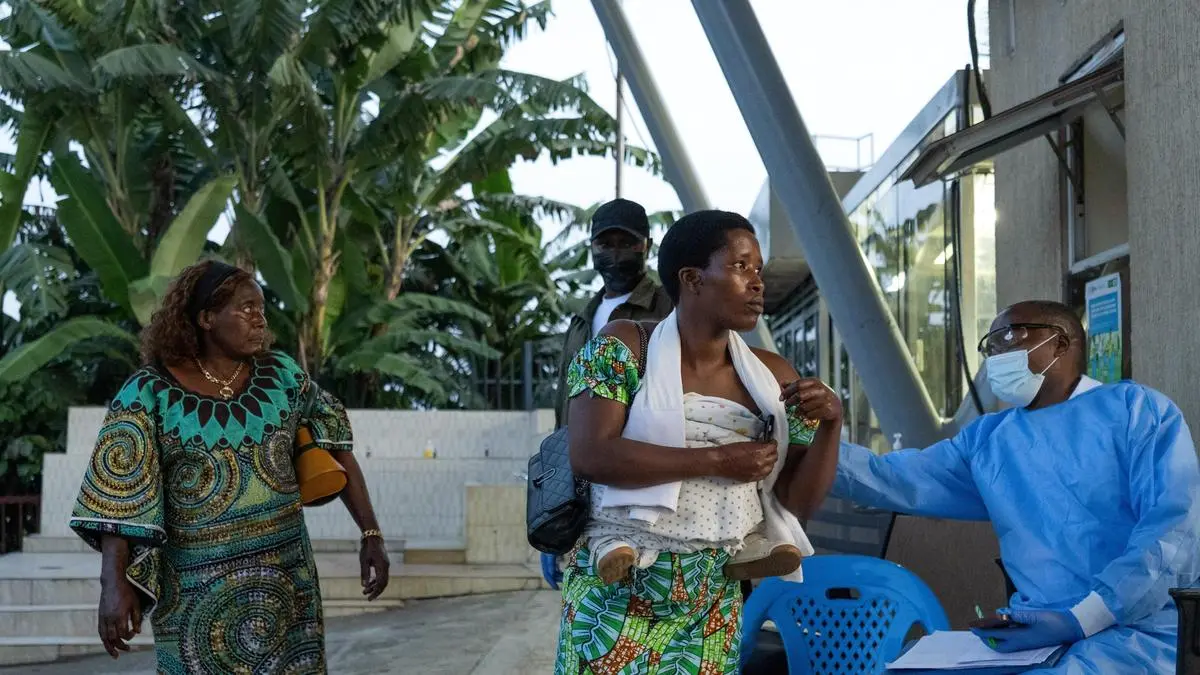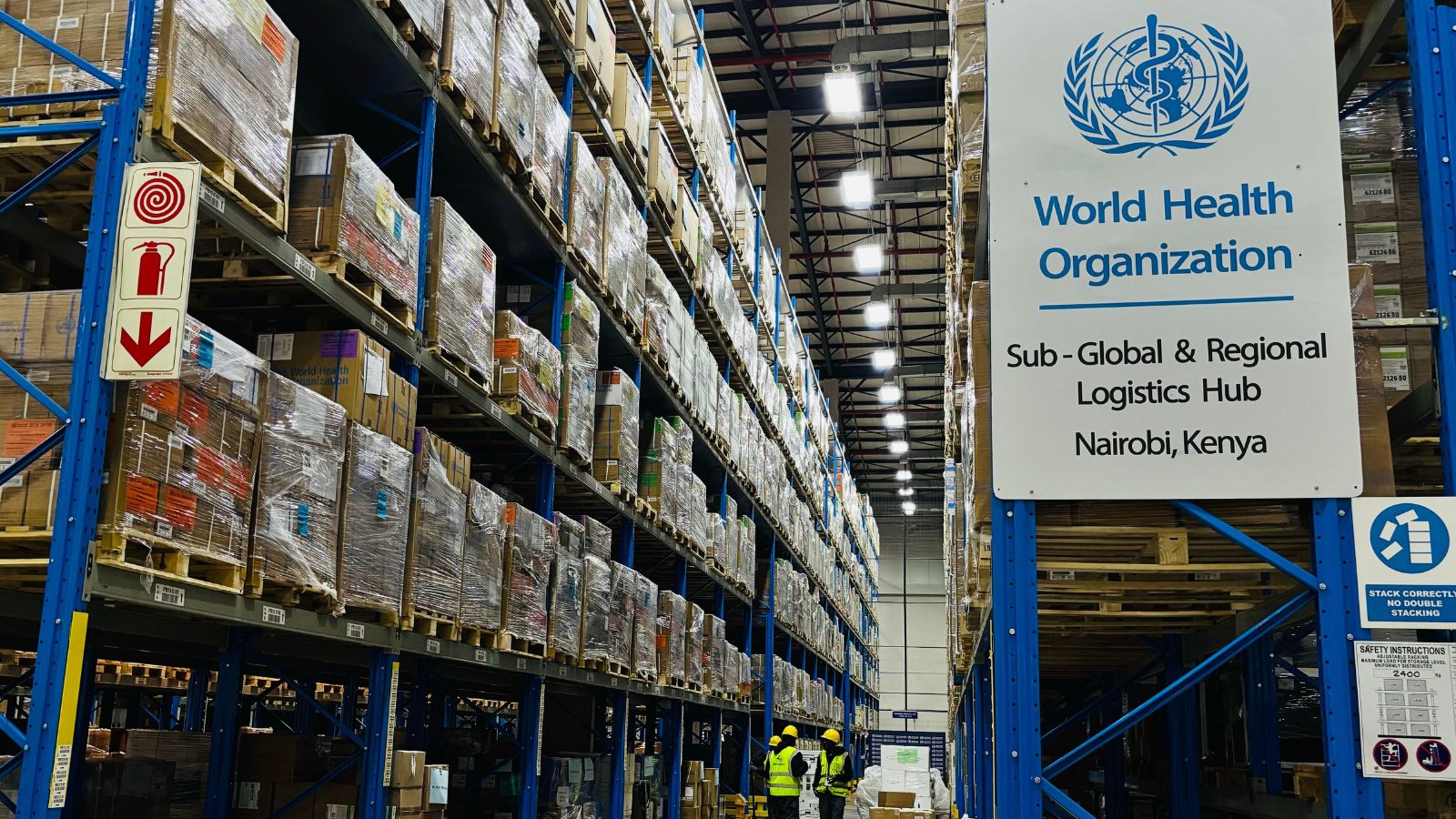
The declaration of a Public Health Emergency of International Concern by the World Health Organization on May 17, 2026, exposes a critical failure vector in global biosurveillance: diagnostic path-dependency. By evaluating the burgeoning Ebola virus disease outbreak in the Democratic Republic of the Congo and Uganda through a purely numerical lens—at least 120 dead and more than 300 suspected cases—conventional reporting misses the structural mechanisms that allowed a rare pathogen to establish a multi-provincial foothold.
The primary driver of this crisis is not the sheer virulence of the agent, but a systematic diagnostic blind spot that generated false negatives for three consecutive weeks. When the index case succumbed on April 24 in the Ituri provincial capital of Bunia, public health authorities initiated standard operational protocols. However, these protocols were hardcoded to detect the Zaire orthoebolavirus, the variant responsible for the vast majority of historical outbreaks in the region. Because the diagnostic assays prioritized the Zaire strain, the actual causative agent—the rare Bundibugyo orthoebolavirus—escaped detection. This latency period allowed the virus to replicate unchecked through high-density nodes before genomic sequencing finally identified the pathogen on May 15.
The Three Pillars of Pathogen Acceleration
To quantify how a localized infection converted into a multi-regional threat, the crisis must be deconstructed into three intersecting variables: transmission mechanics, geographic vulnerability, and diagnostic latency.
1. Diagnostic Latency and the False Negative Bottleneck
The velocity of an outbreak response is fundamentally constrained by the time to accurate identification ($T_i$). In this instance, the diagnostic system suffered from confirmation bias built into the technology. Initial assays returned negative results for the Zaire strain, creating a false sense of security that delayed the deployment of isolation protocols.
The mathematical consequence of this delay is an artificial extension of the pathogen's unchecked reproductive period. During the 20 days between the first mortality and definitive sequencing, individuals displaying ambiguous symptoms remained integrated within the community, driving the basic reproduction number ($R_0$) well above equilibrium.
2. Demographic and Geographic Vector Mapping
The escalation phase of the outbreak was triggered by a specific epidemiological event: the repatriation of the index patient's body from Bunia to the Mongbwalu health zone. Mongbwalu is a high-density, informal gold-mining region characterized by a highly mobile, transient workforce.
Mining economies dictate a continuous churn of personnel moving across porous borders for trade. By introducing a highly contagious hemorrhagic fever into this specific demographic, the virus gained access to an optimized dispersal vector. Mining networks act as regional accelerators, rapidly distributing exposed individuals across vast geographic distances, including rebel-held capitals like Goma, as well as Butembo, Nyakunde, and ultimately across the international border into Kampala, Uganda.
3. The Caregiver Transmission Bias
Current field data from the Africa Centers for Disease Control and Prevention indicates a stark demographic asymmetry: two-thirds of the suspected cases are female, with the highest concentration of infections falling between the ages of 20 and 39. This skew is explained by localized socioeconomic roles rather than biological susceptibility.
In this region, primary caregiving duties—both familial healthcare and traditional post-mortem preparation—fall disproportionately on women. Because Ebola viruses are transmitted via direct contact with fractured skin or mucous membranes and the bodily fluids (blood, vomitus, feces) of symptomatic or deceased patients, the traditional division of labor creates a predictable exposure bias. The infection vectors track along lines of proximity and domestic labor, turning community care structures into amplification networks.
The Technological Deficit: Therapeutics and Immunological Voids
The structural gravity of a Bundibugyo outbreak rests on an absolute lack of medical countermeasures. Public health strategies deployed during recent Zaire strain epidemics relied heavily on highly effective biomedical interventions, including the Ervebo vaccine and monoclonal antibody treatments like Ebanga and Inmazeb.
None of these technologies possess cross-protective efficacy against the Bundibugyo strain.
- Vaccine Insufficiency: The viral envelope glycoproteins of Zaire and Bundibugyo strains diverge significantly at the amino acid level. Consequently, the existing strategic vaccine stockpiles are immunologically irrelevant to the current population at risk.
- Therapeutic Multipliers: Without monoclonal antibodies to neutralize the viral load, clinical management drops back to basic supportive care: aggressive intravenous rehydration, electrolyte stabilization, and symptom management.
- The Case Fatality Rate (CFR) Variable: Historically, the Bundibugyo strain exhibits a lower crude CFR (ranging from 25% to 50%) compared to the Zaire strain (which frequently exceeds 60% to 90%). However, this statistical mitigation is entirely offset by the current infrastructure deficit. In low-resource, conflict-impacted zones like eastern Congo, the absence of intensive care capabilities causes the localized CFR to spike violently above historical baselines.
Operational Constraints in the Conflict Zone
The deployment of three new Ebola treatment centers in Ituri province by the Congolese government faces severe operational bottlenecks that cannot be resolved by capital injection alone. The epicenter overlaps directly with long-standing humanitarian crises and active military friction involving non-state armed groups.
[Active Conflict & Displacement] ➔ [Inability to Establish Static Perimeters]
                                          ↓
[Fragmented Infrastructure]       ➔ [Interrupted Contact Tracing Rings]
                                          ↓
[Porosity of Border Nodes]        ➔ [Transnational Pathogen Exportation]
This environment breaks the standard epidemiological playbook in two distinct ways:
The first limitation is the breakdown of contact tracing rings. Effective containment requires identifying, monitoring, and isolating 100% of an infected individual’s contact network for 21 days. When populations are actively displaced—Ituri currently hosts over 273,000 internally displaced persons—tracking individuals becomes mathematically impossible. The mobility of the host population outpaces the speed of the tracing teams.
The second bottleneck is logistical security. Moving diagnostic samples from remote field clinics like Mongbwalu to reference laboratories in Kinshasa requires traversing territory controlled by hostile factions or navigating severely degraded transport infrastructure. A 1,000-kilometer transit corridor over unpaved roads under constant security threats introduces catastrophic delays in turnaround time, guaranteeing that data arriving at command centers is persistently outdated.
Strategic Play: Immediate Intervention Parameters
To arrest the geographic expansion of the Bundibugyo strain, international and domestic health agencies must abandon standard Zaire-centric containment models and pivot to a localized, structural containment strategy.
- Deploy Multiplex Diagnostic Assays Universally: Immediate field-level supply chains must replace single-target PCR assays with multiplex panels capable of simultaneous differential diagnosis for Zaire, Bundibugyo, Sudan strains, and Marburg virus. This eliminates the path-dependency trap that initiated this crisis.
- Enact Ring Isolation via Socio-Economic Compensation: Because formal contact tracing is compromised by population displacement, containment efforts must focus on localized travel nodes. Testing stations integrated directly into mining security checkpoints and transit hubs around Bunia and Goma must be paired with immediate financial compensation for individuals mandated into 21-day quarantine. Without offsetting the economic loss of daily-wage laborers, compliance will remain near zero.
- Decentralize Treatment via Mobile Units: Constructing massive, static Ebola treatment centers creates highly visible targets vulnerable to security disruptions and introduces long, hazardous transit windows for patients. Operational capacity must shift toward smaller, highly fortified, rapid-deployment mobile isolation pods situated at the intersections of major mining corridors.
The immediate trajectory of the outbreak depends entirely on the speed of this operational re-engineering. If containment strategies continue to rely on centralized logistics and retrofitted Zaire protocols, the porosity of the border nodes between eastern Congo, Uganda, and South Sudan will yield a sustained, transnational epidemic within the next 30 days.