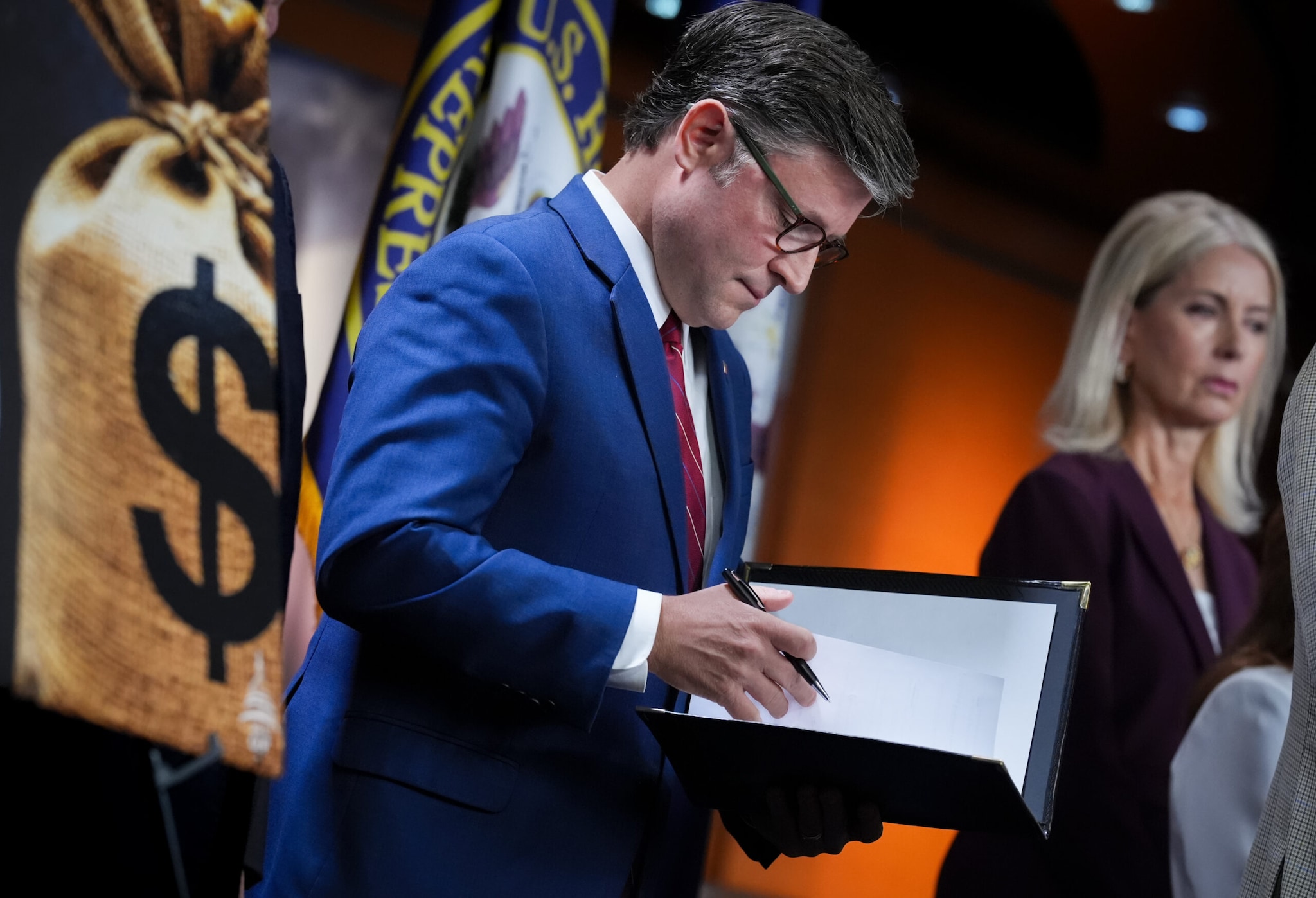
The House of Representatives’ 215–208 passage of the war powers resolution targeting executive operations against Iran establishes a structural friction point between the legislative and executive branches. Rather than a mere political rebuke, this vote serves as a quantifiable indicator of systemic strain within the governance model of United States foreign policy. It marks the first time during this specific engagement that the legislative branch has successfully aggregated the marginal bipartisan support required to challenge an active, unauthorized deployment.
To evaluate the operational impact of this legislative intervention, the event must be stripped of political rhetoric and analyzed through three distinct frameworks: institutional statutory deadlines, macroeconomic cost-imposition vectors, and coalition-defection mechanics.
The Temporal Friction Framework: Statutory Deadlines vs. Executive Interpretation
The core structural conflict stems from contradictory interpretations of the War Powers Resolution of 1973. This statute establishes an explicit 60-day operational window for executive military deployments absent a formal congressional declaration of war or specific statutory authorization.
The mechanics of this statutory timeline create a direct legal bottleneck:
[Hostilities Initiate (Feb 28)] ──> [Formal Notification (March 2)] ──> [60-Day Statutory Clock Expires (May 1)]
                                                                                  │
   ┌──────────────────────────────────────────────────────────────────────────────┘
   ▼
[Executive Defense: Ceasefire Claims Cease of Hostilities] ──> [Legislative Counter: Ongoing Friction / Asymmetric Strikes]
The administration has advanced a legal defense based on operational pause, asserting that the expiration of the statutory window on May 1 was neutralized by a localized ceasefire established following the cessation of direct exchanges of fire. Under this executive doctrine, a lack of active engagement resets or pauses the statutory countdown, effectively transforming a temporary operational pause into an indefinite authorization for deployment.
The legislative branch operates on an opposing doctrine of structural continuity. The House passage asserts that tactical pauses do not alter the strategic reality of an unauthorized deployment. Because peripheral friction, proxy engagements, and regional deployment costs persist, the underlying state of conflict remains active. By passing this resolution, the legislature seeks to codify that tactical ceasefires cannot be used as an executive mechanism to bypass the explicit 60-day statutory limitation.
Macroeconomic Cost Vectors and Public Disapproval Mechanics
The transformation of the engagement from an anticipated short-term intervention into a protracted three-month campaign has activated domestic economic transmission mechanisms. These factors have eroded the political capital required to maintain uniform partisan cohesion.
The economic strain functions through two distinct cost functions.
The Direct Fiscal Drain Matrix
Official Pentagon estimates position the baseline direct expenditure at approximately $29 billion, though external structural analysts project the real asset-allocation and readiness costs closer to $100 billion. This capital drain acts as a direct diversion of treasury resources, creating opportunity costs within domestic fiscal policy and generating friction among fiscal conservatives.
Systemic Commodity Transmission Loops
The operational geography of the conflict directly intersects the Strait of Hormuz, a critical chokepoint for global energy logistics. The ongoing closure and persistent threat matrix within the strait have introduced a geopolitical premium into global energy markets. This premium translates directly into increased downstream costs at domestic consumer distribution points:
$$\text{Geopolitical Friction Coefficient} \longrightarrow \text{Logistical Premium} \longrightarrow \text{Retail Energy Inflation} \longrightarrow \text{Degraded Consumer Sentiment}$$
This economic feedback loop alters the political incentives for marginal legislators. When military engagements cross the threshold from localized tactical actions to systemic inflationary drivers affecting domestic consumer indexes, the political cost of supporting executive autonomy rises exponentially.
Coalition Defection Mechanics and the Speaker's Bottleneck
The passage of the resolution reveals the precise mathematical vulnerability of the legislative majority when cross-pressured by structural incentives. The 215–208 outcome was realized through a highly specific coalition strategy that neutralized institutional procedural delays.
Institutional Delay (Adjournment Strategy) ──> Escalating Microeconomic Pressures ──> Partisan Defection Threshold Reached
The legislative timeline was initially disrupted when leadership deployed procedural adjournment mechanisms to defer floor action, effectively buying operational time for executive diplomatic tracks. However, delaying a vote on a war powers resolution when structural costs are rising tends to intensify rather than dilute legislative friction.
The final vote required a specific defection threshold among the majority party to overcome the unified opposition of the leadership apparatus. Four specific majority legislators provided the critical margin: Representatives Thomas Massie, Brian Fitzpatrick, Tom Barrett, and Warren Davidson.
An examination of these defections reveals two distinct ideological vectors:
- The Constitutional/Non-Interventionist Vector: Exemplified by representatives who prioritize strict adherence to Article I legislative supremacy regarding war powers, independent of partisan alignment.
- The Pragmatic/Fiscal Security Vector: Driven by representatives sensitive to the long-term readiness costs of unbudgeted military campaigns and the downstream inflationary impacts on their respective constituencies.
When these two internal vectors align with a unified minority opposition, the executive branch's legislative shield breaks down, rendering defensive procedural maneuvers obsolete.
Tactical Reality of the Legislative Output
While the passage of the resolution represents a major institutional friction point, its immediate operational utility is constrained by constitutional design. The strategic limitations of this legislative output must be accurately categorized.
| Dimension | Operational Status | Structural Metric |
|---|---|---|
| Immediate Legal Force | Non-Binding / Symbolic | Fails to meet the dual-chamber statutory thresholds required to alter executive funding lines directly. |
| Veto Vulnerability | High | The current 215–208 margin sits well below the two-thirds supermajority ($66.7%$) required to override an executive veto. |
| Asymmetric Deterrence | Moderate | Signals to regional actors and adversaries that executive military options lack long-term domestic political sustainability. |
The true utility of the resolution is not that it acts as an immediate injunction, but that it serves as a signaling mechanism. It establishes a clear baseline showing that the executive branch has exhausted its baseline political credit for this theater.
Secretary of State Marco Rubio highlighted this constraint during committee testimony, arguing that the resolution introduces a strategic variable that alters the adversary's calculation. If regional actors perceive that executive enforcement mechanisms are bound by escalating legislative friction, their incentive to negotiate a durable settlement diminishes. Conversely, the legislative perspective maintains that unchecked executive deployments remove any institutional incentive for the administration to seek a formalized, structured conclusion to hostilities.
The strategic play moving forward will develop within the Senate. If the upper chamber aligns with the House, it will create a unified legislative front. While still vulnerable to an executive veto, a concurrent passage across both chambers formally shifts the burden of escalation entirely onto the executive branch. This sets a precedent for subsequent statutory funding restrictions through the annual appropriations process—the ultimate mechanism of legislative control.
For further analysis on the statutory intersection of executive authority and legislative constraints, see this detailed brief on War Powers and Congressional Oversight Dynamics, which explains the historical evolution of these constitutional friction points.