If you walk across the British countryside today, you'll notice quiet, stubborn lines of green stitching the horizon together. These aren't just wild bushes. They are living, breathing architectural marvels born centuries ago. For decades, modern agricultural trends treated hedgerows like awkward inconveniences—messy borders chopped down to make fields wider for industrial machinery. That mistake cost ecosystems dearly.
Now, the tide is turning in a major way. Around 2,500 farmers across the United Kingdom are rolling up their sleeves to revive over 1,300 kilometers of hedgerows. This isn't just about nostalgia or looking picturesque for tourists. It's a brutal, practical necessity for stopping floods, saving collapsing wildlife populations, and fixing broken soil.
Let's dive into why this ancient craft matters right now and what modern farming is finally getting right.
The Brutal Cost of Ripping Out Our Green Borders
Back in the mid-twentieth century, agricultural policy pushed for maximum efficiency. Bigger fields meant bigger tractors could move faster. Thousands of miles of ancient hedges were bulldozed, uprooted, or left to rot.
Farmers thought they were gaining productive acreage. Instead, they invited disaster.
Without dense shrubs to break the wind and anchor the earth, topsoil blew away. When heavy rains hit, water didn't soak into the ground. It rushed straight off barren fields, turning quiet rural streams into violent torrents that flooded downstream towns.
You cannot out-engineer nature with concrete drainage ditches. Farmers learned this the hard way after watching their most fertile dirt wash down the river. Hedgerows act like natural sponges and speed bumps. Their deep root systems hold the earth together, while their dense branches slow down surface runoff, giving water time to sink deep into the water table.
The Craft of Hedgelaying
Planting a few saplings and walking away won't fix centuries of ecological damage. You need specialized labor. You need ancient techniques.
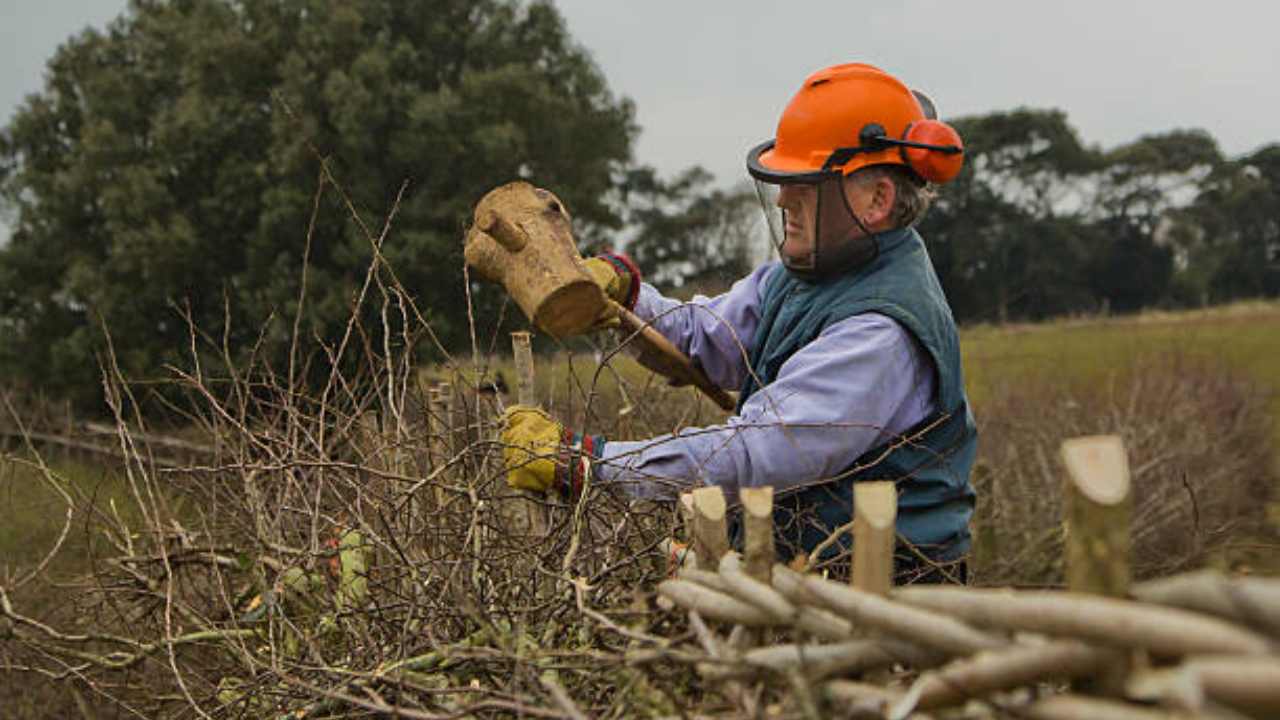
Traditional hedgelaying is a brutal winter craft. It requires cutting partially through the stems of mature trees and shrubs—known as pleaching—without killing them. Workers bend these stems over at an angle, weaving them tightly between wooden stakes to form a living, impenetrable barrier.
This isn't a casual weekend gardening project. It takes years to master. When done right, the injured stems send up fresh shoots from the base while healing into a dense, interwoven wall. Livestock can't push through it, sheep stay put, and predators find it tough to break into.
Seeing modern grain producers and livestock farmers learn a skill practiced by medieval peasants feels surreal. But it works. The physical labor is intense, requiring heavy hand tools, thick gloves, and an intimate understanding of tree biology. You have to know how a hawthorn or hazel will respond to a chainsaw cut in January so it bursts into thick leaves by May.
Saving Species from the Brink
The UK's wildlife crisis is real. Barn owls, hedgehogs, dormice, and countless pollinators are losing their homes every single day.
If you clear out field boundaries, you basically turn the countryside into a biological desert. A single straight-edged monoculture field offers zero shelter for small mammals or nesting birds.
Reviving 1,300 kilometers of hedgerows creates continuous green corridors. Animals don't have to cross dangerous open asphalt or exposed dirt to find food and mates. They can travel safely under the canopy of a thick hedge.
During spring, these linear woodlands explode with life. Insects find pollen, birds build nests hidden from predators, and small mammals forage safely. If you care about reversing the decline of British songbirds, planting trees in urban parks isn't enough. You have to fix the working agricultural landscape where most of the land actually lives.
Climate Resilience in Action
Climate change isn't a theoretical debate for people working the land. It means unpredictable weather extremes—droughts that bake the soil solid followed by torrential downpours that wash away crops.
Hedgerows offer a double defense against climate shocks. First, they lock away carbon in both their woody biomass and the undisturbed soil beneath them. Second, they regulate microclimates at the field level.
Crops protected by a tall hedge suffer less wind damage and retain more soil moisture during dry spells. Animals get natural shade during blistering summer heatwaves and windbreaks during freezing winter storms. It's a low-tech, high-efficiency climate adaptation strategy that requires zero synthetic inputs once established.
How to Support the Hedgerow Revival
You don't need to own a 500-acre farm in Yorkshire to get involved in this movement. Change happens at multiple levels.
- Support local conservation charities that supply native saplings and run training workshops on traditional crafts.
- If you own rural land, stop treating field edges like trash heaps or spraying them with harsh weed killers right up to the property line. Leave a wild buffer zone.
- Buy food from producers who actively practice regenerative agriculture and invest in long-term habitat restoration instead of just chasing short-term yields.
The green infrastructure we inherited was built over generations. Restoring it takes time, sweat, and respect for old knowledge. The farmers bringing back these ancient boundaries are proving that the best way forward often requires looking backward.