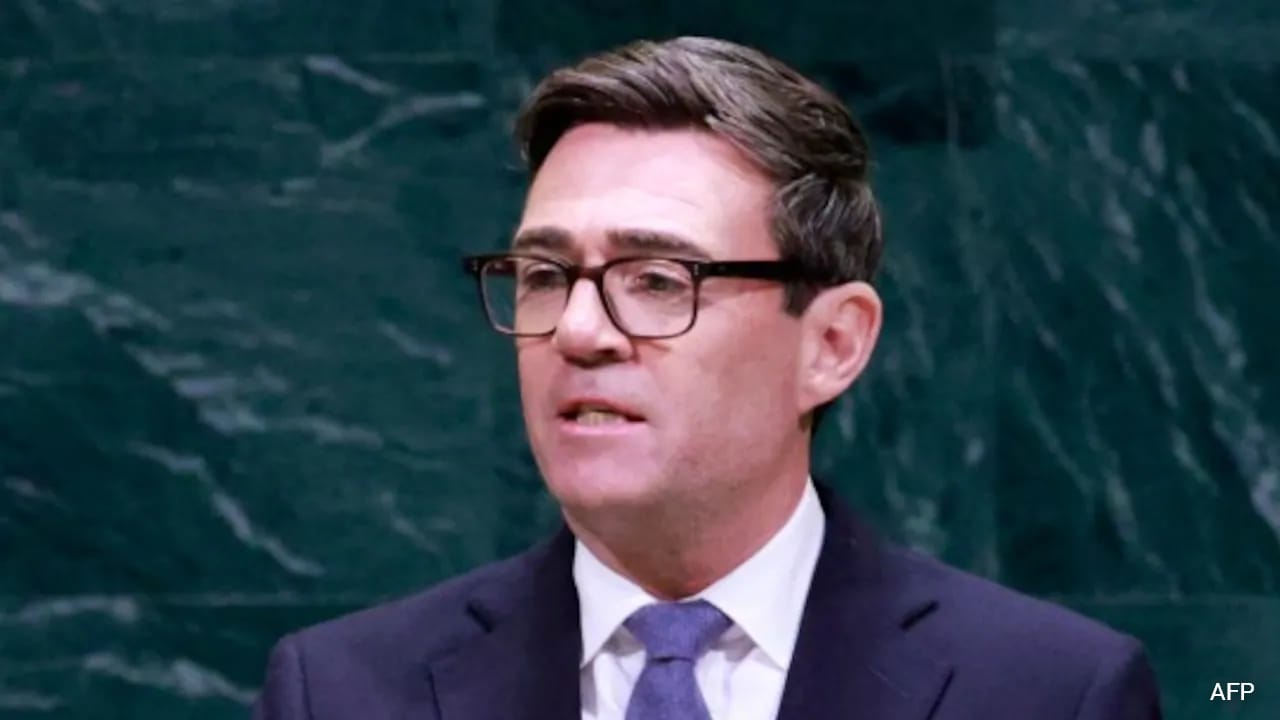
Governments love talking about technology rules until a real crisis hits. Prime Minister Andy Burnham wants to change that script. At the United Nations, Burnham laid out a clear stance that artificial intelligence safety will anchor the United Kingdom's presidency of the G20 in 2027.
It is a massive diplomatic bet. Burnham is drawing a direct line between today's frontier models and the chaos of the 2008 financial crash, arguing that global powers cannot simply let tech monopolies write their own safety manuals.
The Strategy Behind the 2027 G20 Push
If you look at how major economies handle tech regulation right now, it is a mess of fragmented borders. The European Union has its strict code. Washington often leans toward letting markets run free. China builds its own sovereign ecosystem.
Burnham's push aims to build a single set of baseline international safety principles. During the UK's G20 year, the goal is getting major nations to agree on transparency requirements and shared risk assessments before models scale past human oversight.
That puts Downing Street on a collision course with tech-first deregulation policies coming out of places like Washington. But Burnham is pitching the G20 presidency as an organizing forum. He wants the UK to act as the primary bridge between the US, the EU, and emerging powers like India and Brazil.
Why This Matters Right Now
Most people think international summits are just expensive photo ops. Sometimes they are. But hosting the G20 gives a prime minister absolute control over the agenda.
By tying artificial intelligence safety to the 2027 presidency, Burnham is forcing global leaders to answer a basic question: who actually governs critical infrastructure when code can code itself?
The stakes go beyond chatbot guardrails. Frontier systems touch energy grids, financial markets, and national security intelligence. When AI minister Kanishka Narayan warns that cyber attacks on UK infrastructure are practically inevitable, the political calculation becomes obvious. Domestic defenses mean nothing if global labs train unsafe models without cross-border accountability.
What Happens Next
Expect plenty of diplomatic friction before the 2027 summit lands. Silicon Valley executives won't welcome heavy-handed global standards. Washington remains deeply skeptical of anything resembling a centralized regulatory scheme.
Yet Burnham is banking on the reality that chaotic tech scaling worries voters just as much as economic inflation. If the UK can actually forge a unified global baseline for artificial intelligence safety, it might just pull off the most consequential piece of British foreign policy in a decade.
Keep an eye on how international labs respond to these transparency benchmarks over the next year. The real test won't be what leaders say at the podium. It will be whether they sign the treaty when the cameras turn off.