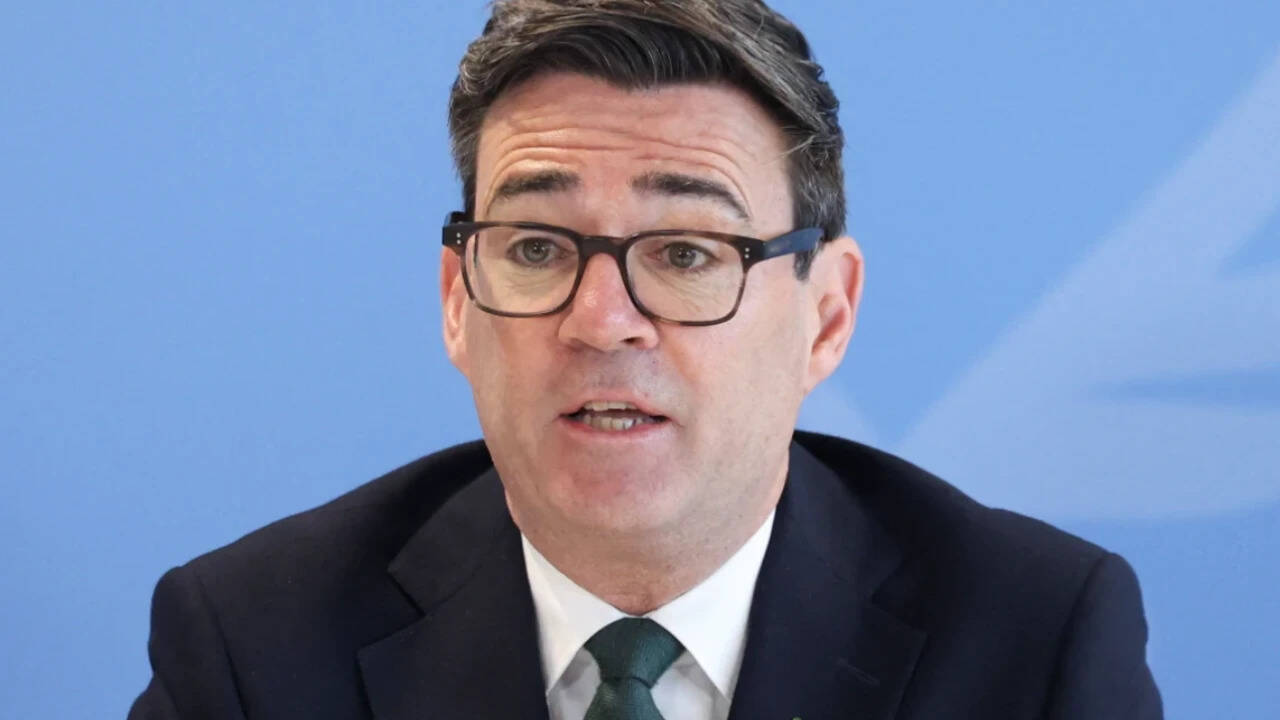
Political headlines rarely tell the whole story. When reports circulate claiming UK Prime Minister Andy Burnham has signaled a possible apology for Britain’s role in the transatlantic slave trade, the immediate reaction online is usually loud, emotional, and largely disconnected from the legal and political realities on the ground.
Let's clear the air right away. The push for a formal British apology—and the looming question of financial reparations—has been simmering inside Westminster and across the Commonwealth for decades. Regardless of who occupies Downing Street, any shift in tone from a British leader regarding the slave trade triggers massive diplomatic consequences. People immediately wonder if an apology opens the legal floodgates for trillions of pounds in compensation claims. Honestly, that fear is the exact reason successive UK governments have danced around the wording for years.
If you want to understand why this specific development matters right now, you have to look past the partisan shouting matches. You need to see how British political leadership, Commonwealth diplomacy, and international law collide on this issue.
Why a British Apology Is So Legally Complicated
Most people think an apology is just a polite way of saying "we're sorry this happened." In international diplomacy, it doesn't work like that. Words carry binding weight.
For decades, Downing Street officials and Foreign Office lawyers have drawn a thick red line between expressing "deep sorrow" or "regret" and issuing a formal "apology." Take Tony Blair’s 2006 statement ahead of the bicentenary of the Abolition of the Slave Trade Act. Blair expressed "deep sorrow" for Britain’s role in the trade, calling it "profoundly shameful." He stopped short of an outright apology. Why? Because under international legal principles, a formal state apology can be interpreted as an admission of legal liability.
Once a state admits liability for a historical wrong, the conversation shifts instantly from moral reflection to financial restitution.
That distinction explains why any signal from a British Prime Minister—whether Burnham or any Labour leader navigating these waters—gets dissected syllable by syllable. If Downing Street softens its stance on an apology, Caribbean leaders and human rights advocates immediately view it as a breakthrough. Meanwhile, Treasury officials break out in a cold sweat thinking about the balance sheet.
The CARICOM Ten-Point Plan
You can't talk about Britain’s role in the slave trade without looking at the Caribbean Community (CARICOM). Back in 2014, the CARICOM Reparations Commission established a specific ten-point action plan demanding reparatory justice from former European colonial powers, including the United Kingdom.
Number one on that list isn't a wire transfer. It's a full, formal apology.
CARICOM leaders have repeatedly argued that expressions of regret aren't enough because they fail to acknowledge that the trade was a crime against humanity. Their argument is straightforward. Britain built immense generational wealth on the backs of enslaved Africans, and when slavery was finally abolished in 1833, the British government didn't pay the victims. It paid the slave owners.
Specifically, the UK borrowed £20 million—roughly 40% of the government’s annual budget at the time—to compensate British slaveholders for the loss of their "property." That debt was so massive that British taxpayers didn't finish paying it off until 2015. When critics say "nobody alive today was responsible," advocates point directly to that 2015 tax date as proof that the financial legacy stretches straight into the modern era.
How Labour Politics Shape the Conversation
Andy Burnham’s political brand has long been tied to representing regions outside the London bubble, particularly Greater Manchester. Yet Manchester itself has a deeply tangled history with the slave trade. During the 19th century, the city earned the nickname "Cottonopolis" because its booming textile mills relied heavily on raw cotton harvested by enslaved people in the American South.
In 1862, Manchester mill workers famously refused to touch slave-picked cotton during the Lancashire Cotton Famine, choosing economic hardship over supporting the Confederacy—a move Abraham Lincoln later praised in a letter to the working people of Manchester.
When a politician with roots in northern industrial history weighs in on Britain's colonial past, it carries a different texture than when it comes from a traditional Whitehall insider. Labour politicians consistently face intense pressure from two opposing sides:
- Progressive MPs and grassroots activists who view a formal apology and restorative justice as basic moral requirements for a modern, diverse Britain.
- Traditional working-class voters in former industrial towns who feel economically left behind right now and react poorly to the idea of sending billions in taxpayer money overseas for crimes committed centuries ago.
Trying to satisfy both groups at once is a political tightrope. Signaling openness to an apology while attempting to rule out massive financial payouts is the classic Westminster compromise. The problem? Neither side usually buys it.
What People Get Wrong About Reparations
Whenever the word "apology" hits the news cycle, social media immediately jumps to the conclusion that the UK government is about to start writing personal checks to descendants of enslaved people. That's a massive misconception.
Even the most aggressive proposals from CARICOM and international legal scholars rarely focus on individual cash payouts. Instead, the realistic frameworks on the table look very different:
- Debt cancellation: Writing off bilateral debts owed by Caribbean and African nations to British institutions.
- Targeted development funding: Directing capital toward public health crises, educational infrastructure, and climate resilience in regions disproportionately affected by colonial extraction.
- Cultural repatriation: Returning stolen artifacts held in institutions like the British Museum back to their countries of origin.
- Technology transfer: Providing green energy infrastructure and medical research partnerships rather than raw cash.
Understanding this difference changes the debate entirely. When critics dismiss the entire conversation as "impossible cash handouts," they're arguing against a straw man. The actual diplomatic negotiations happening behind closed doors at Commonwealth Heads of Government Meetings (CHOGM) are centered on structural investment and debt relief.
The Royal Family Factor
You also can't ignore the role of the British monarchy in this equation. Britain's involvement in the slave trade wasn't just a private enterprise; it was royal policy. King Charles II granted a charter to the Royal African Company in 1672, which shipped more enslaved Africans to the Americas than any other single institution during the height of the trade.
In recent years, King Charles III has acknowledged the "appalling atrocity of slavery" and allowed researchers access to the Royal Archives to investigate the monarchy's historical ties to the trade. While Buckingham Palace operates on the advice of the Prime Minister, any shift from Downing Street directly impacts how the Royal Family engages with Commonwealth realms.
Several Caribbean nations, including Jamaica and Barbados, have either already removed the British monarch as head of state or signaled plans to hold referendums to become republics. A refusal by the UK government to formally apologize accelerates that departure. If Britain wants to maintain soft power and diplomatic influence across the Commonwealth, ignoring the demands of member states simply isn't a viable long-term strategy.
Where This Leaves British Taxpayers and Voters
So what happens next when a Prime Minister signals flexibility on a slave trade apology? Expect months of fierce parliamentary debate, legal posturing, and media pushback before a single official word changes.
A verbal apology costs the Treasury zero pounds on paper, yet it shifts the moral and diplomatic baseline permanently. If the UK government formally apologizes, it validates decades of activism and gives Commonwealth nations fresh leverage in trade, climate finance, and debt negotiations. On the flip side, if Downing Street walks back the remarks or hides behind cautious legal phrasing once again, it risks alienating key international allies and deepening domestic political fractures.
If you're following how this unfolds in Westminster, watch the specific language used in official parliamentary statements rather than headline summaries. Look for whether ministers use the words "formal apology" versus "deep regret," and pay close attention to any mention of "reparatory justice" versus standard foreign aid budgets. Those exact phrases will tell you whether Britain is genuinely changing course or simply buying more time.