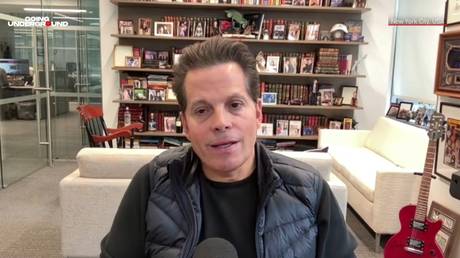
Anthony Scaramucci is currently sounding the alarm on a structural shift in executive power that few legacy pundits seem to grasp. While the headlines focus on the friction between the former communications director and his one-time boss, the real story lies in the disintegration of the multi-nodal advisory system. The traditional "war room"—a collection of seasoned strategists, legal minds, and policy experts meant to stress-test an executive’s impulses—has been replaced by a singular, unfiltered feedback loop. Scaramucci’s critique centers on the danger of a "war council of one," a phenomenon where institutional guardrails are not just ignored but intentionally dismantled to ensure speed and total alignment with a single ego.
This isn't merely a political spat. It is a fundamental breakdown of risk management. In any high-stakes environment, whether a Fortune 500 boardroom or the West Wing, the presence of dissenting voices acts as a vital insurance policy against catastrophic error. When those voices are purged in favor of absolute loyalty, the organization loses its ability to course-correct. Scaramucci, drawing on his background in high-finance hedge funds and his brief but chaotic stint in the White House, argues that this centralization of decision-making creates a massive "tail risk"—the possibility of a rare but devastating event that wipes out all previous gains.
The Architecture of Isolation
To understand why a war council of one is so effective in the short term and so lethal in the long term, we have to look at the mechanics of information flow. In a standard operational model, information is gathered by subordinates, filtered through subject-matter experts, and presented to the leader with a set of options and projected outcomes. This process is intentionally slow. It is designed to catch flaws in logic and identify legal or ethical landmines.
When a leader decides to act as their own strategist, press secretary, and legal counsel, they bypass these filters. The result is a high-velocity operation that can dominate a news cycle for forty-eight hours but lacks the structural integrity to survive a sustained legal or political counter-offensive. Scaramucci’s observations suggest that the current political environment rewards this speed, even if it leads to long-term instability. The "war council of one" thrives on the idea that the leader's intuition is superior to the collective intelligence of an organized staff.
The Loyalty Trap
In this environment, loyalty is no longer defined by protecting the leader from their worst impulses. Instead, loyalty is measured by the speed with which a subordinate executes a flawed command. Scaramucci has pointed out that this creates a "yes-man" ecosystem where the most competent advisors are the first to be purged. They are replaced by individuals who lack the stature or the will to say "no."
This creates a dangerous vacuum. Without internal critics, the leader becomes increasingly detached from reality, relying on a narrow set of data points that confirm their existing biases. This is a classic hallmark of organizational decline. We see it in tech startups where a "genius" founder ignores market realities until the venture capital runs dry. We see it in aging dictatorships. And, as Scaramucci warns, we are seeing it in the highest levels of American political campaigning.
The Financial Logic of Centralized Power
Scaramucci’s perspective is unique because he views political power through the lens of a Wall Street veteran. In finance, if you don't have a compliance department or a risk officer who can shut down a trade, you eventually go bust. The "war council of one" is essentially a trader operating without a back office. It looks brilliant during a bull market when every gamble pays off, but it offers zero protection when the market turns.
The political "market" is currently volatile. Scaramucci argues that the absence of a professionalized war room means that the campaign—or the administration—is unable to handle multiple crises simultaneously. They can fight one fire with total intensity, but they are blind to the three other fires starting behind them. This lack of peripheral vision is the direct result of a leadership style that views collaboration as a sign of weakness or a potential for betrayal.
The Cost of Emotional Volatility
When the council is reduced to one person, the entire organization becomes a slave to that person's emotional state. A bad night's sleep or a frustrating segment on cable news can dictate national policy or campaign strategy. This is the opposite of the "stable" leadership that markets and international allies crave. Scaramucci’s critiques often return to this point: the sheer unpredictability of a leader who has no one to pull them back from the ledge.
The veteran journalist knows that stability is a product of process, not personality. When you remove the process, you are left with raw, unmediated personality. For a segment of the electorate, this is the appeal. It feels authentic. It feels "strong." But from an analytical standpoint, it is a recipe for operational failure. You cannot run a complex modern state on the fly.
Why the Traditional Model is Dying
We have to ask why the old war room model is failing to compete. In the past, the "vets" and the "pros" held the keys to the kingdom because they controlled the infrastructure of communication. They had the relationships with the networks and the newspapers. They controlled the flow of donor money.
Today, social media has democratized the ability to cause chaos. A single person with a massive following can reach more people in ten minutes than a traditional war room could reach in a week of coordinated press releases. This has convinced some leaders that the "pros" are an unnecessary expense—or worse, a hindrance to their direct connection with the "people." Scaramucci, despite his own use of these platforms, recognizes that reaching people is not the same as governing them.
The Illusion of Efficiency
There is a seductive quality to the "council of one." It feels efficient. There are no meetings, no debates, and no leaks from disgruntled staffers who disagree with the direction. But this efficiency is an illusion. It is the efficiency of a car driving toward a cliff at a hundred miles an hour. It’s moving fast, yes, but the direction is the problem.
The "leaks" that a centralized leader hates are often the system's way of trying to save itself. When an advisor leaks a bad idea to the press, they are often doing it to kill the idea before it becomes reality. By eliminating the advisors who might leak, the leader also eliminates the internal alarms that warn of impending disaster.
The Hard Truth of Executive Isolation
The "war council of one" is ultimately an expression of profound distrust. It suggests a belief that no one else is capable of understanding the mission or executing the vision. This level of isolation is rarely a choice made from a position of strength. It is usually a defensive crouch.
As Scaramucci continues to critique this model, he is highlighting a trend that extends far beyond one specific politician. We are entering an era where the cult of the "great man" (or woman) is making a comeback, fueled by digital tools that allow for direct, unmediated influence. The danger is that these leaders forget that the "great man" of history usually had a room full of brilliant, difficult, and dissenting people who kept him from destroying himself.
Without that room, the leader is just a man in a vacuum. And vacuums are notoriously difficult to breathe in for long. The fallout of this shift will be felt in the coming election cycles, as the lack of professionalized, strategic depth leads to increasingly erratic behavior and unforced errors. The war room isn't just a relic of the past; it is a fundamental requirement for any leader who intends to actually stay in power once they've seized it.
The current trajectory suggests a move toward more volatility, not less. When the person making the decisions is the only person allowed to have an opinion, the margin for error disappears. Every mistake is magnified. Every impulse becomes a directive. This is the reality Scaramucci is pointing toward—a world where the guardrails are gone, and the driver has his eyes closed.



