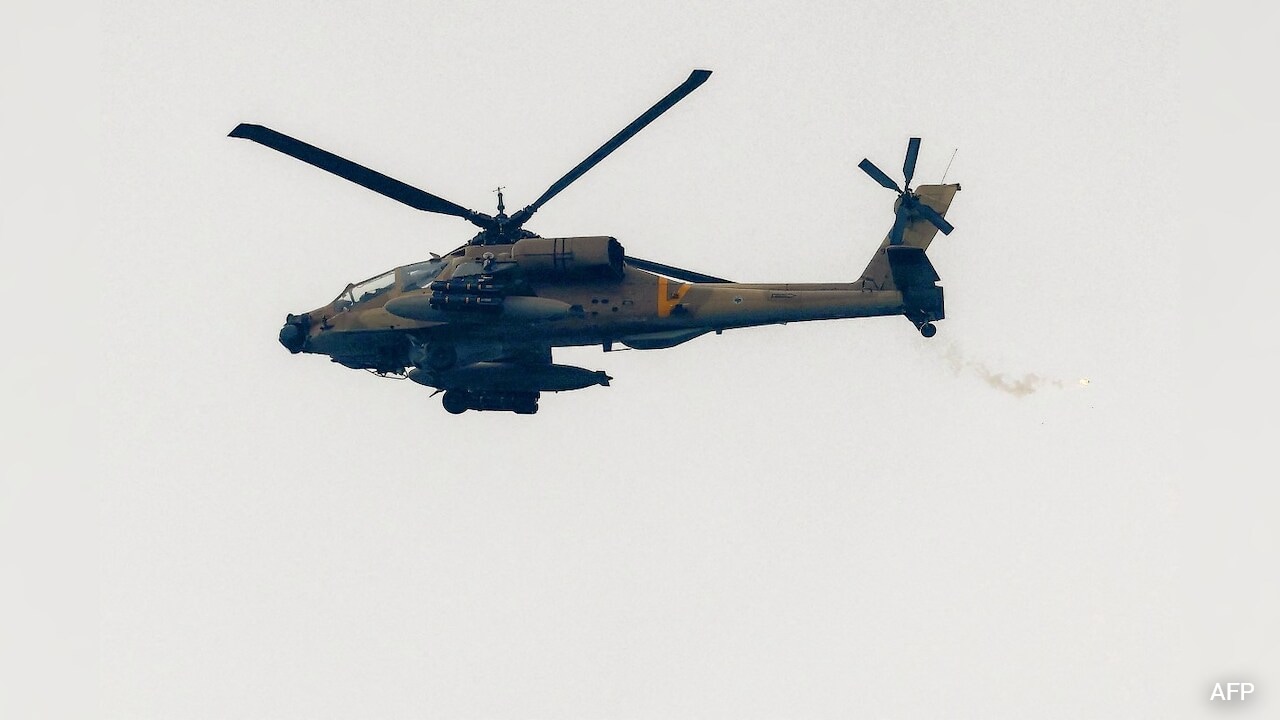
The defense establishment is breathing a collective sigh of relief because two pilots were fished out of the Persian Gulf after an AH-64 Apache gunship splashed down near the Strait of Hormuz. The mainstream press is running the standard playbook. They focus on the flawless search-and-rescue operation. They praise the resilience of the aircrews. They treat the loss of a $35 million asset as a routine cost of doing business in a high-tension theater.
They are missing the entire point.
The headline shouldn’t be that the pilots survived. The headline is that we are still risking elite crews and flying multi-million-dollar metal boxes designed in the 1970s into the most heavily saturated drone and missile environment on earth. This crash isn’t an operational hiccup. It is a blinking red light warning us that the Army's doctrine for the Indo-Pacific and the Middle East is fundamentally broken.
The Myth of the Low-Altitude Leviathan
For forty years, the Apache has been the undisputed king of the attack helicopter market. It earned its reputation in the deserts of Iraq, hunting Soviet-era armor with Hellfire missiles from behind sand dunes. But look at the modern threat environment in the Strait of Hormuz or the Taiwan Strait. The tactical reality has inverted.
The defense community clings to the idea that low-altitude flight offers protection. It doesn't.
- The Man-Portable Air Defense System (MANPADS) Saturation: The proliferation of cheap, shoulder-fired surface-to-air missiles means the deck is no longer a safe haven. It is a kill zone.
- The Drone Swarm Factor: Airspace below 500 feet is increasingly crowded with first-person view (FPV) loitering munitions. A helicopter turning a corner at 120 knots is just as vulnerable to a $500 drone as a main battle tank.
- Maritime Vulnerability: Apaches are heavy. They are optimized for land operations. Flying them over open water to counter fast-attack craft or monitor shipping lanes strips away their primary survival mechanism: terrain masking.
When an Apache operates over water, it loses the trees, hills, and valleys that hide its massive radar and thermal signature. It becomes a slow, loud, high-contrast target sitting perfectly against a flat background. We are using a scalpel designed for Central Europe's forests to chop wood in the open ocean.
Why the Army Fought for a Flying Anachronism
I have watched the Pentagon burn billions trying to keep legacy platforms relevant in eras they were never built for. The insistence on deploying attack helicopters to littoral choke points stems from institutional inertia, not tactical utility.
The U.S. Army has a deep-seated identity crisis regarding its role in maritime theaters. The Navy owns the waves. The Air Force owns the sky. The Marines own the beaches. To guarantee its slice of the budget in places like the Persian Gulf or the South China Sea, the Army pushes its rotary-wing assets into missions that belong to unmanned systems.
Consider the math of a modern maritime engagement.
$$Cost\ Effectiveness = \frac{Target\ Value\ Destroyed}{Platform\ Cost + Pilot\ Training\ Investment}$$
When you factor in the $35 million hull cost of an AH-64E, plus the millions spent training two warrant officers over a decade, the equation collapses the moment a single airframe goes down. Even without enemy intervention, mechanical failures—like the one suspected in this latest Hormuz incident—inflict a massive strategic tax.
Imagine a scenario where instead of two pilots hovering over a volatile shipping lane in a loud, maintenance-heavy machine, the same mission is handled by twenty long-endurance, low-observable autonomous drones. If you lose three to engine failure or salt-water corrosion, you lose zero lives and a fraction of the capital. The mission continues without a geopolitical crisis or a dramatic rescue operation.
Dismantling the PAA: Is the Apache Inherently Unsafe Over Water?
The public always asks the wrong questions after an aviation mishap. The standard inquiry is: Was it pilot error or mechanical failure?
That inquiry misses the structural flaw. The real question is: Why are we putting human beings in a position where a single mechanical failure over water guarantees a catastrophic loss?
The Apache lacks the inherent buoyancy or emergency flotation systems found on dedicated naval helicopters like the MH-60R Seahawk. When an Apache hits the water, it rolls upside down immediately due to its top-heavy rotor head and heavy armor plating. Escaping from a submerged, inverted cockpit while wearing body armor and night-vision goggles is a nightmare scenario that aircrews train for in specialized pools ("the dunker"), but the survival rates in real-world open-ocean ditches are terrifyingly low.
The pilots near Hormuz got lucky. The weather was favorable, the rescue assets were close, and the airframe didn't trap them underwater. Relying on luck is not a strategy.
The Hard Truth About Future Procurement
The pushback from traditionalists is always the same: Drones can't match the situational awareness of a human pilot in a cockpit.
That argument died five years ago. Modern sensor suites, synthetic aperture radar, and AI-driven target classification can process data faster and more accurately than a pilot staring through a modernized target acquisition designation sight (MTADS) while pulling Gs and dodging surface-to-air fire.
The termination of the Future Attack Reconnaissance Aircraft (FARA) program proved that leadership recognizes the shift at the highest levels. They realized that flying a manned scouting helicopter into modern air defenses is a suicide mission. Yet, we continue to deploy the Apache into the exact same high-threat environments because we already bought the airframes and don't know what else to do with them.
This approach is reckless.
We need to stop treating every successful rescue as a validation of our operational choices. The Hormuz crash wasn't a success story because the pilots lived. It was a failure of imagination because they were out there in the first place.
Ground the over-water Apache missions. Accelerate the deployment of land-based anti-ship missile batteries and long-range unmanned aerial vehicles. Stop risking our most valuable human assets to justify keeping a Cold War icon on life support. The next crew won't get a lucky break in the water, and the enemy won't wait for the rescue boats to arrive.