Read the headline again. Read it slowly.
When a senior foreign minister says there are no plans to meet the United States and dismisses the chatter as media speculation, lazy coverage treats the quote like a locked door. It writes the story around a flat denial. Case closed. Move on. If you found value in this article, you might want to read: this related article.
That is bad foreign policy analysis. Worse, it is lazy journalism.
In diplomatic reporting, a public refusal to meet is rarely the end of a story. Often, it is the opening move in a high-stakes negotiation over terms, leverage, face-saving, and timing. Treating an official denial as gospel confuses public signaling with private reality. For another perspective on this development, refer to the recent coverage from The Guardian.
Here is the uncomfortable truth nobody in the headline-chasing crowd wants to admit: whether or not a formal table is set today tells you almost nothing about how adversaries actually talk, probe, or bargain.
The Myth of the Public Denial
Watch enough diplomatic crises and you see the same reflex play out over and over. A reporter asks a blunt question about bilateral talks. An official gives a blunt "no" and blames rumor-mongers. Instantly, pundits declare the door slammed shut.
That reaction rests on a flawed assumption: that serious diplomacy begins with a press release and a photo op.
It rarely does. Public denials serve immediate tactical functions. They protect domestic political standing. They prevent rivals from claiming premature concessions. They keep hardliners at home from accusing leadership of weakness before anything concrete exists on paper. A minister who confirms talks too early hands critics ammunition and gives the other side leverage before a single clause is drafted.
Dismissing everything else as "media speculation" is also a classic deflection. Journalists and analysts get plenty wrong when they invent backchannels out of thin air. Yet rumors in high-stakes foreign policy frequently trace back to real trial balloons, third-party messages, or leaked drafts designed to test reactions without owning the proposal.
Calling something speculation does not make the underlying pressure disappear. It just changes who takes credit—or blame—if a shift happens later.
Why Analysts Keep Asking the Wrong Question
Most coverage around a headline like this zeroes in on a narrow binary: Are they meeting or not?
That is the wrong question.
The right question is: What is each side trying to achieve by shaping expectations right now?
When a government says no meeting is planned, ask what happens next under different conditions. Would a meeting happen if sanctions relief were on the table? Would it happen only through intermediaries? Would it happen quietly in a third country while officials deny it publicly until the last possible hour?
People Also Ask whether a flat denial means talks are dead. Brutally honest answer: no. It means no acknowledged, scheduled meeting exists on current terms. Diplomacy has never required cameras to move a file forward. Historically, some of the most consequential breakthroughs between bitter rivals started through quiet backchannels, regional go-betweens, or indirect signals long before anyone admitted a conversation was underway.
People Also Ask if media reports on diplomatic contacts are ever reliable. Sometimes they are dead on; often they are half-baked. Treat anonymous diplomatic sourcing like raw ore. You do not eat it as-is. You smelt out who benefits from the leak, what incentives drive the source, and whether the claim matches observable actions on the ground.
Statecraft Is Not a Press Conference
To understand why public denials mislead, separate the mechanics of statecraft cleanly.
- Public posture: Statements aimed at domestic audiences, allies, and adversaries to project resolve, set red lines, and manage political risk.
- Backchannel signaling: Indirect communication—often via third states, UN settings, or carefully worded public remarks—used to test intentions without formal commitment.
- Formal negotiation: Structured talks where delegations trade specific concessions, timelines, and verification terms.
Confusing these three layers is where amateur commentary goes off the rails. A state can maintain a hard public posture while testing backchannel waters, and still refuse formal direct negotiations unless core preconditions shift.
In international relations scholarship, realist thinkers like Hans Morgenthau and Thomas Schelling spent decades dissecting how states use threats, commitments, and strategic ambiguity to bargain under tension. Schelling in particular showed how controlling expectations and commitment—what you say you will or will not do—shapes outcomes before formal bargaining even starts. A public "no" is a commitment device as much as a factual report.
I have watched organizations and analysts blow huge amounts of credibility by treating every diplomatic statement as a literal blueprint. Over the years, I have seen smart teams misread market shocks, policy shifts, and geopolitical moves because they took podium rhetoric at face value instead of tracking incentives and leverage. When you anchor your analysis to a single denial, you get blindsided the moment quiet movement begins.
A Thought Experiment in Strategic Ambiguity
Imagine a scenario where two rival capitals have every reason to avoid looking eager, yet both face mounting pressure to test whether a narrow, practical arrangement is possible.
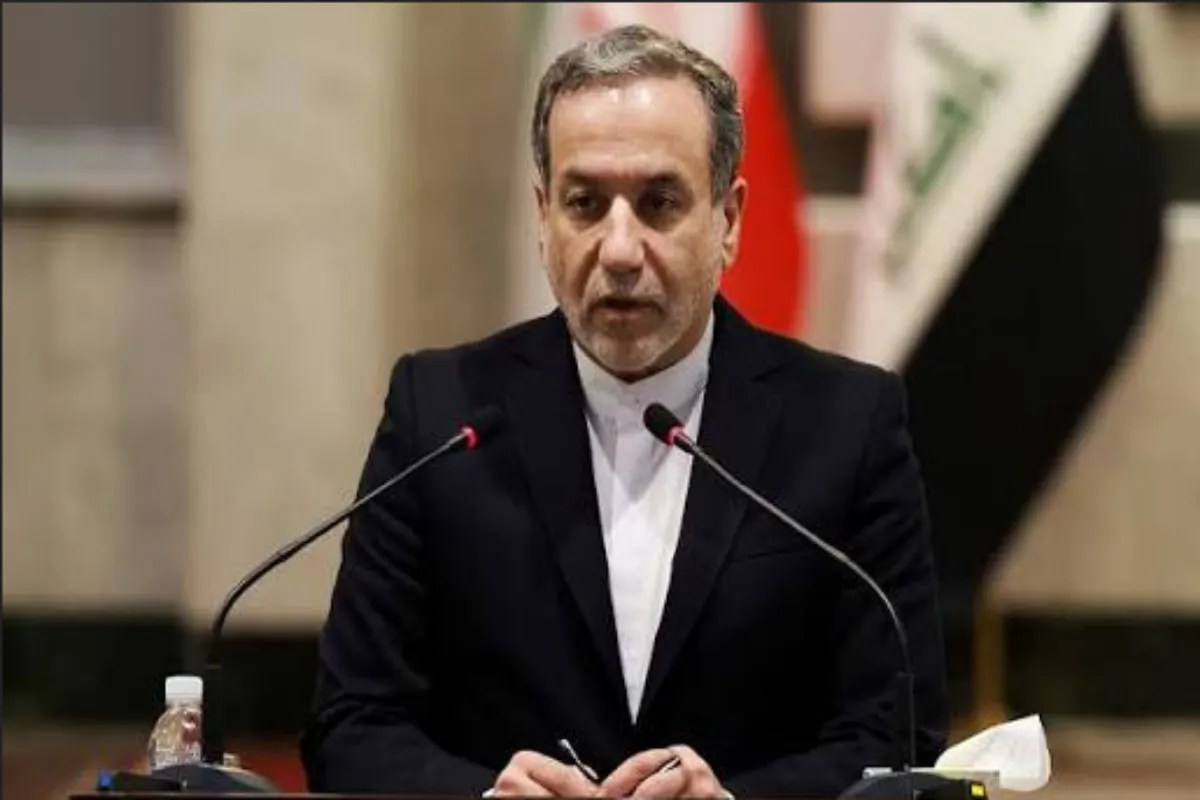
If Foreign Minister Abbas Araghchi—or any top diplomat in a comparable standoff—announces that talks are underway, domestic critics pounce immediately. Rivals demand concessions before sitting down. The other side raises its price because it sees movement.
Now flip it. Suppose he says there are no plans to meet and calls the talk media speculation. Domestic hawks stay quiet. Pressure on the negotiating team drops. If quiet probes fail, nobody loses face. If serious terms eventually emerge behind closed doors, the announcement comes later on terms chosen by the leadership rather than dictated by rumor.
That scenario does not prove secret talks are happening today. It proves something far more useful: a public denial is logically compatible with both zero contact and intense behind-the-scenes probing. Treating it as proof of only one outcome is sloppy thinking.
The Downside of Being Contrarian
A contrarian read carries real risks if you get carried away.
First, contrarianism can curdle into paranoia. Sometimes a "no" really means "no." Adversaries routinely hit dead ends, miscalculate, or stay locked in gridlock for years. Assuming hidden diplomacy behind every denial is just as lazy as taking every denial literally. You end up seeing 4D chess where there is only stubbornness.
Second, over-indexing on subtext can make you ignore plain facts. If structural obstacles—deep mistrust, domestic politics, conflicting core demands—remain intact, clever signaling alone will not bridge the gap.
Third, contrarian analysis is harder to defend in the short term. If nothing changes next week, critics will say you overthought a simple quote. You have to live with being early, wrong on timing, or unflashy while waiting for real evidence to accumulate.
How to Read Diplomatic Headlines Without Getting Played
Stop treating official denials as the final word. Start treating them as data points inside a larger incentive system.
- Audit the timing. Ask why the statement came out right now. Did a rumor gain traction? Did domestic pressure spike? Did a regional event shift leverage?
- Separate words from moves. Watch concrete actions—sanctions enforcement, regional diplomacy, messaging tone across multiple officials—rather than relying on a single soundbite.
- Track intermediaries. Pay close attention to neutral or regional capitals offering mediation or hosting quiet visits. Real movement often shows up in third-party traffic before direct contacts are admitted.
- Demand verifiable proof. Do not invent backchannels or claim secret deals exist without hard indicators. Hold contrarian theories to the same standard of evidence you demand from conventional takes.
- Define what would change your mind. Decide in advance what facts would confirm genuine deadlock versus quiet movement, so confirmation bias does not steer your judgment.
Read the next diplomatic denial with sharper eyes. Do not ask whether the door is shut—watch who is standing behind it and why they want you to think it is locked.


