The air in a professional hockey arena changes the moment the season ends. During the winter, it is a pressurized container of adrenaline, the smell of frozen water and expensive popcorn clashing with the roar of eighteen thousand people. But when the lights go down for the final time and the ice begins to melt into the concrete, the silence is deafening. For a coach, that silence isn't peaceful. It is an interrogation.
Sheldon Keefe knows this silence better than most. He is a man built on structure, a tactician who sees the game as a series of interlocking gears. He was brought to Newark to be the final piece of a puzzle—the steady hand that would take a roster of blindingly fast, hyper-talented young stars and turn them into a machine capable of lifting silver. But now, the man who hired him is gone. Tom Fitzgerald, the general manager who staked his reputation on Keefe’s philosophy, has walked out the door.
In the high-stakes theater of the NHL, a coach without the GM who hired him is a king without a country.
The Ghost of the Visionary
Imagine standing in a house you are halfway through building. You have the blueprints rolled up under your arm. You know exactly where the load-bearing walls go. You know how the light will hit the kitchen at four in the afternoon. Then, suddenly, the homeowner sells the property to someone else. The new owner walks in, looks at your half-finished walls, and shrugs. They might like your work. They might hate it. They might want to tear the whole thing down and build a parking lot.
That is the reality Keefe wakes up to every morning now.
Tom Fitzgerald wasn't just a boss; he was the architect of a specific brand of Devils hockey. He believed in Keefe’s high-possession, high-pressure system. He traded for players who fit that mold. He signed the checks and stood in the locker room tunnels, nodding in agreement when Keefe talked about "the process." When a GM leaves, the "process" loses its protection. It becomes an expense line on a ledger that someone else has to justify.
The league is littered with the remains of coaching tenures that ended not because of a losing streak, but because of a shift in the wind at the executive level. A new GM rarely wants to inherit someone else’s legacy. They want their own guy—someone who speaks their language, someone who owes them their loyalty. Keefe is currently a man living in a house with a new landlord, and the lease is being reviewed hour by hour.
The Weight of the Suit
When you watch a coach on the bench, you see the scowl, the pointed finger, the frantic scribble on a whiteboard. You see the authority. What you don't see is the fragility. Behind every tactical decision is the knowledge that failure isn't just a loss on the scoreboard; it's a step toward a U-Haul parked in the driveway.
Keefe has always been a polarizing figure in the hockey world. His time in Toronto was defined by regular-season brilliance and postseason heartbreak. He arrived in New Jersey with a chip on his shoulder, a man desperate to prove that his system wasn't the problem—the environment was. He threw himself into the Devils' rebuild with the intensity of a man trying to outrun a storm.
But hockey is a game of inches, and management is a game of optics.
If the Devils start next season with a three-game skid, the narrative won't be about a slow start. It will be about "alignment." The media will start asking if the new management team sees eye-to-eye with the man behind the bench. They will wonder if the "philosophical gap" is too wide to bridge. These are the invisible stakes. Keefe isn't just coaching against the Rangers or the Flyers anymore; he is coaching against the perception that he is a leftover.
The Locker Room Whisper
Players are intuitive creatures. They can smell uncertainty. In a locker room, the head coach is the ultimate authority, the man who decides your ice time, your power-play minutes, and ultimately, your career trajectory. But that authority is derived from the front office.
Think about a classroom where the students find out the principal is planning to replace the teacher by the end of the semester. The dynamic shifts. The "buy-in" that coaches talk about so obsessively begins to erode. A player might think twice before diving headfirst into a shot block for a system that might be extinct in three months. They look toward the press box, trying to gauge the facial expressions of the new regime, wondering who the real power is.
For Keefe, the challenge is no longer just about X’s and O’s. It’s a psychological war. He has to convince twenty-three millionaires that his vision is still the only vision, even as the ground shifts beneath his feet. He has to project a confidence he likely doesn't feel. Every time he walks past the GM’s office—the office that used to house his biggest ally—he has to keep his head up.
The Cold Math of Survival
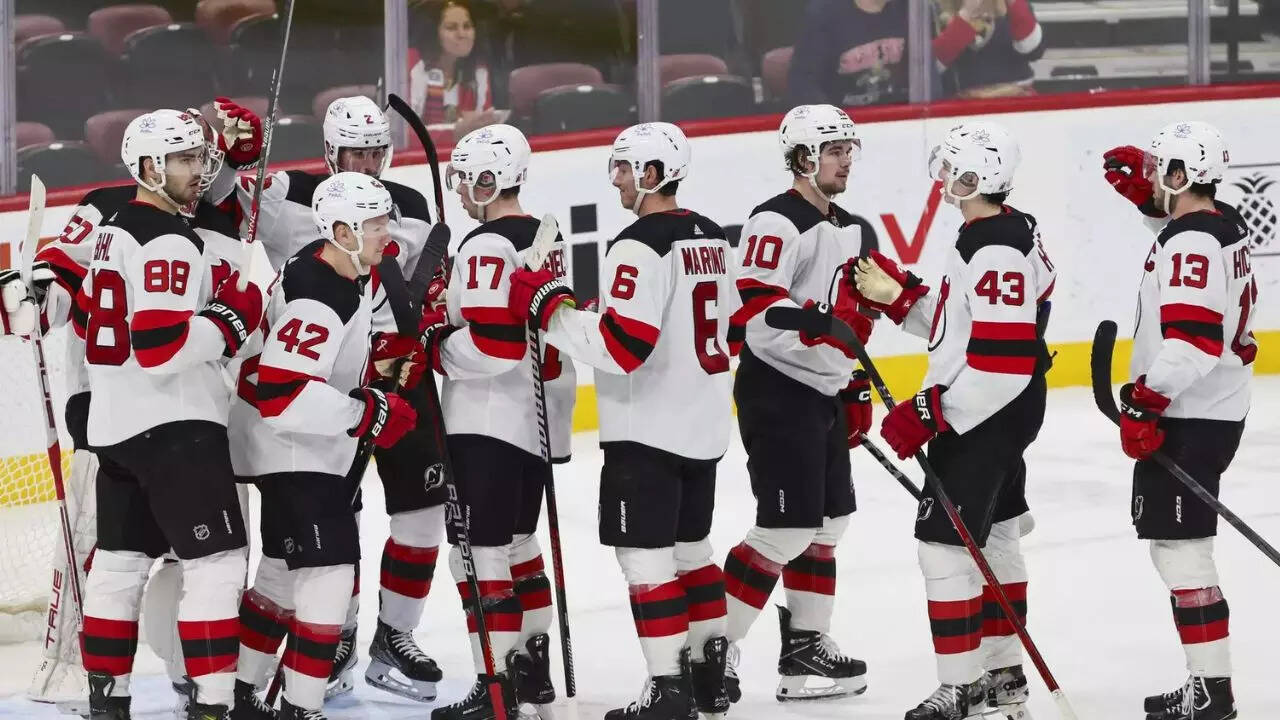
Let’s look at the numbers, though the numbers rarely tell the story of a man’s pulse. The Devils are a team built for "now." Jack Hughes, Nico Hischier, Jesper Bratt—these aren't prospects anymore. They are the engine of a franchise that has spent years in the wilderness and is finally seeing the oasis.
A new GM coming into this situation has a terrifying amount of power. They can decide that Keefe is the "bridge coach"—the guy who keeps the seat warm while they hunt for a "championship-caliber" replacement. Or, they can decide he is the problem.
History shows us that the "interim" feel is a poison. When a coach enters a season as a "lame duck," the results are almost always catastrophic. The tension becomes a self-fulfilling prophecy. The coach squeezes the stick too tight, the players play with fear rather than flow, and the front office watches it all with a clinical, detached eye, waiting for the excuse to make the move they already planned in their heads.
Keefe is currently trapped in the "Evaluation Phase." It is the most insulting period in a professional's life. It suggests that your years of experience, your wins, and your tactical mind are all subject to the whims of a newcomer who hasn't seen you work in the trenches.
The Loneliness of the Long Season
The lights are back on now. The off-season workouts have begun. Keefe is likely in his office, staring at video of a power play from mid-February, looking for the half-second delay that caused a turnover. He is working as if his job is secure, because that is the only way he knows how to work.
But the silence from the executive floor is louder than any crowd.
There is a specific kind of bravery required to lead a group of men when you know your own future is a coin flip. It’s the bravery of the captain of a sinking ship who is still polishing the brass. Keefe is a hockey lifer. He understands the cruelty of the business. He knows that in the NHL, loyalty is usually just a lack of better options.
He will stand on the bench for the season opener. He will wear the suit. He will give the pre-game speech. But every time he looks over his shoulder, he won't be looking at the scoreboard. He’ll be looking at the empty seat in the luxury box where his protector used to sit, wondering if the new occupant is holding a contract or a pink slip.
The ice is frozen again. The skates are sharpened. But for Sheldon Keefe, the ground has never felt less solid. He is an architect standing in a hallway, waiting to see if the new owners want to keep his walls or start the demolition.