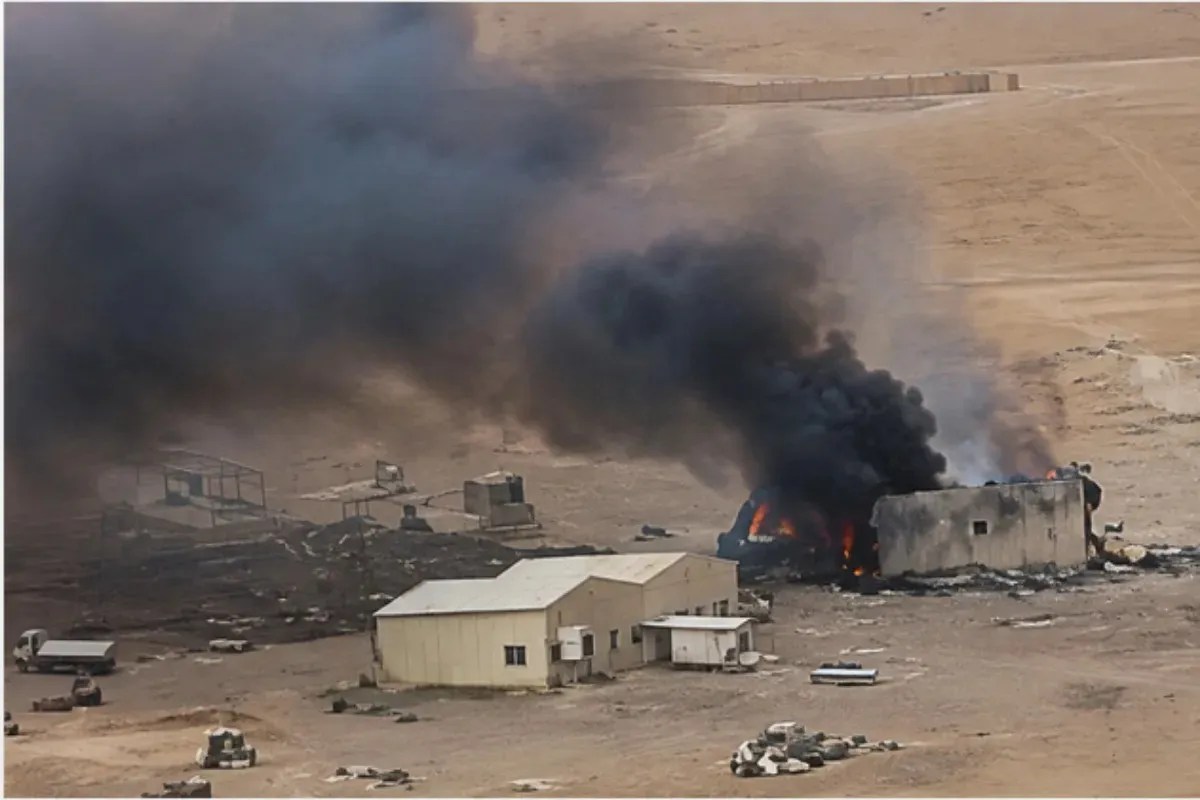
Geopolitical friction between state actors operates on calculated thresholds of signaling rather than immediate kinetic execution. The recent operational posture adopted by the Islamic Revolutionary Guard Corps toward United States intelligence nodes highlights a systemic shift in asymmetric deterrence frameworks. Rather than evaluating such statements through emotional rhetoric, analysts must deconstruct the underlying variables governing state-level posturing, technological integration, and the economics of regional containment.
The Mechanics of Strategic Signaling
State actors deploy verbal escalations and technological disclosures to calibrate adversary risk perception. This dynamic relies on establishing credibility within an environment characterized by chronic distrust and asymmetrical military capabilities. When military leadership highlights specific capabilities or designates intelligence installations as active targets, the primary objective is altering the adversary's operational calculus rather than signaling imminent war.
Consider the variables governing this signaling mechanism:
- Frequency of public operational disclosures versus classified posture adjustments.
- Degree of ambiguity regarding weapon system specifications and deployment readiness.
- Historical precedent of response thresholds following similar declarations.
- Third-party diplomatic channels utilized to de-escalate or reinforce the stated posture.
Each variable influences how intelligence agencies model threat probabilities. When deterrence models fail, it is rarely due to a lack of data; rather, it stems from misinterpreting the weight assigned by opposing leadership to specific symbolic markers. Rhetoric serves as an economic substitute for kinetic action, allowing states to project influence and test red lines at minimal material cost.
Furthermore, strategic signaling operates on dual-audience framing. The domestic audience receives a narrative of strength, national sovereignty, and technological parity, reinforcing regime legitimacy during periods of economic strain. Simultaneously, the international audience receives a calibrated deterrent signal designed to raise the political and military costs of continued adversary intervention in regional spheres of influence. Disentangling these domestic political drivers from actual operational intent is one of the most complex tasks facing intelligence analysts.
The Vulnerability Matrix of Intelligence Infrastructure
Intelligence collection nodes operate across dispersed geographic and digital planes, creating multi-vector attack surfaces that traditional defense architectures struggle to completely insulate. Modern intelligence infrastructure relies heavily on continuous data ingestion, telecommunications relay stations, and localized human networks, each presenting distinct operational vulnerabilities.
To understand the mechanics of targeting intelligence nodes, one must analyze the structural dependencies inherent in modern surveillance networks:
- Centralized data processing hubs that aggregate multi-source intelligence inputs.
- Telecommunication backbones connecting forward operating bases with continental command centers.
- Supply chain dependencies for specialized microelectronics and sensor components.
- Physical security perimeters vulnerable to asymmetric infiltration and standoff munitions.
When an adversary declares intelligence nodes to be under active surveillance or within range of specialized weapon systems, the strategic intent is twofold. First, it forces the targeted nation to expend resources hardening defensive perimeters, redistributing assets, and upgrading redundancy protocols. Second, it creates psychological friction within command structures, introducing operational hesitation into routine surveillance and reconnaissance missions.
The Asymmetry of Modern Weaponry
The mention of novel weapon systems in geopolitical posturing warrants rigorous technical categorization. Modern military modernization programs across regional powers prioritize capabilities designed to defeat traditional missile defense shields. These include hypersonic glide vehicles, low-observable cruise missiles, electronic warfare suites, and distributed swarming architectures optimized for saturation attacks.
Analyzing the tactical utility of these systems requires examining their core performance parameters:
- Flight trajectory profiles that evade early-warning radar horizons.
- Terminal guidance systems capable of compensating for electronic countermeasures.
- Payload modularity allowing rapid adaptation to different target typologies.
- Production scalability and sustainment logistics under sanctions regimes.
Traditional defense systems optimized for ballistic missile trajectories face severe intercept challenges against maneuverable, low-altitude platforms. The inclusion of these platforms in threat assessments shifts the strategic equation from quantitative numerical parity to qualitative vulnerability management. Even if weapon stockpiles are limited, the psychological and operational impact of potential deployment forces a reevaluation of forward-deployed force protection postures.
In addition to kinetic delivery systems, electronic warfare and cyber capabilities form the invisible backbone of modern asymmetric doctrine. Jamming signals, spoofing GPS coordinates, and blinding optical sensors represent non-kinetic methods of neutralizing intelligence nodes. When state actors reference new weapons, they frequently encompass integrated electronic warfare platforms designed to degrade command-and-control networks long before physical munitions are launched.
The Cost Function of Regional Friction
Sustained geopolitical escalation imposes measurable economic and operational costs on all participating entities. The cost function of regional friction is not distributed evenly; it cascades through energy markets, maritime insurance rates, and diplomatic capital expenditure.
Evaluating the financial and strategic toll requires accounting for several primary vectors:
- Increased insurance and freight tariffs for commercial shipping transiting contested chokepoints.
- Opportunity costs associated with diverting military assets from global strategic priorities to regional containment.
- Diplomatic expenditure required to maintain coalition alignment and manage allied anxieties.
- Intelligence collection overhead dedicated to monitoring continuous threat indicators.
When the cost of maintaining a defensive posture exceeds the expected utility of forward presence, strategic adjustments become necessary. Adversaries understand this dynamic and utilize persistent low-level friction to drain resources and test the political resolve of democratic coalitions. This dynamic creates a war of attrition fought on balance sheets and political timelines rather than battlefields.
Operational Risk Mitigation and Strategic Forecast
Managing asymmetric threats requires moving beyond reactive defensive measures toward resilient architectural design. Intelligence nodes and forward-deployed assets must operate under the assumption of contested communication links and persistent surveillance.
Effective risk mitigation strategies rely on decentralized command structures, hardening critical data nodes, and establishing automated fail-safes that do not rely on centralized telecommunication backbones. By distributing intelligence processing and minimizing reliance on single points of failure, nations can neutralize the psychological leverage gained by adversaries through public threats.
The trajectory of modern regional conflict suggests that signaling will increasingly blend cyber operations, kinetic posturing, and economic warfare. Long-term stability depends less on neutralizing every declared threat vector and more on establishing clear, predictable boundaries that prevent accidental escalation stemming from miscalculated rhetoric.