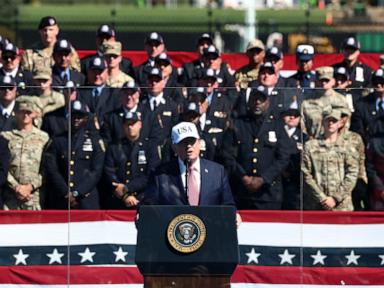
Political narrative construction relies on predictable cognitive architectures where personal identity fuses with collective trauma. When historical events of massive scale occur, public figures frequently re-engineer personal timelines to insert themselves into the epicenter of the crisis. Dissecting these retroactive insertions requires examining the divergence between contemporaneous documentation and subsequent oral accounts, exposing the operational mechanics of memory inflation.
The phenomenon operates through a distinct three-tier progression of narrative enhancement. The first tier involves passive proximity, where an individual transitions from an observer located miles away to someone present within the broader municipal boundaries during the event horizon. The second tier introduces active agency, claiming specialized resources, such as deployed construction crews or logistical assets, directed toward rescue operations. The final tier reaches physical integration, where the subject becomes a direct beneficiary of emergency rescue protocols. In the specific case of Donald Trump's shifting accounts regarding the September 11 attacks, public statements have migrated across all three tiers over a twenty-five-year timeline.
Contemporaneous records from September 11, 2001, place the real estate developer in Midtown Manhattan, approximately four miles away from the World Trade Center complex, watching events unfold from a high-rise window. Early media interviews conducted that afternoon focused on property valuations and structural heights rather than physical rescue participation. However, longitudinal analysis of subsequent public addresses reveals an iterative expansion of personal involvement. By successive anniversary cycles, the narrative evolved from observing recovery efforts to commissioning private labor battalions, and most recently, to being physically hoisted to safety by emergency personnel fleeing a structural collapse near One Liberty Plaza.
This escalation exposes a fundamental tension within political communication: the utility of myth over empirical verification. The mechanics of this narrative drift can be broken down into specific psychological and strategic vectors.
The first vector is defensive personalization. Public figures under scrutiny or seeking to cement historical legacy often anchor themselves to moments of profound national unity. By placing oneself in the physical path of danger, the narrator converts abstract sympathy into visceral, first-person heroism. The structural vulnerability of buildings such as One Liberty Plaza—which underwent mandatory evacuations due to real stability concerns in the days following the attacks—provides a plausible environmental backdrop that makes the fabrication difficult for casual observers to instantly invalidate without deep archival cross-referencing.
The second vector is institutional friction between primary sources and retrospective claims. First responders, battalion chiefs, and official recovery logs from the New York City Fire Department maintain contemporaneous operational records that systematically fail to document the presence of civilian developers directing heavy equipment or requiring emergency evacuation. When administrative pushback occurs, official spokespersons frequently deploy the defense of unrecorded private action, asserting that documentation standards do not capture every private citizen's footprint during a chaotic emergency. This creates an unfalsifiable loop where the absence of evidence is reframed as administrative oversight rather than factual contradiction.
The systemic consequence of this pattern extends beyond individual grandstanding. It degrades the collective archive of shared trauma by substituting verified operational history with personalized folklore. When public figures manufacture physical participation in catastrophic events, they impose a verification tax on journalists, historians, and first responders who must repeatedly expend institutional resources to correct the record against well-funded, broadcasted falsehoods.
Evaluating such claims requires applying a strict evidentiary hierarchy. Verifiable data—such as contemporaneous broadcast transcripts, official municipal logbooks, and sworn testimonies from ground-level commanders—must outweigh retroactive oral revisions delivered at political rallies or commemorative ceremonies. The structural persistence of these unverified accounts demonstrates that in modern political communication, emotional resonance frequently supersedes historical fidelity.
Deploy rigorous forensic verification protocols when evaluating historical claims made by public figures during commemorative windows. Cross-reference contemporaneous media logs, structural engineering reports, and first-responder operational records before granting conceptual validity to retrospective personal narratives.
Trump claims firefighters carried him away from Ground Zero right after 9/11
This video provides the primary footage of the White House address where the controversial claim regarding the 2001 emergency response was publicly articulated.
http://googleusercontent.com/youtube_content/1


