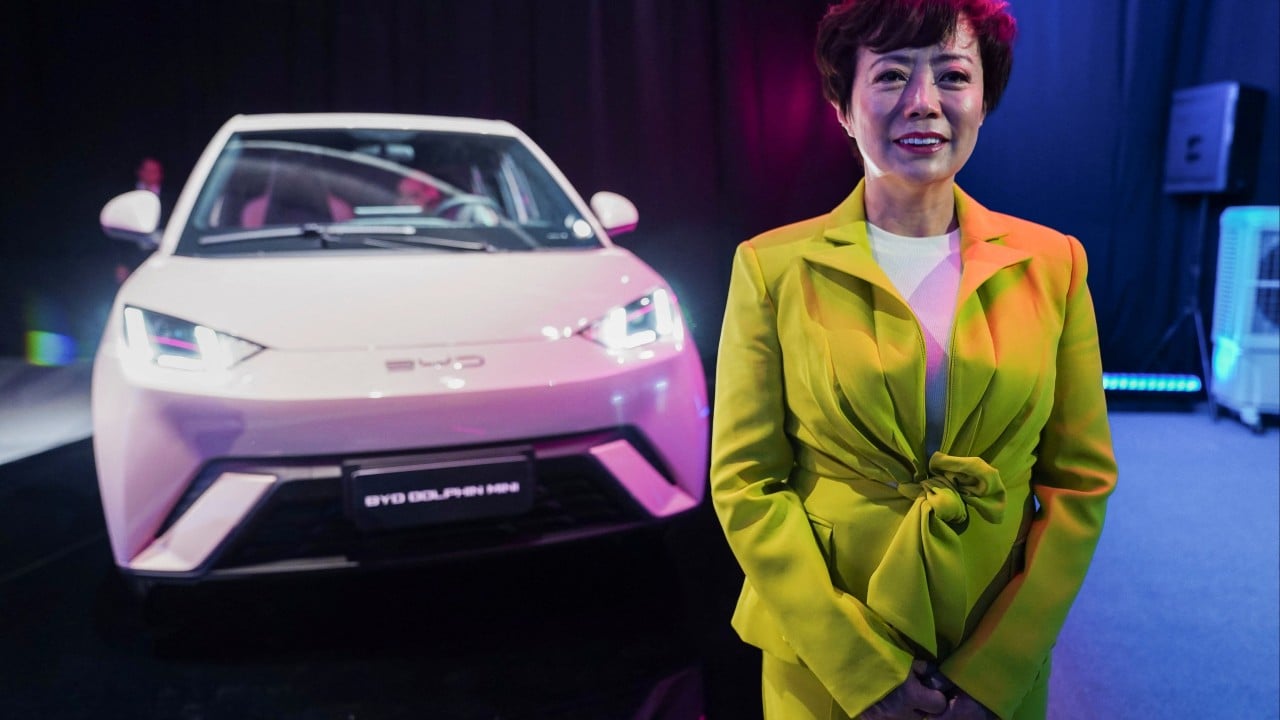
Ministers sell. That has always been the primary job description for any trade envoy stepping off a long-haul flight. When Argentine Foreign Minister Pablo Quirno sat down with BYD Executive Vice President Stella Li in Singapore, the diplomatic choreography was entirely predictable. Headlines quickly followed, declaring that the Chinese electric vehicle giant was considering a lithium battery and energy storage plant in Argentina.
Corporate announcements regarding what a multinational is "studying" represent the loosest verb construction in international commerce. It costs nothing to evaluate a market, and it requires zero capital expenditure to commission a feasibility report. Behind the polished communiques and the enthusiasm of a deregulated Argentine economy under President Javier Milei lies a much harder operational reality. BYD is playing a high-stakes chess match across South America, and Buenos Aires is currently just one square on a board where the risks are mounting as fast as the potential rewards. Also making news in related news: Why Sagarmanthan 2026 Proves India Won't Wait for Global Shipping to Fix Itself.
To understand why a potential battery plant in Argentina demands intense skepticism, look north across the Andes to the cautionary tale of Chile. Only a short time ago, BYD held grand ambitions for a $290 million lithium cathode plant in Antofagasta, backed by regional development incentives. That project quietly dissolved when BYD and its partner Tsingshan walked away, bruised by protracted friction over land allocation and a dramatic collapse in global lithium prices. Corporations do not forget those administrative bottlenecks easily. When an automaker encounters bureaucratic drag in a neighboring jurisdiction with mature lithium extraction, it scales back its ambitions for heavy downstream processing elsewhere.
Argentina certainly possesses the raw geological wealth. Situated squarely inside the Lithium Triangle, the salt flats of Salta, Jujuy, and Catamarca hold some of the largest brine deposits on Earth. Yet extracting lithium from high-altitude brine pools and turning it into battery-grade cells are entirely different industrial disciplines. Brine evaporation is chemically delicate and weather-dependent, while cell manufacturing requires massive, continuous-power electrical infrastructure, hyper-pure inputs, and strict quality control tolerances. Additional information on this are covered by Investopedia.
The Milei administration has rolled out aggressive incentives and mining-friendly reforms designed to position the country as an export hub rather than a mere quarry for raw material. For an enterprise like BYD, which builds its competitive moat on extreme vertical integration—making its own semiconductors, software, ships, and batteries—localizing production inside a raw-material powerhouse feels like a natural extension of its global footprint. The company has already established its local subsidiary, registered a corporate purpose covering both vehicle and battery manufacturing, and built out an initial commercial footprint with dozens of dealerships moving imported models.
Yet shipping vehicles on company-owned roll-on/roll-off vessels from manufacturing hubs in Asia or regional assembly lines in Brazil is fundamentally distinct from pouring hundreds of millions of dollars into a fixed electrochemical facility in a volatile macroeconomic zone. Currency controls have eased under the current administration, but the historical ghost of capital freezes and sudden regulatory reversals remains vivid for foreign boardrooms. Executives in Shenzhen evaluate risk through a multi-decade lens. A welcoming government today can be replaced by an antagonistic administration tomorrow, leaving heavy industrial assets vulnerable to expropriation or punitive export levies.
Furthermore, global market dynamics are shifting beneath the feet of battery planners. Lithium oversupply and fluctuating spot prices have squeezed margins across the supply chain, forcing even dominant market leaders to rationalize their capital expenditure. Building a standalone battery or energy storage facility in Argentina only makes economic sense if local demand or regional trade pacts can absorb the output without relying on high-cost logistics across fractured South American borders. Mercosur trade barriers and varying national regulations continue to complicate cross-border component shipping, diluting the cost advantages of local assembly.
The diplomatic meeting in Singapore served its purpose for both sides. It signaled to global competitors that Buenos Aires is open for business and gave BYD a useful lever in ongoing commercial positioning. Until a binding financial commitment appears on an official balance sheet alongside concrete construction timelines, this is statecraft disguised as industrial strategy. Argentina has the salt, and BYD has the technology, but the bridge between political optimism and heavy factory floors is paved with hazards that neither side has figured out how to cross.


