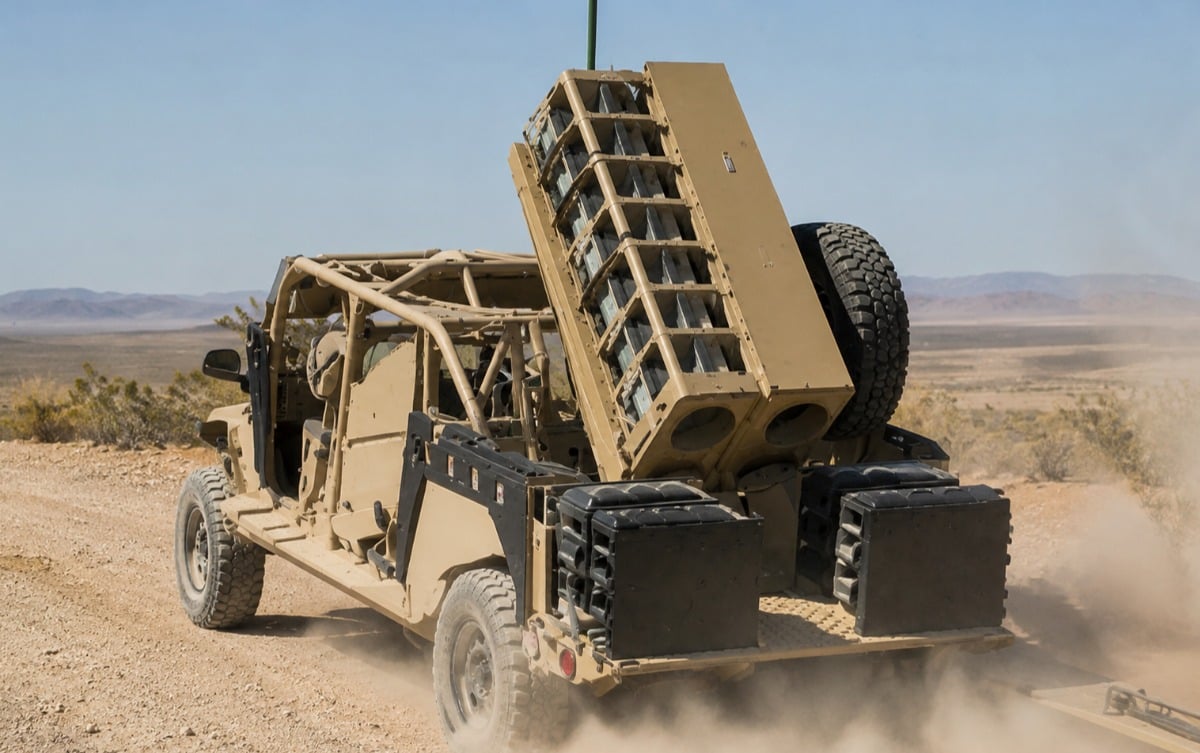
The military has a massive rocket motor problem.
They cost too much to build. They take forever to manufacture. Worst of all, they leave a massive, glowing heat signature the second they ignite, telling every adversary in the region exactly where the launch came from. For a more detailed analysis into this area, we suggest: this related article.
That is why the military is looking closely at electric launch tracks. The recent push by defense agencies to back Auriga Space, a California startup building linear electromagnetic accelerators, highlights a shift away from chemical propellants. While some commentators describe the system as a futuristic electromagnetic weapon, the reality is far more practical—and much more disruptive to the defense supply chain.
By replacing chemical rockets with high-speed magnetic tracks, the military hopes to launch interceptors, drones, and test packages into the sky using nothing but electricity. It is a system that could change missile defense, hypersonic testing, and battlefield logistics. For additional context on this topic, comprehensive coverage can be read at Gizmodo.
The Real Story Behind the Auriga Space Electromagnetic Weapon Project
When people hear the term electromagnetic weapon, they usually picture a sci-fi laser or a giant naval railgun humming with static electricity. But the Auriga Space technology is actually a highly sophisticated kinetic accelerator.
Founded by Winnie Lai, Auriga Space did not set out to build weapons. The company emerged from stealth to build a reusable, electrically powered launch platform designed to catapult small satellites into low Earth orbit. The concept is simple in theory but brutal in execution: build a track several kilometers long, use magnets to accelerate a payload to hypersonic speeds, and let the vehicle glide to high altitude before lighting a small rocket engine to finish the trip.
This approach completely bypasses the heaviest, most expensive part of a rocket: the first stage booster.
The U.S. military quickly realized this exact civilian launch concept solves their biggest battlefield bottlenecks. Through a series of Small Business Innovation Research (SBIR) grants, including funding from the Missile Defense Agency, the military began partnering with Auriga to adapt this track technology for tactical operations.
It is not about shooting down planes with a death ray. It is about using magnetic tracks to launch interceptors and unmanned systems without relying on solid rocket fuels.
Why Rocket Fuel is Becoming a Military Liability
To understand why the Army is funding this, you have to look at the current state of missile defense. Traditional interceptors are essentially oversized fireworks. They rely on solid rocket motors to get up to speed.
Solid rocket motors are incredibly complex to manufacture. They require highly volatile chemical mixtures that must be cast under precise conditions. The defense industrial base is struggling to keep up with demand, creating a severe bottleneck for critical missile systems. If a conflict lasts more than a few weeks, the military runs a very real risk of running out of interceptor rockets.
Then there is the logistics nightmare. Transporting highly explosive rocket boosters across oceans and through hostile territory is dangerous. They require special storage, strict temperature controls, and constant maintenance.
Magnetic launchers change the entire equation.
An electromagnetic track runs on electricity. You do not need to ship tons of volatile propellant to the front lines; you just need a reliable generator or a high-capacity battery system. Because the launcher relies on a magnetic field to push the projectile, there is no hot exhaust, no explosive launch pad, and no toxic chemical plume.
This means a launcher can be buried in a silo or mounted on a mobile truck bed without the risk of an onboard explosion destroying the entire unit.
How Magnetic Levitating Tracks Launch Interceptors Without Explosives
The underlying physics of Auriga’s system relies on linear induction motors, similar to the technology the U.S. Navy uses to launch fighter jets from the deck of the USS Gerald R. Ford.
Instead of a round motor that spins, a linear motor is laid out flat along a track. When an electrical current flows through the track’s coils, it creates a moving magnetic field. This field pulls a sled—which holds the projectile—down the track at accelerating speeds.
[ Power Source ] ---> [ Software Control ] ---> [ Coils along Track ]
                                                       |
                                                       v
                                            [ Magnetic Levitating Sled ]
                                                       | (Accelerates to Mach 2+)
                                                       v
                                            [ Free Flight / Launch ]
By eliminating physical contact between the track and the sled using magnetic levitation, the system removes friction. No friction means less wear and tear, allowing the system to fire multiple times a day with minimal maintenance.
For missile defense, this offers massive advantages:
- Adjustable Speed: Traditional rockets burn at a fixed rate. An electromagnetic launcher allows the operator to dial the launch speed up or down instantly based on the target’s distance and velocity.
- Rapid Fire Capability: Without the need to clear smoke, cool down launch tubes, or reload heavy chemical canisters, an electromagnetic track can launch successive interceptors in seconds to defeat incoming swarms.
- Compact Interceptors: Because the projectile does not need to carry its own first-stage rocket booster, the interceptors themselves can be much smaller and lighter. This allows mobile launchers to carry significantly more ammo, deeply expanding their magazine depth on the battlefield.
The Secret Killer of Hypersonic Missiles is Rain
While the long-term goal is launching satellites and military interceptors, Auriga has already commercialized a smaller version of their track for a critical defense bottleneck: hypersonic materials testing.
Hypersonic flight—traveling at five times the speed of sound or faster—is incredibly violent. The friction between the air and the vehicle generates temperatures high enough to melt steel. But engineers have found an even bigger obstacle to high-speed flight: simple weather.
At Mach 5, a single raindrop behaves like a solid metal bullet. If a hypersonic missile flies through a rainstorm, a cloud, or a dust storm, the impact of these microscopic particles can strip away defensive ceramic coatings, crack protective radomes, and destabilize the flight path.
Historically, testing how materials handle this abuse has been incredibly difficult. You either had to burn a multi-million-dollar rocket booster to fly a test sample through a rainstorm, or use gas guns that often destroy the sample upon impact, leaving researchers with no physical materials to inspect afterward.
Auriga solved this by building a specialized weather chamber around their Prometheus test track.
The system suspends precise water droplets or sand particles in a vacuum chamber, shoots a material sample down the track at Mach 2.4, and then decelerates the sample smoothly so researchers can recover it fully intact. It lets advanced materials companies, like their launch customer Axiom Materials, test high-temperature ceramics and coatings under realistic weather conditions dozens of times a week.
What the Army Gains From Removing Rocket Motors Entirely
The military's partnership with Auriga highlights a broader trend: the digitization of kinetic force. By turning propulsion into a software problem, the Army gains tactical advantages that traditional rocketry simply cannot match.
First, there is the reduction in thermal signature. When a patriot missile or an artillery shell fires, satellite-based infrared sensors pick up the launch flash instantly. An electromagnetic launcher has no hot fire. A weapon system that can deploy drones, decoys, or kinetic interceptors silently and coolly is incredibly difficult for an enemy to locate and counter.
Second, it untethers the military from global supply chain shocks. The raw materials for solid rocket propellants are heavily dependent on complex global trade. Electricity, on the other hand, can be generated using tactical solar arrays, diesel generators, or small modular nuclear reactors.
To bring this technology to the battlefield, defense contractors and military planners need to address three immediate steps:
- Standardize high-power battery storage: Electromagnetic launchers require massive surges of electrical power in milliseconds. Field units must be paired with durable, fast-charging capacitor banks that can survive harsh weather and rough transport.
- Integrate with existing command systems: The software controlling the launch velocity must link directly to radar tracking networks, automatically calculating the exact speed required to intercept a target before the sled even moves.
- Harden components against high G-forces: Projectiles launched via magnetic tracks experience extreme, instantaneous acceleration. Electronic guidance packages inside the interceptors must be built to withstand these immense force spikes without cracking.
The transition from chemical energy to electromagnetic energy on the battlefield is no longer a theoretical exercise. As startup-led test tracks show viable results, the military is steadily moving toward a world where the best rocket is no rocket at all.