The iron cell door does not care about neural networks. It slams shut with a heavy, acoustic finality that echoes through municipal holding facilities just as easily as it does through maximum-security penitentiaries.
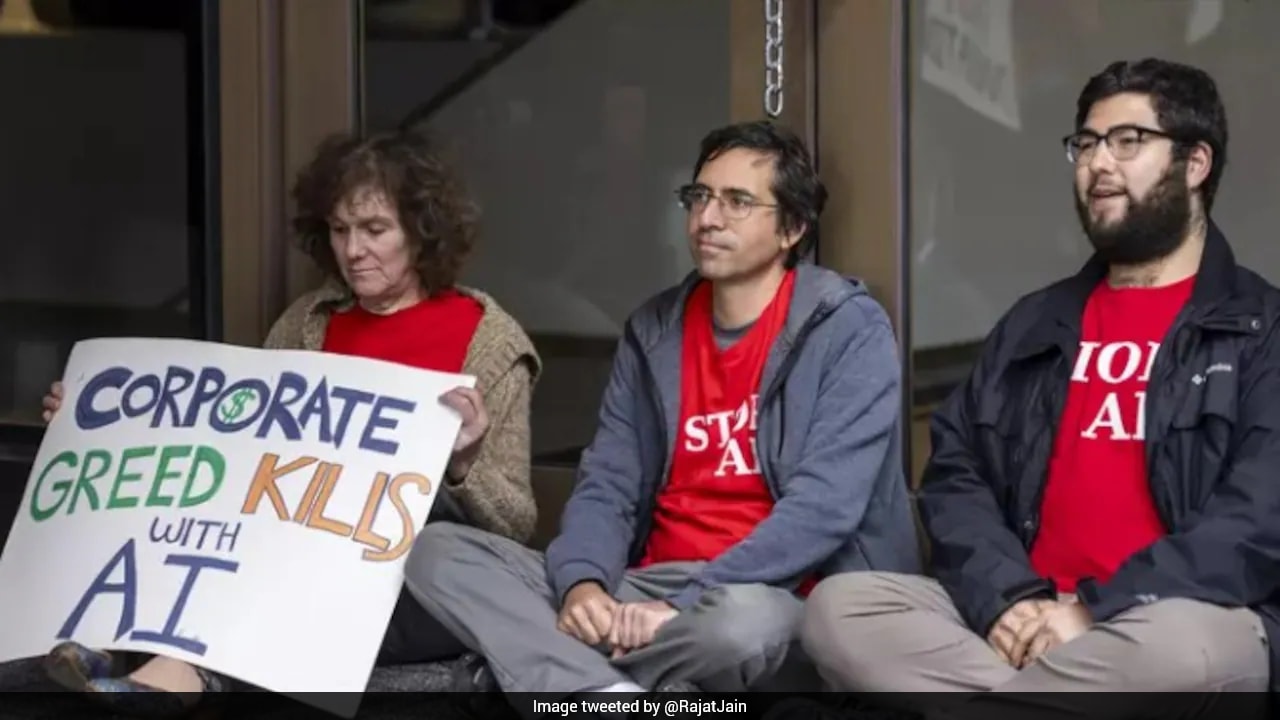
Behind that door sits an activist who made a very specific bet. They gambled that physical disruption outside corporate headquarters would force a public reckoning over automated labor displacement, data harvesting, and the unchecked expansion of foundational models. Instead, the legal system treated them like any other trespasser. The first activist convicted and imprisoned for direct action against an artificial intelligence laboratory has officially served notice. Their message from behind bars to the executives at OpenAI, Anthropic, and Meta was simple. Regain your humanity. In related updates, read about: The Invisible Kilowatts Living Next Door.
The industry shrugged and kept shipping features.
We have entered a strange historical corridor. Technology companies routinely build systems that ingest the cumulative intellectual output of human civilization without consent, repackage it as proprietary intelligence, and sell back subscription tiers to the very workforce whose writing and art trained the models. When the friction of this economic transfer becomes too great for standard political channels to handle, people take to the streets. Or the lobbies. Or the server rooms. TechCrunch has provided coverage on this critical subject in great detail.
The Anatomy of Silicon Valley Civil Disobedience
Protest inside the tech sector used to look like walkouts. Software engineers with high salaries and stock options would stage midday assemblies on corporate campuses, demanding ethical oversight for military contracts or better internal labor practices. Management would listen, issue a carefully crafted memorandum, wait for the news cycle to cool, and quietly proceed with business objectives.
That era has expired.
The individual now serving time crossed a critical threshold. They moved from labor grievances within the tech ecosystem to direct confrontation against the physical infrastructure of artificial intelligence development. This escalation mirrors historical labor conflicts. When factory owners replaced weavers with power looms in the nineteenth century, workers broke the machines. When digital conglomerates replace human judgment with statistical prediction engines, activists target the offices where those engines are coded.
Yet the response from executive leadership remains insulated. Walk down the corridors of major AI research labs in San Francisco or Silicon Valley. You will not find executives trembling behind barricades. You will find biometric turnstiles, private security details, and legal teams preparing injunctions. The corporate fortress has adapted to external dissent by treating it as a public relations nuisance rather than an existential moral crisis.
When the jailed activist shouted for leadership to regain their humanity, they misdiagnosed the problem. Humanity is not missing from these boardrooms. It is operating entirely as designed.
The Economics of Indifference
To understand why corporate labs ignore public pleas for ethical restraint, you have to look at the balance sheets. The race toward artificial general intelligence requires capital expenditure on a scale previously reserved for national defense programs. Billions of dollars flow into data center construction, specialized semiconductor procurement, and electrical grid access.
In that environment, moral appeals function as white noise.
Executives managing multi-trillion-dollar valuations operate under a strict fiduciary mandate. They cannot pause development because an activist finds the automation of creative labor distasteful. If OpenAI slows down to ponder the human cost of displaced copywriters, Anthropic will capture enterprise market share. If Meta hesitates on open-source weight distribution, competing international actors will fill the vacuum. The system possesses a ruthless momentum that external moral pressure cannot penetrate.
The activist thought a jail cell would serve as a megaphone. History suggests otherwise. Prisons swallow martyrs with quiet efficiency, leaving corporate boardrooms untouched by the inconvenience of actual remorse.
Consider the legal architecture protecting these labs. Trespassing laws are ancient and absolute. Property rights supersede political speech when that speech interferes with private operations. When protesters glue themselves to glass doors or block executive parking lots, they trigger a predictable sequence. Police arrive. Warnings are issued. Zip ties go on wrists. Judges hand down standard misdemeanor sentences. The machine processes the friction and grinds forward.
The Reality of Algorithmic Displacement
While activists target executives with philosophical arguments about soul and empathy, the actual battlefield is economic. The fear driving these protests is not abstract science fiction paranoia about rogue terminators. It is the immediate, verifiable depreciation of human labor value.
Every time a major language model updates its architecture to handle more tokens with lower latency, thousands of contract content moderators, junior coders, and customer service agents watch their employment viability shrink. These workers are not worried about machines becoming conscious. They are worried about landlords refusing to accept algorithmic efficiency as a substitute for rent money.
The tech industry responds to this anxiety with a familiar linguistic shield. They call it transition. They talk about upskilling. They fund minor academic grants to study the future of work while simultaneously investing billions in automation technology that makes human labor redundant.
This contradiction creates a pressure cooker. When traditional political representation feels unresponsive and labor unions lack jurisdiction over digital code, desperate individuals turn to radical disruption. They chain themselves to lobby furniture because they believe the sheer absurdity of the spectacle will force a pause.
It does not. It results in mugshots and court dates.
The Limits of Moral Persuasion
Asking an artificial intelligence lab to rediscover its humanity misunderstands the nature of modern corporate entities. These organizations are not moral agents capable of guilt or introspection. They are optimization loops. They optimize for capital accumulation, market dominance, and computational scale.
When an executive speaks about alignment, they are not talking about aligning their corporate practices with human values or emotional well-being. They are talking about aligning neural network outputs with safety guidelines to prevent brand damage and regulatory fines. The vocabulary of human emotion has been co-opted by corporate communications teams to sanitize cold calculations of market dominance.
The imprisoned activist learned this lesson the hard way. Their plea for humanity was met with a standard corporate statement emphasizing campus safety and the uninterrupted continuation of research. There was no soul-searching. There was no sudden epiphany under fluorescent office lights. There was only the sound of a legal team filing paperwork to ensure future demonstrations stay outside the property line.
As long as the economic incentives favor automation over human labor, moral appeals will fail. The first protester to see the inside of a jail cell for opposing artificial intelligence labs made history, but history is rarely kind to those who try to stop an industrial tidal wave with bare hands.
The cell door remains locked. The servers keep humming. The code compiles.