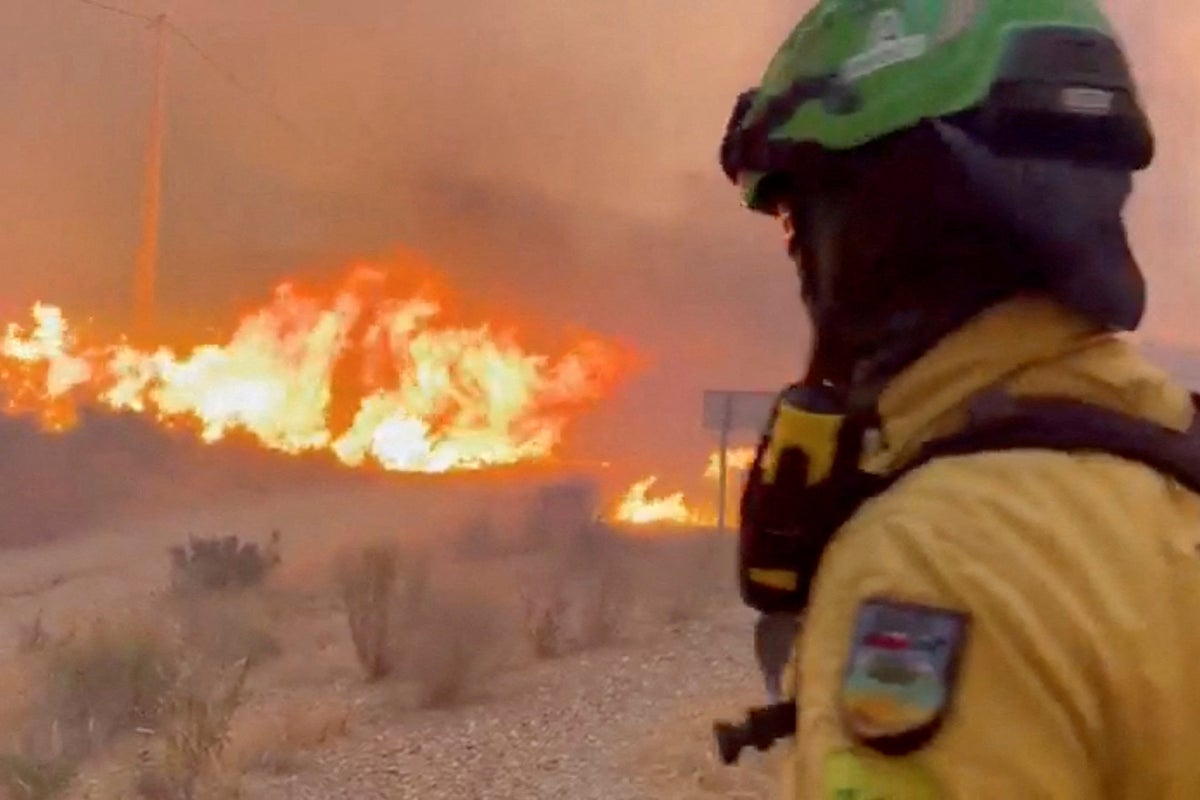
The wind in Andalusia does not just blow. It whispers secrets of the Sahara, carrying a dry, suffocating heat that makes the leaves of the olive trees rattle like old bones. On a normal summer afternoon, the smell of roasted garlic and sea salt drifts through the white-walled villages. But when the sierra catches fire, the air changes. It turns into a thick, metallic soup that scratches the back of your throat before you even see the first plume of smoke.
You notice the silence first. The cicadas, usually a deafening wall of sound in the Spanish heat, suddenly stop.
Then come the birds, flying low and fast toward the coast, fleeing something invisible.
For those who view Spain through the glossy pages of travel brochures, it is a land of endless sun, rhythmic flamenco, and late-night tapas. But there is a parallel reality unfolding beneath the canopy of its ancient pine forests and sprawling natural parks. It is a reality measured not in tourist foot traffic, but in hectares burned and lives disrupted.
The dry statistics tell a grim story: vast fronts of fire tearing through thousands of acres, hundreds of emergency personnel deployed, and a rising death toll that has now claimed twelve individuals. Yet, a map with red dots marking containment zones cannot capture the true weight of what is happening on the ground.
To understand the fire, you have to look at the ash settling on a plastic patio table miles away from the front line. You have to look at the hands of the people trying to brush it away.
The Chemistry of a Megafire
Wildfires are no longer what they used to be. The traditional lifecycle of a forest fire involved a predictable progression: a spark, a localized blaze, and a straightforward containment strategy. Today, emergency crews find themselves battling a different beast entirely.
Consider how a fire behaves when the ambient temperature hovers above forty degrees Celsius for a week straight, combined with humidity levels dropping into the single digits. The environment becomes a tinderbox. The soil loses every molecule of moisture, turning the forest floor into a continuous fuse. When a fire ignites under these conditions, it creates its own weather system.
Huge columns of smoke rise so high and hot that they form pyrocumulus clouds. These clouds can collapse in on themselves, generating unpredictable, erratic winds that shoot embers miles ahead of the main fire front. This is how a single blaze turns into a multi-headed monster overnight.
Emergency responders mapping these zones are not just fighting flames; they are trying to outsmart a shifting, volatile network of heat. The current outbreaks span several distinct regions, stretching the resources of the Unidad Militar de Emergencias—Spain’s elite military emergency unit—to their absolute limits. Helicopters and water-bombing planes loop continuously between local reservoirs and the burning hillsides, their engines roaring against a backdrop of orange haze.
But the air support can only do so much when the canopy is so thick that the water vaporizes before hitting the ground. The real work happens on foot, in the suffocating heat, where crews cut firebreaks with chainsaws and hand tools, fighting for every meter of dirt.
The Cost of the View
There is a specific vulnerability that comes with living on the edge of paradise. Over the past few decades, the desire to escape crowded urban centers has driven a massive expansion of residential areas into the fringes of forested lands. These zones, known to urban planners as the wildland-urban interface, are where the human tragedy of these fires hits hardest.
Imagine a hypothetical resident—let us call her Maria—who moved to a small villa tucked into the pine hills outside of Málaga five years ago. She wanted quiet. She wanted to wake up to the scent of pine needles and look out over the valley.
When the evacuation order comes, it does not arrive with the dramatic fanfare of a movie. It comes as a text message alert or a neighbor banging frantically on the front gate while a police siren wails in the distance. You are given fifteen minutes to decide what your life is worth.
Do you grab the passport? The photo albums? The dog’s medication?
As Maria drives down the narrow mountain road, looking through her rearview mirror at the ridge line glowing a terrifying, bright violet against the night sky, the abstract concept of climate volatility becomes acutely personal. Her home may survive, or it may become one of the charred skeletons that crews find once the smoke clears. The uncertainty is a heavy, physical ache.
This is the hidden tax of the changing Mediterranean climate. The beautiful landscapes that draw millions of visitors every year are becoming increasingly hazardous to inhabit. The twelve casualties recorded in these recent blazes include not just trapped residents, but firefighters who stood their ground to protect properties built in places that nature never intended to be defended.
Reading the Map of the Scarred Earth
When you look at the official maps published by emergency services, the affected areas are neatly demarcated in bright orange and red polygons. They look clean on a screen. They look manageable.
But if you walk those perimeter lines after the fire has passed, the reality is a monochromatic wasteland. The vibrant greens and deep earthy browns of the Spanish scrubland are replaced by a uniform, ghostly grey. The ground stays hot for days, smoking faintly like the embers of a giant campfire that refuses to die.
The immediate focus of the containment strategy is saving lives and preserving infrastructure, but the long-term scar on the local economy is massive. Olive groves that took generations to mature are reduced to blackened stumps in a matter of minutes. Small family-run hotels and rural tourism businesses face sudden cancellations, their peak season evaporating along with the air quality.
The problem runs deeper than a single bad summer. When a fire burns with such intense heat, it sterilizes the soil, destroying the microbial life necessary for regeneration. When the autumn rains eventually arrive, the unprotected ground cannot absorb the water. The result is a secondary disaster: mudslides and flash floods that wash away the remaining topsoil, altering the geography of the region permanently.
The Unspoken Bond of the Front Line
There is a unique subculture among the crews who walk into these blazes while everyone else is fleeing. They wear heavy, flame-retardant yellow jackets in the blistering summer heat. Their faces are permanently smudged with charcoal, their eyes bloodshot from smoke inhalation and lack of sleep.
They talk about the sound of a major forest fire. It is not a crackle. It is a deep, rhythmic roar, like a freight train barreling through a tunnel at ninety miles an hour. It is a sound that vibrates in your chest.
To stand in front of that roar requires a specific kind of quiet resolve. The crews rely on rigorous training and real-time satellite mapping data, but at three o'clock in the morning, when the wind shifts unexpectedly and the radio crackles with urgent warnings, human instinct takes over. They look out for one another. They watch the treeline. They calculate escape routes in their heads.
The loss of twelve lives hangs heavily over the entire operation. Every firefighter on the line feels that number. It is a stark reminder that despite all the technological advancements, the satellite tracking, and the aerial water drops, the boundary between containment and catastrophe remains terrifyingly thin.
The battle lines are shifting as weather patterns become more extreme, forcing a total reconsideration of how these landscapes are managed. It is no longer enough to react to fires when they break out; the focus must pivot toward aggressive, year-round forest management, controlled burns, and stricter zoning laws in high-risk areas.
The smoke will eventually clear, as it always does. The blue Spanish sky will return, and the tourists will flock back to the beaches and the outdoor cafes. But for the communities along the hillsides, the memory of the roar will linger, waiting in the dry wind.