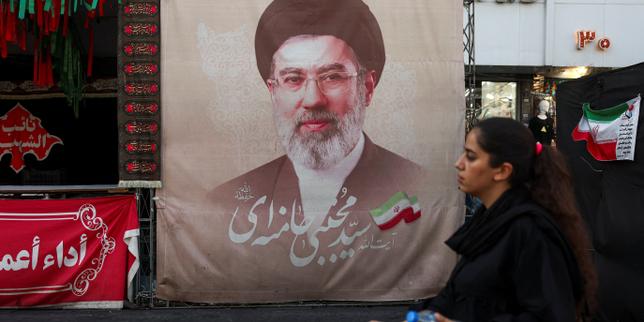
Geopolitical succession in authoritarian states is rarely an event; it is a prolonged, structural realignment of security networks, financial conglomerates, and ideological arbiters. When public discourse fixates on binary outcomes—such as whether a specific figure like Mojtaba Khamenei is alive or incapacitated—it misses the underlying architecture of power transfer within the Iranian state. The Islamic Republic operates not as a personal dictatorship dependent on a single physical body, but as a complex institutional matrix where the Islamic Revolutionary Guard Corps, the clerical bureaucracy, and extensive parastatal foundations known as bonyads act as stabilizing shock absorbers. Evaluating the viability and trajectory of Mojtaba Khamenei requires dissecting the functional mechanics of institutional control rather than relying on speculative health reports or external political commentary.
The Structural Anatomy of Power Consolidation
The operational core of political survival in Iran rests on three interlocking pillars: the coercive apparatus, economic autarky, and clerical validation. Understanding how leadership transitions succeed or fail within this ecosystem demands an examination of each pillar's internal incentives.
The coercive apparatus, anchored by the Islamic Revolutionary Guard Corps and the Basij paramilitary network, functions as the ultimate arbiter of internal security and economic distribution. The Guard is not merely a military wing; it is an extensive conglomerate controlling vital sectors of telecommunications, construction, energy, and smuggling networks. For any successor to consolidate authority, they must maintain the cohesion of this officer corps. Mojtaba Khamenei has spent decades cultivating informal yet deep-seated ties within the mid-to-high-ranking echelons of the security apparatus, positioning himself as a reliable custodian of their institutional autonomy and economic privileges.
Economic autarky provides the regime with insulation against external sanctions. Parastatal organizations operate outside the direct oversight of the national budget, generating continuous revenue streams that fund both internal repression and regional proxy networks. The institutional alignment between these financial nodes and the office of the Supreme Leader ensures that succession is heavily underwritten by capital concentration. A transition that preserves this financial architecture reduces the risk of elite fragmentation.
Clerical validation, though secondary to coercive and economic power in practical terms, remains essential for maintaining the ideological legitimacy of the Islamic Republic. The Assembly of Experts holds the constitutional mandate to select the Supreme Leader, yet this body functions primarily as a rubber stamp for decisions pre-negotiated by security brokers. The clerics who populate these councils depend entirely on state patronage and security clearance. Consequently, theological debates regarding qualifications are subordinate to the strategic consensus of the security elite.
The Cost Function of Institutional Continuity
Political stability in Tehran is maintained through a continuous calculation of elite appeasement versus resource scarcity. When economic pressures mount due to sanctions or structural mismanagement, the cost of maintaining elite loyalty increases. The primary variable in this equation is rent distribution. If the ruling coalition can no longer extract and distribute sufficient economic rents to keep regional commanders and bureaucratic loyalists satisfied, internal fissures widen.
A transition to Mojtaba Khamenei represents, from the perspective of the existing security elite, a risk-minimization strategy. Unlike outsiders or reform-minded technocrats who might seek structural adjustments or foreign policy realignments that threaten the Guard's economic empire, an insider with deep familial and structural ties guarantees institutional continuity. The cost function favors the status quo because the alternative—systemic reform—carries an existential threat to the ruling class's accumulated assets.
External actors frequently miscalculate by assuming that public demonstrations or economic distress automatically translate into regime collapse. In autocratic systems with high security penetration, collapse occurs only when the coercive apparatus fractures internally. As long as the security leadership remains unified around the preservation of their material interests, succession mechanisms will function smoothly, regardless of external skepticism or fluctuating health reports regarding key figures.
Strategic Trajectories for Regional and Domestic Dynamics
The practical implementation of leadership transition under Mojtaba Khamenei involves managing three distinct operational friction points: succession institutionalization, regional proxy management, and domestic compliance.
The first friction point is the formalization of authority. Transitioning power from father to son violates the anti-monarchical founding ethos of the 1979 revolution, introducing an ideological contradiction that must be managed through strict narrative control and pre-emptive neutralization of dissenting clerical factions. This requires silencing alternative centers of religious authority in Qom and enforcing total conformity within state media channels.
The second friction point is the maintenance of the so-called Axis of Resistance. The operational coordination between Tehran and regional allies in Lebanon, Iraq, Yemen, and Syria depends on consistent financial flows and tactical intelligence sharing managed by the Quds Force. Any disruption at the top of the command chain temporarily increases tactical vulnerability, making the preservation of institutional continuity an absolute priority for the security council.
The final friction point is the management of domestic dissent. The regime relies on predictive policing, digital surveillance, and targeted coercion to suppress civil unrest before it achieves critical mass. The intelligence apparatus has refined its response matrix to handle recurring economic protests, ensuring that no unified opposition leadership can emerge.
Maintain continuous surveillance on the internal promotions within the Islamic Revolutionary Guard Corps command structure and the allocation patterns of parastatal budgets, as these metrics provide the only reliable early indicators of elite cohesion or fracturing during a succession cycle.


