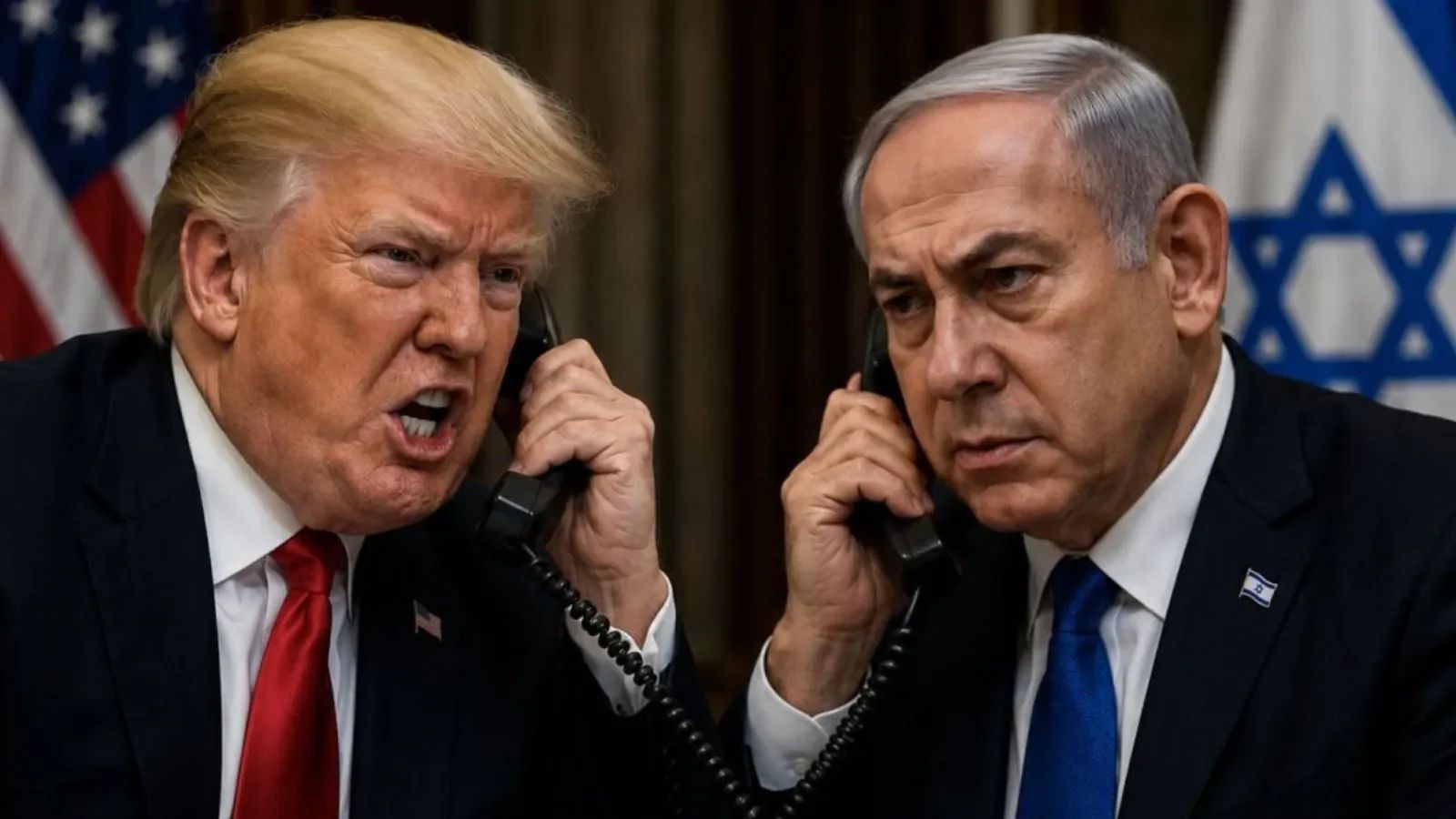
Acute diplomatic friction between Washington and Jerusalem over military operations against Iran stems from a structural divergence in strategic time horizons, domestic political incentives, and risk tolerance thresholds. When high-level bilateral consultations deteriorate into reported shouting matches between Donald Trump and Benjamin Netanyahu, the surface-level interpersonal volatility masks a deeper game-theoretic impasse: two allied executives attempting to optimize incompatible utility functions while sharing an interconnected security architecture.
Standard political journalism reduces these confrontations to personality clashes, emotional outbursts, or isolated tactical disagreements. That framing obscures the operational mechanics driving the conflict. To understand why the US-Israel axis fractures under the pressure of direct confrontation with Tehran, analysts must evaluate the underlying deterrence models, economic shock absorbers, and escalation ladders governing each capital.
The Structural Divergence of Strategic Objectives
Bilateral alliances remain stable only while the cost of defection exceeds the cost of compliance. In the context of kinetic action against the Islamic Republic, Washington and Jerusalem operate under fundamentally different definitions of victory, creating an immediate principal-agent problem within the coalition.
Jerusalem’s strategic doctrine prioritizes existential risk elimination. For the Israeli defense establishment, a threshold nuclear capability or an entrenched regional missile network in Iran represents an intolerable, permanent degradation of national survival margins. Under this framework, pre-emptive kinetic degradation—targeting nuclear infrastructure, ballistic missile production facilities, and command-and-control nodes—is viewed as a mandatory corrective measure, regardless of short-term regional volatility. The Israeli calculus discounts long-term macroeconomic disruption because the primary threat is localized and existential.
Washington’s strategic doctrine prioritizes global systemic stability and domestic economic insulation. A US administration managing an active confrontation with Iran must calculate second- and third-order effects across global energy markets, maritime chokepoints, and competing theaters in Eastern Europe and the Indo-Pacific. For the White House, a full-scale regional war is not a localized security operation; it is a systemic shock that threatens global supply chains, spikes domestic energy prices, and drains finite munitions stockpiles required for great-power deterrence.
This divergence creates three specific points of operational friction:
- Target Set Selection: Jerusalem favors comprehensive targeting that includes regime infrastructure, energy export terminals, and deep-buried nuclear sites to force systemic collapse or total capitulation. Washington favors calibrated, proportional strike packages designed to restore deterrence without triggering an unconstrained Iranian retaliation against Gulf energy infrastructure.
- Termination Criteria: Israeli planners define war termination through measurable physical degradation of Iranian capabilities. American planners define war termination through diplomatic off-ramps and the rapid restoration of regional commercial normalcy.
- Escalation Dominance: Jerusalem assumes that rapid, overwhelming vertical escalation forces Tehran to back down. Washington operates under the assumption that vertical escalation without a viable exit ramp forces the Iranian leadership into a corner where regime survival depends on maximizing regional economic pain.
The Economics of Deterrence and Risk Transfer
The friction reported between Trump and Netanyahu reflects an unresolved dispute over risk transfer. In alliance politics, asymmetric risk transfer occurs when one partner initiates an action whose defensive and economic costs are disproportionately absorbed by the other.
Israel possesses high tactical offensive capability within the Levant and broader Middle East, yet its strategic endurance relies heavily on American logistical resupply, intelligence-sharing architectures, and diplomatic cover. When Jerusalem pushes for expansive kinetic operations against Iran, it effectively externalizes the systemic consequences onto Washington.
If Tehran responds to an Israeli strike by mining the Strait of Hormuz, launching saturation drone attacks against Saudi and Emirati oil processing facilities, or activating proxy networks against US bases in Iraq and Syria, the immediate financial and military burden falls on the United States. The US Navy must clear the maritime lanes; the Federal Reserve and the White House must manage the resulting inflationary spike in crude oil prices; the Pentagon must expend high-end interceptor missiles—such as THAAD and Patriot batteries—whose annual production rates lag far behind wartime consumption rates.
From a transactional standpoint, a US president focused on domestic economic metrics and minimizing foreign entanglements views unilateral Israeli escalation as an uncompensated liability. The core of the reported disputes lies in Washington’s refusal to grant blank-check security guarantees for offensive operations that undermine American macroeconomic interests. Conversely, from the Israeli prime minister's perspective, accommodating Washington’s timeline forces Israel to absorb continuous multi-front attrition while allowing Iran to advance its nuclear breakout timeline—a trade-off that carries fatal domestic political consequences in Jerusalem.
Domestic Political Incentives and Two-Level Games
International negotiations and alliance management operate simultaneously on two levels, as formalized in Robert Putnam’s two-level game theory. At Level I, national leaders bargain with each other to reach an agreement or coordinate military strategy. At Level II, each leader must ratify that strategy with their respective domestic coalitions, legislatures, and electorates.
A bilateral breakdown occurs when the "win-sets"—the range of outcomes acceptable to both domestic constituencies—fail to overlap.
In Jerusalem, Netanyahu’s political survival depends on maintaining a right-wing governing coalition that demands decisive military outcomes and rejects perceived concessions to international pressure. Appearing to yield to American restraint signals weakness to his domestic base and invites coalition collapse. Therefore, maximalist rhetoric and aggressive operational demands serve a vital Level II survival function, even when they generate severe friction at Level I.
In Washington, Trump’s political capital is anchored in a mandate to avoid protracted Middle Eastern wars, reduce foreign military expenditures, and deliver domestic economic prosperity. While his administration favors maximum economic pressure and decisive, short-duration displays of force, getting drawn into an open-ended, resource-draining ground or air campaign in the Persian Gulf directly violates his core domestic promise. When Netanyahu pushes for operational commitments that threaten to lock the US military into a prolonged regional conflict, Trump’s Level II constraints force an aggressive pushback.
The reported shouting matches are the predictable byproduct of two leaders attempting to force the other to absorb the domestic political cost of a strategic compromise. Neither leader can afford to be seen by their domestic audience as subordinate to the other’s priorities.
Operational Bottlenecks in Joint Military Execution
Beyond political theory and economic friction, physical and logistical constraints impose hard limits on what a US-Israel coalition can achieve against Iran. Media narratives often assume that joint military action is merely a matter of political will, ignoring the severe material bottlenecks that dictate operational tempo.
- Munitions Depletion Rates: High-intensity air and missile defense operations consume interceptors faster than Western defense industrial bases can manufacture them. Sustained Iranian ballistic missile and drone salvos require multi-layered defense expenditures that deplete global US stockpiles, creating critical vulnerabilities in other theaters.
- Bunker-Busting Limitations: Neutralizing deeply buried Iranian nuclear facilities, such as Fordow, requires specialized heavy ordnance like the GBU-57 Massive Ordnance Penetrator, which can only be delivered by US strategic bombers. Israel lacks the indigenous heavy-lift bomber fleet necessary to execute this mission independently, granting Washington an absolute physical veto over the final destruction of Iran’s underground nuclear infrastructure.
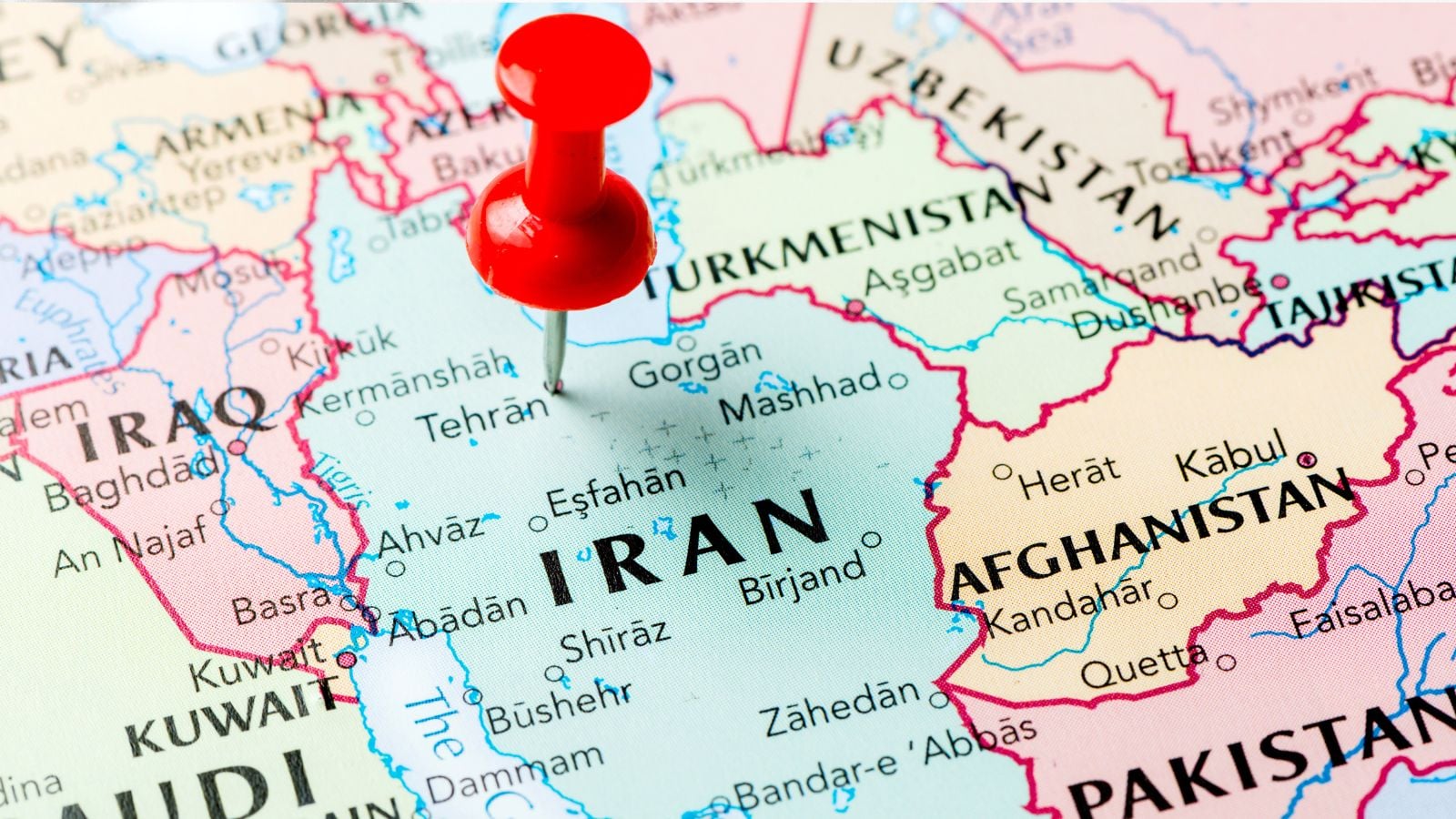
- Aerial Refueling and Overflight: Conducting sustained, high-sortie-rate air campaigns over Iran—located over 1,000 miles from Israeli airbases—requires extensive aerial refueling tankers and permissive overflight corridors across sovereign Arab airspace. Regional Gulf states, fearing Iranian retaliation against their own desalination plants and oil fields, routinely restrict overflight permissions, forcing reliance on US aerial refueling assets operating over international waters.
These material realities mean that Jerusalem cannot achieve its strategic end-state without active American participation, while Washington cannot prevent regional destabilization if Jerusalem initiates unilateral strikes that draw the US into a defensive war. This mutual dependency, paired with incompatible strategic objectives, guarantees recurring diplomatic crises.
The Fallacy of Coercive Bargaining Within Alliances
Both leaders frequently rely on coercive bargaining tactics—public leaks, delayed weapons shipments, surprise diplomatic overtures, or abrupt shifts in rhetoric—to extract concessions from the other. In adversarial relationships, coercive bargaining establishes credibility. Within a tightly integrated security alliance, it degrades operational security and signals exploitable divisions to the adversary.
When Tehran observes public friction and leaked accounts of acrimonious phone calls between Washington and Jerusalem, the Iranian leadership adjusts its deterrence calculus. Specifically, Tehran recognizes that Washington is actively working to restrain Israeli operational scope. This realization lowers the perceived risk of calibrated Iranian provocations, as Iranian planners calculate that the White House will intervene to prevent a disproportionate Israeli counter-strike.
Simultaneously, the ambiguity created by bilateral friction complicates deterrence signaling. Effective deterrence requires clear, unified communication of red lines and guaranteed consequences. When the US and Israel project conflicting thresholds—one emphasizing rapid de-escalation and negotiation, the other emphasizing existential preemption—the adversary exploits the seam between the two positions to advance its strategic objectives incrementally.
Strategic Execution Under Asymmetric Constraints
Managing this structural friction requires moving away from ad-hoc crisis management and establishing an explicit, binding operational framework before kinetic thresholds are crossed. Relying on personal rapport between executives fails when systemic incentives diverge.
To resolve the impasse, Washington must enforce strict conditionality on offensive support while hardening defensive architectures. The United States should explicitly decouple defensive munitions resupply from offensive operational backing, signaling to Jerusalem that while American assets will defend Israeli population centers against saturation attacks, US strategic bombers and refueling tankers will not support unilateral strikes on Iranian energy or regime infrastructure absent a verified, imminent nuclear weapons breakout. Simultaneously, Washington must bypass bilateral gridlock by establishing direct, back-channel de-escalation parameters with Tehran, utilizing regional intermediaries to define clear geographic and economic red lines—specifically protecting maritime energy transit—while maintaining maximum financial sanctions.
For Jerusalem, the optimal strategic play requires shifting from unilateral kinetic escalation to asymmetric covert degradation and regional coalition building. Rather than forcing a binary choice on Washington that triggers diplomatic ruptures and munitions freezes, Israeli planners must prioritize intelligence-driven sabotage, cyber disruption, and targeted supply-chain interdiction against Iranian nuclear and missile programs—methods that achieve physical delay without forcing Gulf states or the White House to absorb overt macroeconomic shocks. Until both capitals align their operational timelines with their material and political constraints, high-level consultations will continue to fracture under the weight of incompatible strategic realities.